
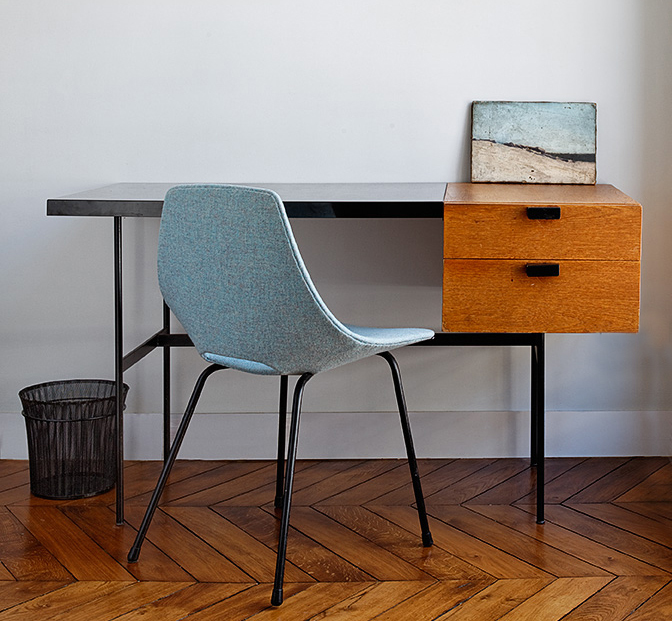
In the world of interior design, certain names stand out for their ability to transcend time and trends. Pierre Paulin, a renowned French designer, undoubtedly belongs to this category of timeless artists. His iconic work, the CM141 desk, designed in 1953, remains a symbol of elegance and innovation among lovers of 1950s furniture.
A cutting-edge design
The CM141 desk is a piece that stands out for its avant-garde approach. Paulin, known for his ability to blend functionality and aesthetics, has created a desk that goes beyond its simple utility. The clean lines and simplicity of form give this piece an airy, almost sculptural appearance, in contrast to the more monumental creations of the Roaring Twenties. It is part of a minimalist approach, anticipating trends that would emerge several decades later.
The fusion of wood and metal
Pierre Paulin chose a bold combination of materials for the CM141. The use of wood for the top and drawers adds a touch of warmth and naturalness. In contrast, the metal base, both discreet and sturdy, offers a modern and refined contrast. This combination of materials underscores Paulin's vision of a design where tradition meets innovation.

One office, many facets
The CM141 desk is not only a functional piece of furniture; it is also a work of art. Its design allows it to blend easily into different environments, whether a contemporary office, a more traditional workspace, or even a residential interior where its small size is also an asset, particularly in capital cities. Its versatility makes it a sought-after piece among collectors and design enthusiasts, who you might encounter at the Saint-Ouen flea market, for example.
The legacy of Pierre Paulin
The CM141 desk is emblematic of Pierre Paulin's legacy in the world of design. His creations continue to influence contemporary designers and remain central pieces in modern furniture collections. The CM141, in particular, is celebrated for its ability to embody the spirit of its era while remaining relevant in today's context. Through this piece, Paulin demonstrates that design can both serve everyday needs and achieve the status of a work of art.