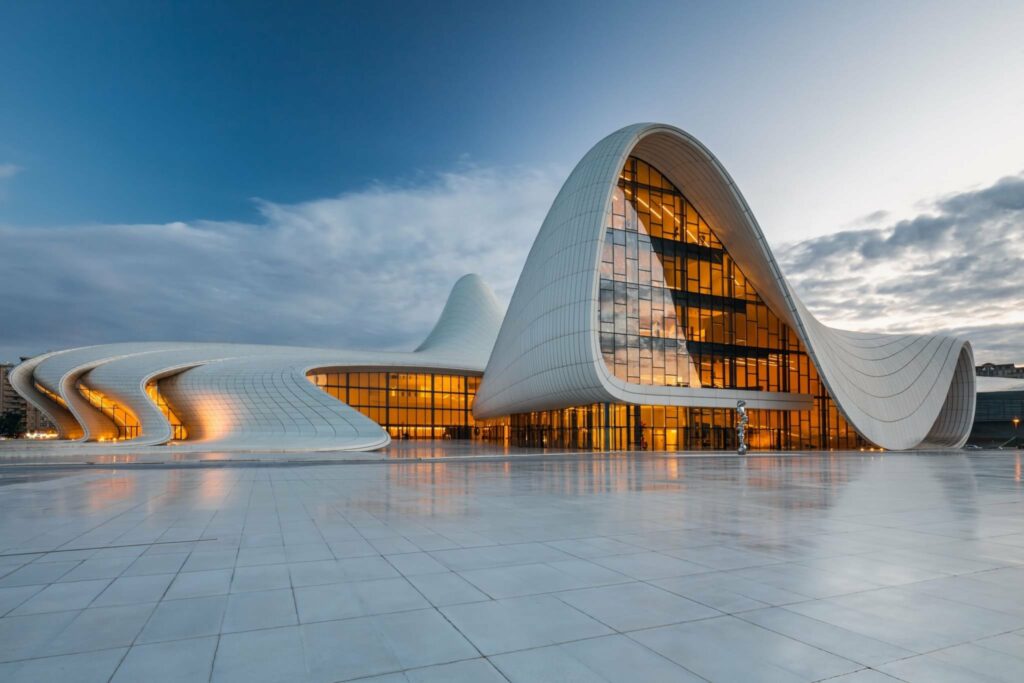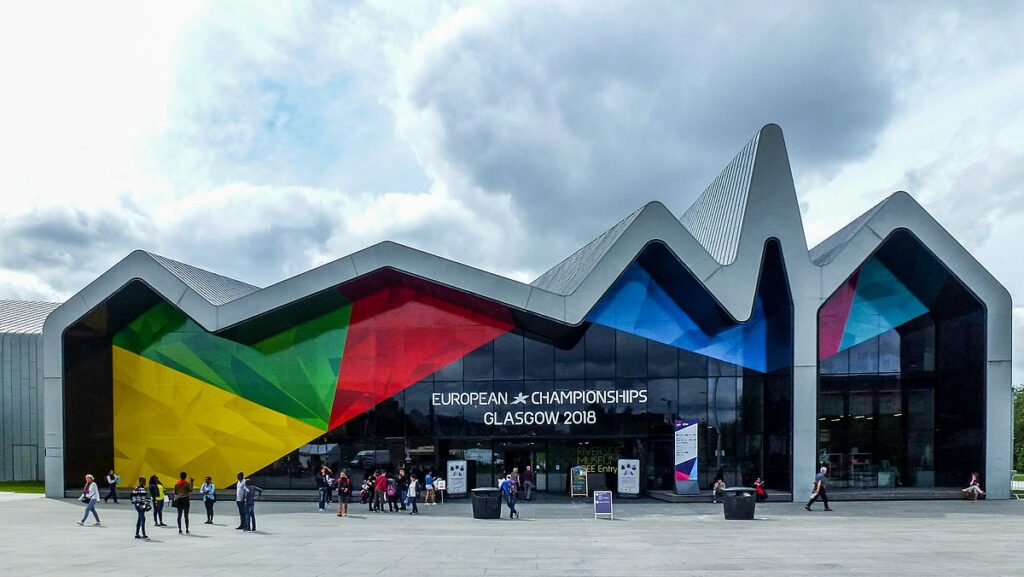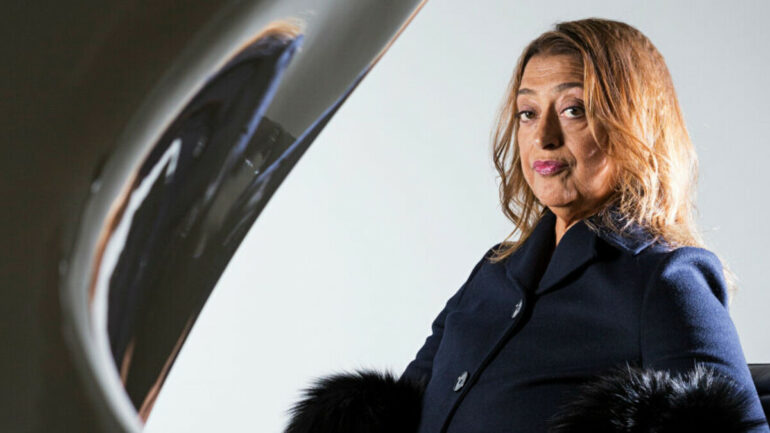
Zaha Hadid was the first female architect to receive the Pritzker Prize (the equivalent of a Nobel Prize for architecture) in 2004. Hadid is known for her dynamic curves and shapes, making her work very powerful and elegantly structured.
THE BEGINNINGS OF ZAHA HADID
Born in Baghdad in 1950, she was raised in the secular and liberal atmosphere of the Nasser regime. At that time, the Middle East was showing a desire for rapid modernization and a strong belief in technological progress. After receiving her master's degree in mathematics from the University of Beirut, she moved to London in 1972 to study atthe Architectural Association. There she met Rem Koolhaas, Daniel Libeskind, and Bernard Tschumi, among other innovative architects who were champions of experimental European architecture. Hadid graduated in 1977 and briefly became a partner in Koolhaas and Ella Zenghelis' new venture, the Office for Metropolitan Architecture. But she already had the desire to start her own business.
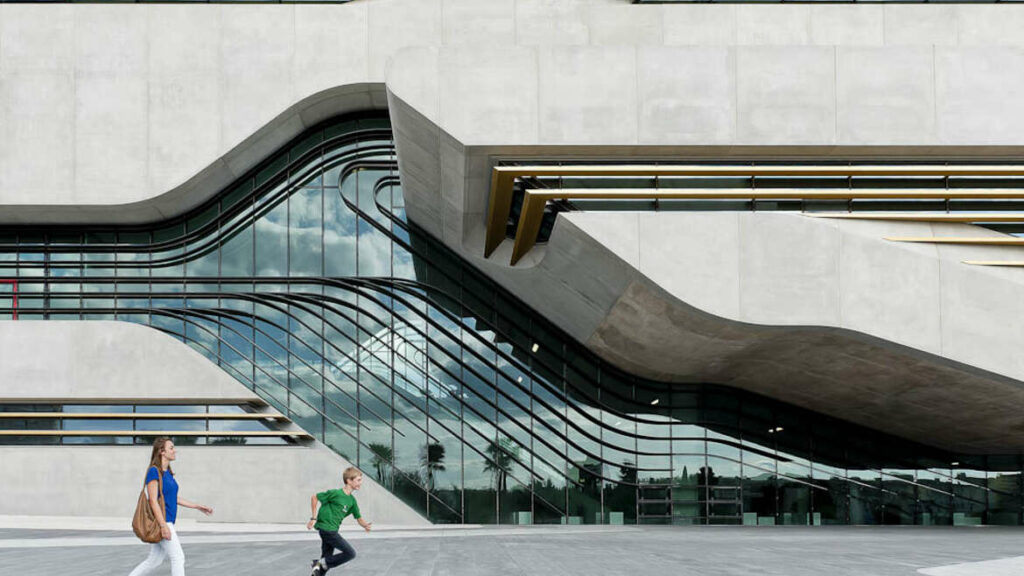
Through her early work and teaching, Zaha Hadid became an icon of neo-modern or deconstructivist aesthetics. She adopted an innovative approach to the use of space through multiple perspectives and more fragmented geometry, evoking the chaos of modern life, which translated concretely into a proliferation of "interlacing lines and curves, acute angles and superimposed planes." This rather radical technique took time to be accepted by the public, and many of her projects were not accepted, such as the Peak Club in Hong Kong (1983) and the Cardiff Bay Opera House in Wales (1994).
INTERNATIONAL RECOGNITION FOLLOWING THE ROSENTHAL CENTER FOR CONTEMPORARY ART
Zaha Hadid's first building in the United States, the Rosenthal Center for Contemporary Art in Cincinnati (2003), was an immediate hit with the public and critics. It waspraised by the New York Timesas "the most important building constructed since the end of the Cold War." The museum is a kind of kit, where a different show can be created and animated in each part.
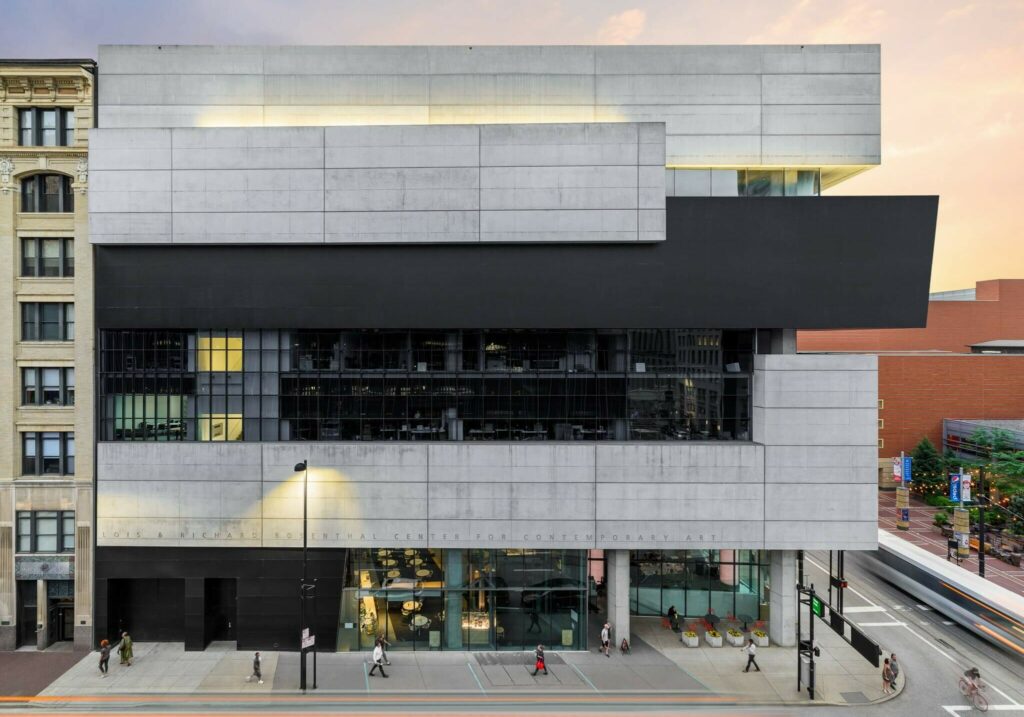
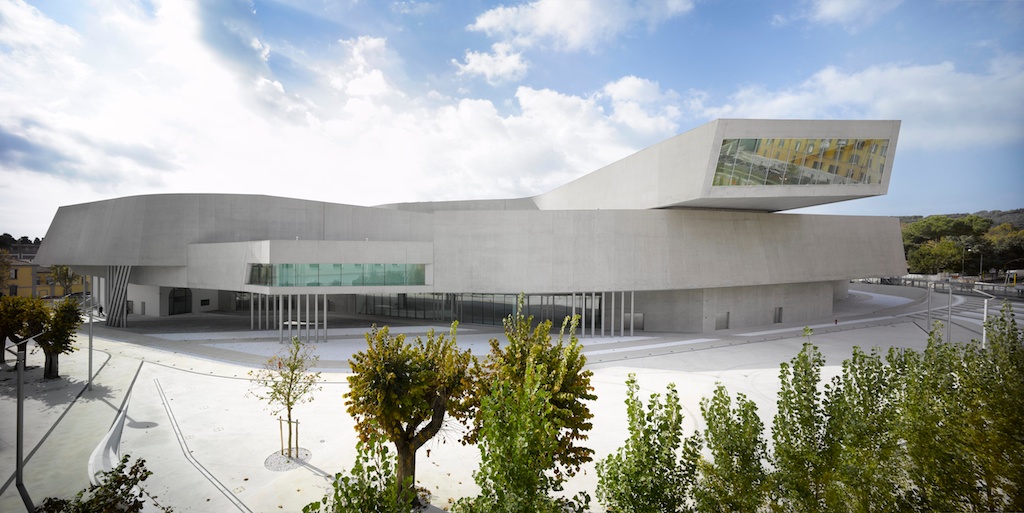
This success paved the way for Zaha Hadid to take on international projects and prestigious commissions, including the BMW Central Building in Leipzig (2005), the Phaeno Science Center in Wolfsburg (2005), and the MAXXI Contemporary Arts Center in Rome (2010). Although the architect passed away in 2016, her London-based firm still existsand has more than 400 employees.

THE THORNY CASE OF THE TOKYO OLYMPIC STADIUM
Zaha Hadid had stumbled over the Tokyo Olympic Stadium project,which had been selected by the Japanese authoritiesfor the 2020 Tokyo Olympic Games following an international competition. Unfortunately, Prime Minister Shinzo Abe reversed this decision, citing excessive design costs and a design that did not meet with unanimous approval among the Japanese population (81% of Japanese people were opposed to it, according to a poll).

In fact, the cost of this extraordinary stadium had skyrocketed to $2 billion due to an increase in construction costs on the archipelago, while unflattering nicknames rained down on the stadium designed by Zaha Hadid: "bicycle helmet," "toilet bowl," and even "turtle waiting for Japan to sink so it can swim away." As a direct consequence, the Japanese had to do without an Olympic stadium for the 2019 Rugby World Cup.
The death of Zaha Hadid in 2016 sent shockwaves through the architectural world, reflecting the profound influence she had acquired over the years through her numerous projects around the world.