Make Texture a preferred source on Google to support us
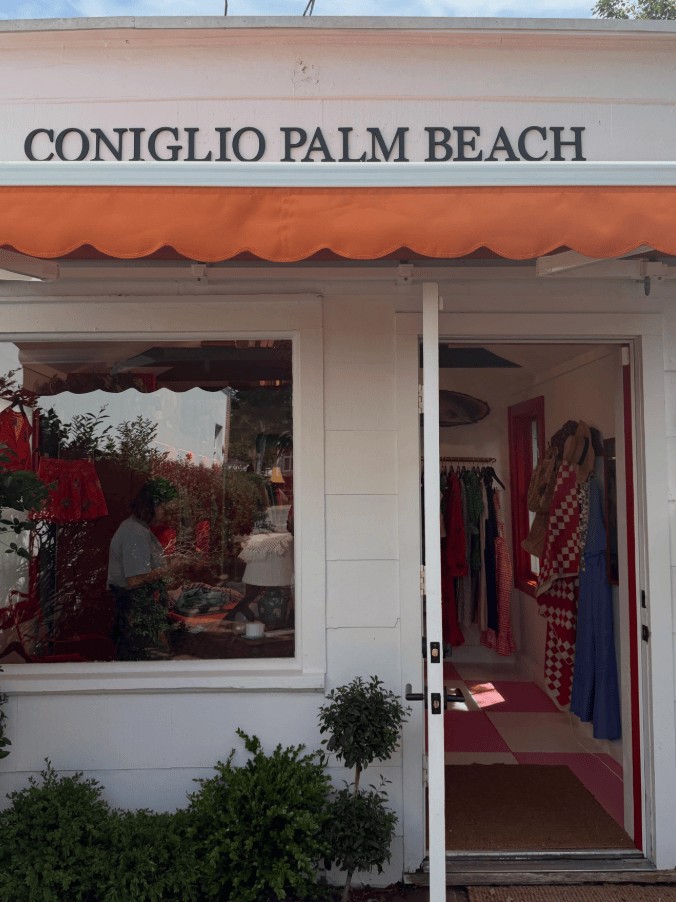
Add Texture to GoogleIt all began in 2023, in a space barely forty square meters in size. After cutting her teeth in New York as senior design director for LoveShackFancy, Christina Coniglio felt the need to return to her native Florida to launch her own brand. A graduate of the Savannah College of Art and Design, she initially conceived her brand, Coniglio Palm Beach, as an intimate creative lab. The original boutique served as a design studio. The designer worked there every day, surrounded by racks of clothing, taking advantage of this close proximity to her first customers to explain a concept that required some education: a wardrobe designed around one-size-fits-all and modularity. The idea is to do away with the rigidity of standard measurements to offer clothing that adapts to the body, rather than the other way around.
Eight months later, the low-key Florida location has transformed into a company whose revenue has doubled in the space of a year. The artisanal spirit of the early days has evolved into a structured team of twelve people, split between the bustling energy of New York—where President Cara Chen is based—and Christina Coniglio’s Southern roots. Above all, the brand has now moved beyond its beachwear label to establish a comprehensive vision of the vacation wardrobe, attracting the attention and investment of key figures in the American fashion industry along the way.
The Engineering of Adjustable Garments
The brand’s stylistic approach is based on dual functionality and discreet engineering of the cut. The label’s very first hit, the Ruffle Power Pareo, epitomizes this philosophy: the piece can be tied either as a skirt or as a traditional pareo. This concept of adjustability is reflected in the brand’s two current bestsellers: the Banyan pant, structured with a series of snap buttons, and the Move and Groove pant, both designed to flatter a variety of body types. The silhouettes introduced in the first collection—such as the long V-neck dress or the gathered mini-dress with a half-button placket—remain the cornerstones of the catalog today.
Visually, the founder draws on her roots. The Palm Beach aesthetic infuses the collections through saturated, luminous, and high-contrast prints. Yet the company generates a substantial portion of its revenue from a much more understated fabric: silk doupion. This fabric, which ranks just behind cotton gauze and cotton-wool blends in terms of production volume, allows for the creation of solid-color panels. It is a deliberately sophisticated and understated alternative, designed to appeal to a segment of the clientele that is typically resistant to exuberant patterns.
Endorsement from Industry Veterans
This highly distinctive approach to vacation wear quickly piqued investors’ curiosity. The spark came during the opening of a pop-up store in Southampton, New York. The unique layout of the space, designed around layering and accumulation, immediately caught Andrew Rosen’s eye. Introduced to the founder by Stacey Bendet, the designer behind Alice + Olivia, the businessman decided to invest on the spot.
For Rosen, the venture is based on proven business pragmatism. The resort wear market is driven by steady demand: women travel, stay at resorts, and update their wardrobes on these occasions. Impressed by the profile of a designer he considers talented, passionate, and endowed with a slightly eccentric vision, he brings much more than financial support. He makes his own infrastructure available to the young team to manage finances, human resources, logistics, and order fulfillment, while using his influence to open strategic doors that would normally be inaccessible to a brand of this age.
The Luxury Hotel Industry as a Distribution Network
While the brand primarily targets a female audience aged 35 to 55, its cheerful aesthetic allows it to transcend generational barriers. The business model heavily favors direct-to-consumer sales, with a remarkable customer retention rate: 44% of female shoppers return. The e-commerce site, launched nearly a year after the physical store opened, has seen its sales double in just eighteen months.
On the wholesale front, Coniglio Palm Beach cultivates exclusivity. Rather than expanding through traditional retailers, the executive team has targeted the ecosystem where its clientele naturally thrives: the luxury hospitality industry. The brand is now carried in sixty prestigious establishments worldwide, including several Four Seasons and Montage properties, Eden Rock in Saint Barthélemy, and The Rooster on the Greek island of Antiparos. In Palm Beach, the partnership with The Colony Hotel extends to the creation of exclusive pieces and includes, for the upcoming season, a monthly commitment to an entire suite, for which the brand will redesign the curtains and lampshades.
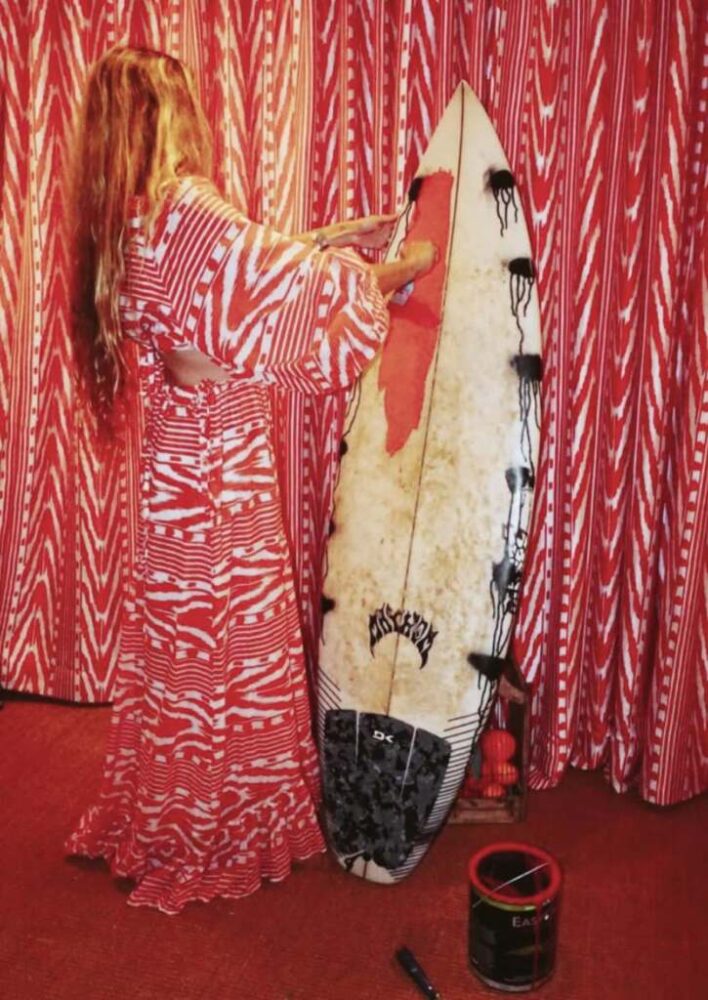
Beyond luxury ready-to-wear, an unexpected segment is experiencing explosive growth: souvenir merchandise. Lighters, bumper stickers, and screen-printed sweatshirts and T-shirts inject a dose of pop culture into the brand’s universe. The timely launch of a T-shirt emblazoned with “It’s Better in New York”—just as the Knicks won the championship—resulted in hundreds of immediate sales, demonstrating the company’s ability to respond to current events.
Moving Beyond Summer
The current goal is to move the brand beyond mere beachwear seasonality. The design studio is gradually incorporating fabrics suited for transitional seasons. Thick quilted jackets, lightweight knits that can be worn year-round, and brushed flannel are appearing on the racks, ahead of the upcoming introduction of cable-knit sweaters and heavier intarsia knits.
This expansion also extends to product categories. Already established in the children’s and home goods segments—with bedding, table runners, towels, and tablecloths—the brand is preparing to enter the denim and swimwear markets. The schedule for the coming months looks packed, with the launch of a line for teens in December and a foray into men’s apparel planned for May.
To keep up with this pace, production has gone global. While most manufacturing is outsourced to India, the brand also relies on China and Portugal. Souvenir products, however, remain locally produced, screen-printed in West Palm Beach, with additional textile printing done in the Bahamas whenever capacity allows. Numerous new hires have been made over the past two months in the design and production departments to accommodate this scale-up and respond to the many partnership inquiries.
The brand’s physical footprint is following this upward trajectory. The original space has given way to a vast flagship store of nearly 185 square meters on Royal Poinciana Way, complemented by a studio relocated to Antique Row in West Palm Beach. During the summer, the team will set up shop in a seasonal boutique in East Hampton. While the Southern United States remains the priority for future company-owned openings, the brand is actively preparing to expand beyond its home turf. Starting in 2025, it will occupy a 185-square-meter space in the heart of Bloomingdale’s department store in New York, will launch on the Moda Operandi platform within the next few weeks, and plans to open pop-up stores across Europe starting next summer.