
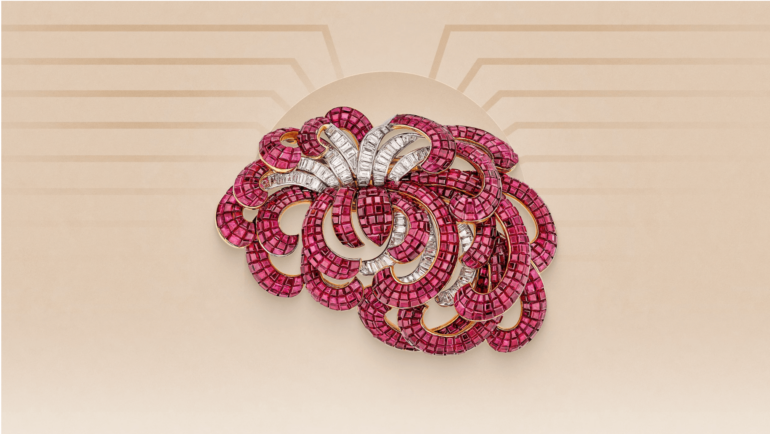
The renowned French jewelry house Van Cleef & Arpels is celebrating its long and rich relationship with Japan through an exhibition in its Heritage Gallery, located on the prestigious Place Vendôme in Paris. The exhibition, which runs until June 15, explores the profound influence of Japanese culture on the brand's creations since the mid-19th century, a period marked by a growing Western fascination with the arts and crafts of the Land of the Rising Sun.
This fascination with Japan, triggered by the country's opening up to the outside world, captivated Europe through a craze for exotic Japanese objects. Parisians of the time, as evidenced in the novel Au Bonheur des Dames, were particularly enamored with this distant culture, characterized by pagodas, dragons, and unique floral motifs, often made from materials unheard of in the West.
A slow integration into Western jewelry
Japan's influence on fine and applied arts in Europe has been significant, although slower in jewelry than in other sectors, partly because Japanese tradition did not emphasize jewelry. Instead, sophistication was found in ornate hairstyles, luxurious clothing, and obi (belts used to fasten traditional garments such as the famous kimono). We would like to take this opportunity to highlight the fusion work on kimonos by the Parisian brand Baucis.

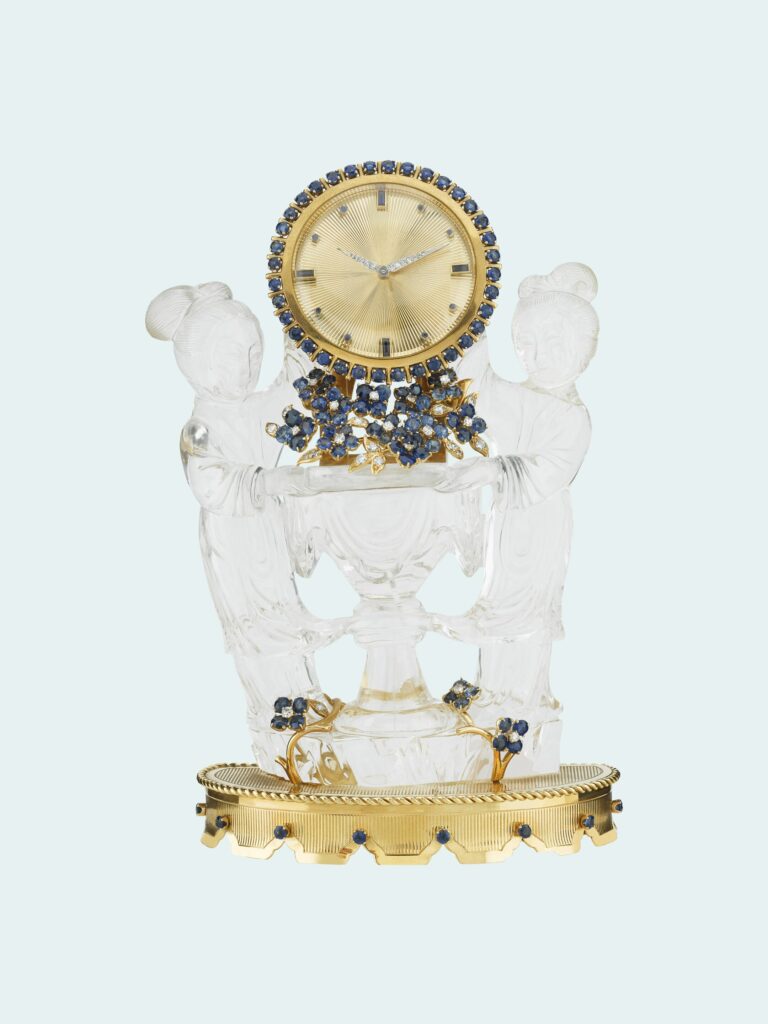
The exhibition at the Heritage Gallery presents thirty iconic pieces, created between 1923 and 2012, from the Van Cleef & Arpels heritage collection. It is complemented by precious archival documents. Among the pieces on display, a table clock from 1957 is particularly eye-catching, featuring a pair of women in kimonos sculpted from rock crystal. Other pieces, such as the Morita clip inspired by "dogu" statuettes and a 1945 bracelet evoking the structure of Japanese screens, demonstrate how Japanese motifs and aesthetics have been integrated into Western jewelry design.
Seeking excellence in local craftsmanship
The exhibition also highlights artistic collaborations between Van Cleef & Arpels and Japanese artisans. Since 2004, the house has given Hakose San carte blanche to create designs for butterfly clips, an iconic motif of the brand since 1906. More recently, the talent of artist Kunihiko Moriguchi, a master of traditional Japanese painting and textile dyeing, was called upon to create two precious boxes, evoking the motifs of ceremonial kimonos.
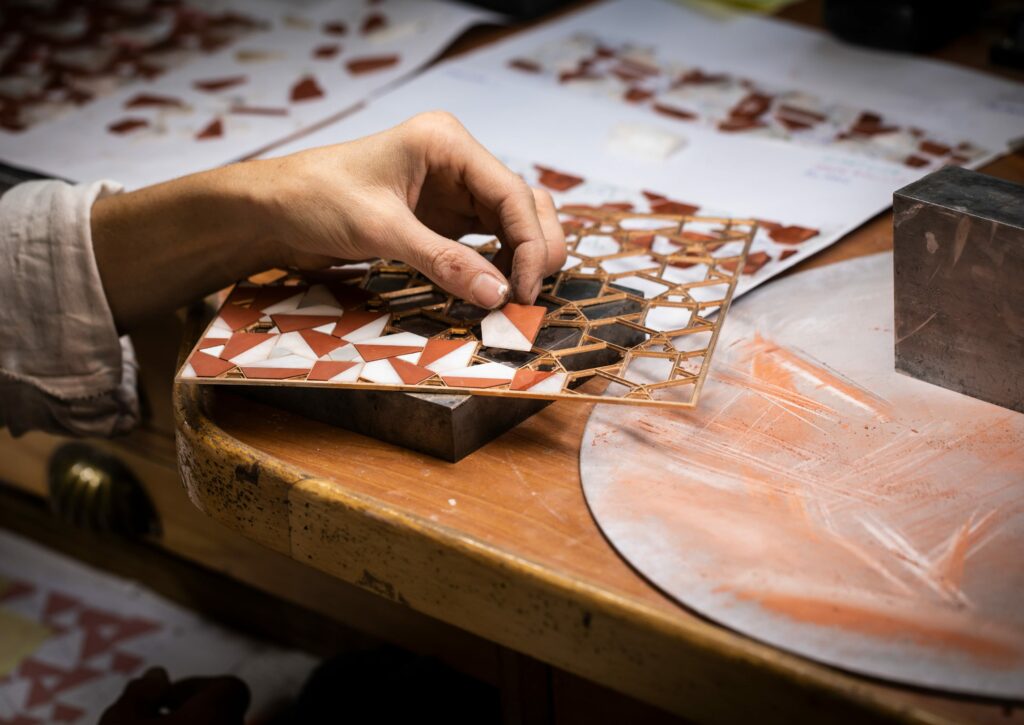
This exhibition not only showcases the exquisite pieces created by the jewelry house, but also celebrates a cultural bridge between the West and the East, enriched by three centuries of expertise and mutual fascination. It demonstrates how Van Cleef & Arpels has skillfully and respectfully integrated elements of Japanese culture into its creations, paying tribute to a country that continues to inspire and amaze.