Being modern is not a fashion, it is a state of mind," said Le Corbusier. "You have to understand history, and those who understand history know how to find continuity between what has been, what is, and what will be." Nearly a century has passed since the French-Swiss architect Le Corbusier (1887-1965), born Charles-Édouard Jeanneret, made this statement, and yet his legacy is such that his designs still seem entirely contemporary. Arguably the most brilliant and controversial architect of the 20th century, revered by architects around the world, Le Corbusier designed more than 300 buildings and wrote no fewer than 24 books. A passionate writer, theorist, sculptor, furniture designer, and painter, his legacy continues to influence our society.
Why was Le Corbusier so innovative? UNESCO outlines an idea by viewing his work as "testimony to the invention of a new architectural language that broke with the past." His contributions to modernism and the international style are the most significant, as they both represent a major leap forward from the architectural styles of the time.His designs rejected superfluous ornamentation (an early example of Ludwig Mies van der Rohe's phrase, "less is more") and are characterized by geometric shapes, asymmetrical compositions, horizontal planes, and open floor plans.Modern architecture is also characterized by the use of industrial materials—concrete, steel, and glass—to promote natural lighting, as well as a tendency to use gray, white, or neutral color palettes. Le Corbusier's ideas were shaped by important movements of the early 1900s, including Art Nouveau and the Bauhaus. Whatever project he worked on, whether private villas, large social housing complexes, churches, or public monuments, his designs were always original. Below is a selection of ten of his works from around the world.
Villa Savoye – Poissy, France
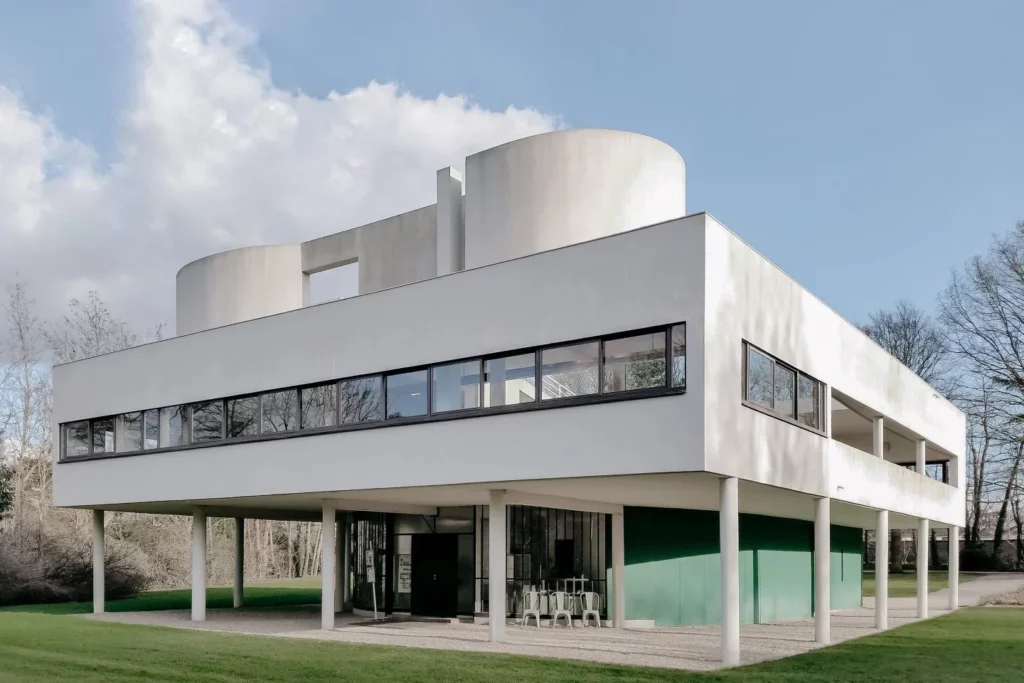
The Villa Savoye, originally designed by Le Corbusier and his cousin Pierre Jeanneret as a vacation home for the Savoye family, is located in a field surrounded by woods on the outskirts of Paris. The villa is considered pioneering because it clearly embodies the five points of new architecture formulated by Le Corbusier in 1927: pilotis, or columns, used to raise the base of buildings; the absence of interior supporting walls; long horizontal ribbon windows; a facade freed from the supporting structure; and a flat roof that can be used as a garden or terrace. The Villa Savoye is located at 82 rue de Villiers in Poissy.
Villa La Roche – Paris, France
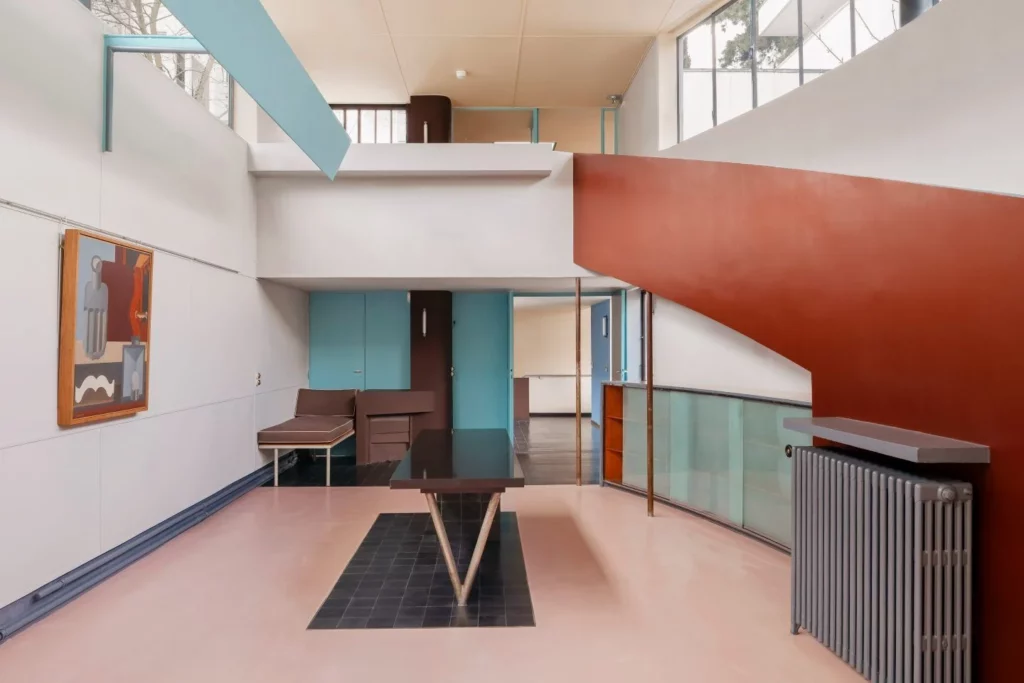
Villa La Roche, also known today as Maison La Roche, is a pair of semi-detached houses built for Albert Jeanneret, Le Corbusier's brother, and Raoul La Roche, a collector of Cubist art and close friend of the architect. The project is widely considered to be the first truly modernist house, with its unusual geometric shapes, minimalist aesthetic, and muted color palette. The villa now serves as a museum and exhibition space for the Le Corbusier Foundation.
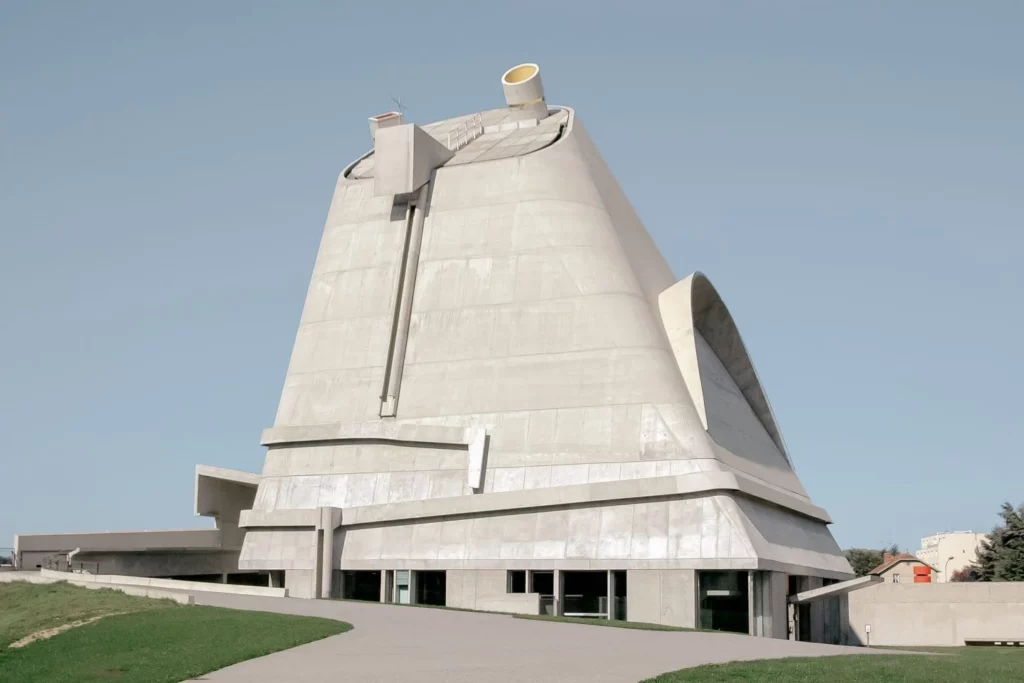
Saint-Pierre – Firminy, France
Le Corbusier's last major work, whose design began in 1960, this concrete church located in the small French town of Firminy was completed 41 years after his death. It is located in a former mining and industrial area, which explains the logic behind its shape: the building looks more like a twisted power station than a place of worship.When designing the building, Le Corbusier stated that the church should be "vast so that the heart feels at ease, and high so that prayers can breathe."
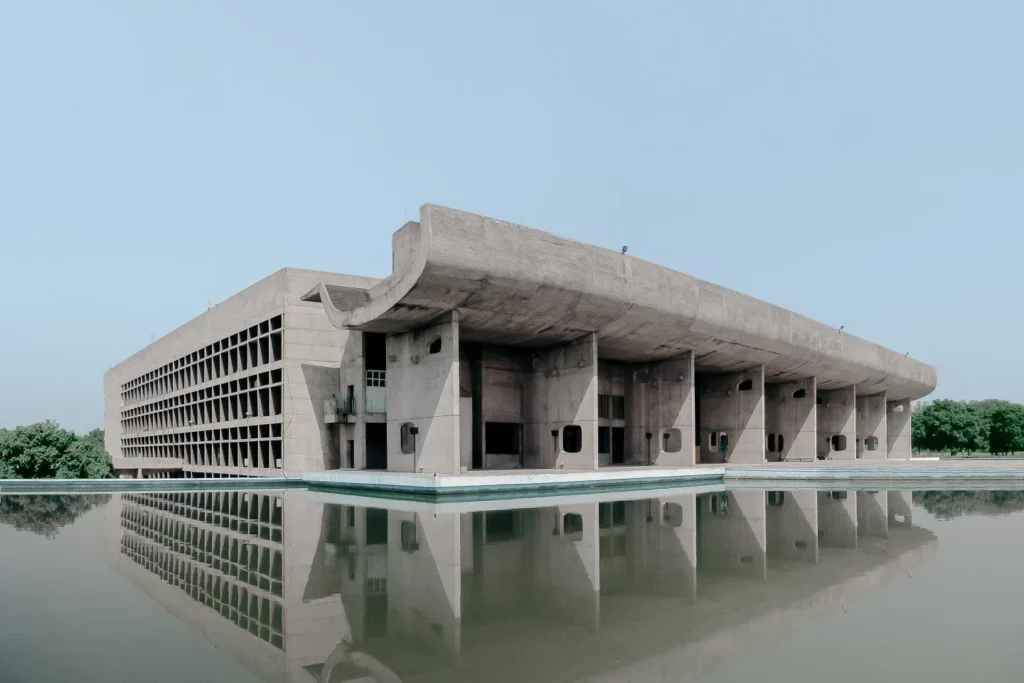
Palace of the Assembly – Chandigarh, India
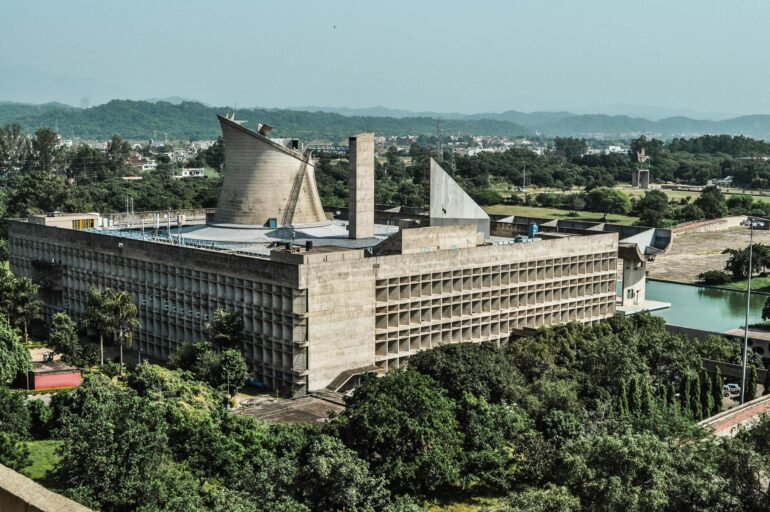
This monumental structure is part of the Capitol Complex, a large government complex comprising three buildings in northern India, including the Secretariat and the High Court. This gigantic 250-meter-long building consists of eight floors of raw concrete, with the Himalayan mountains as a backdrop. The "Palace of the Assembly" implements Le Corbusier's modernist theories on a huge scale.
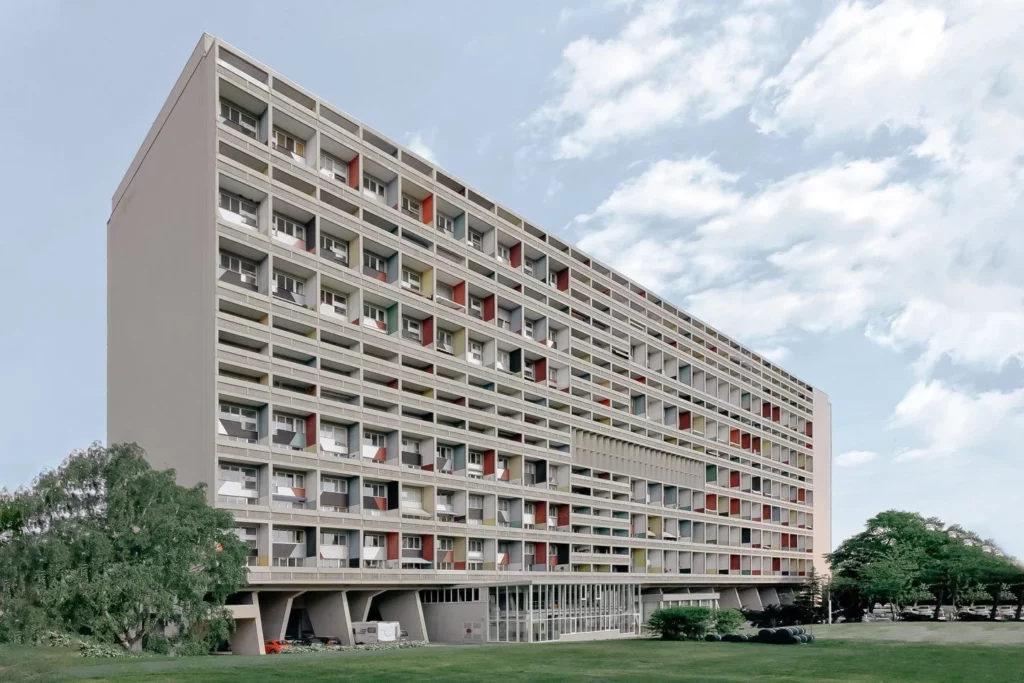
Corbusier House (Unité d’Habitation) – Berlin, Germany
Due to extensive bombing, Berlin experienced a severe housing crisis after World War II. In direct response to this situation, Le Corbusier designed a high-rise social housing project consisting of 530 apartments spread over several floors, symbolizing Germany's modernization after the destruction of war. The concept of the "Unité d'Habitation" was first successful in Marseille, where the building was considered the most influential example of Brutalism of all time. A few years later, in 1959, the Unité d'Habitation was built in Berlin's Westend district to create better living conditions for its residents.
National Museum of Western Art – Tokyo, Japan
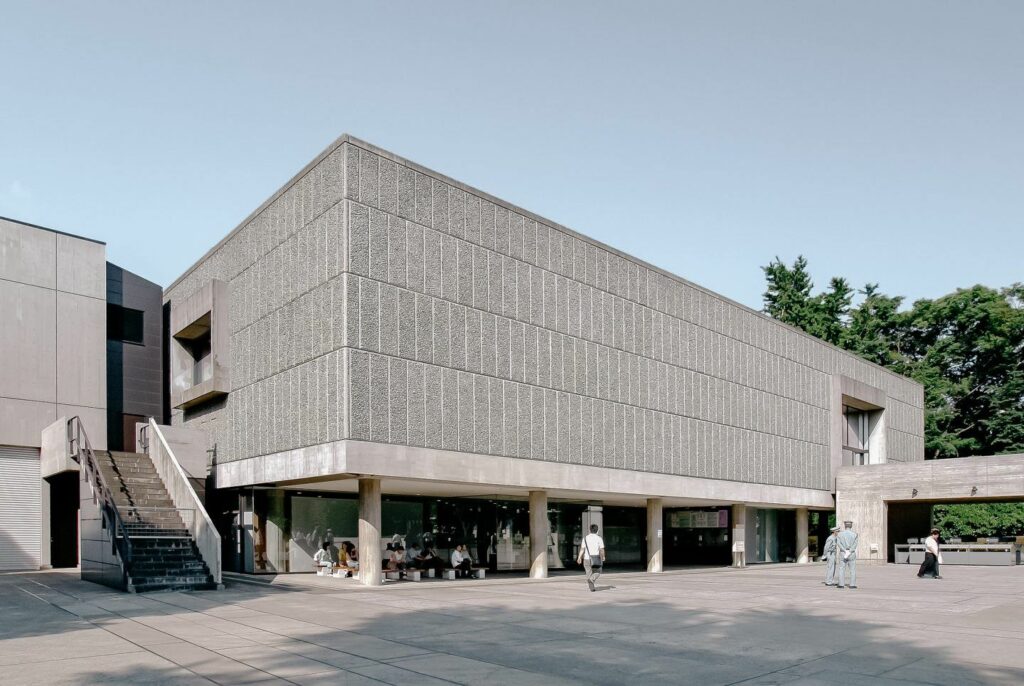
Located in central Tokyo, this public art gallery has become a symbol of brutalism in Japan. The National Museum of Western Art consists of prefabricated reinforced concrete panels resting on steel consoles, with the central galleries arranged in a square layout. According to a review in The New York Times, the building itself has "artistic significance and beauty" that rivals the paintings it houses, which are not painted by just anyone: Picasso, Manet, and Pollock.
Sainte-Marie de la Tourette Convent – Éveux, France
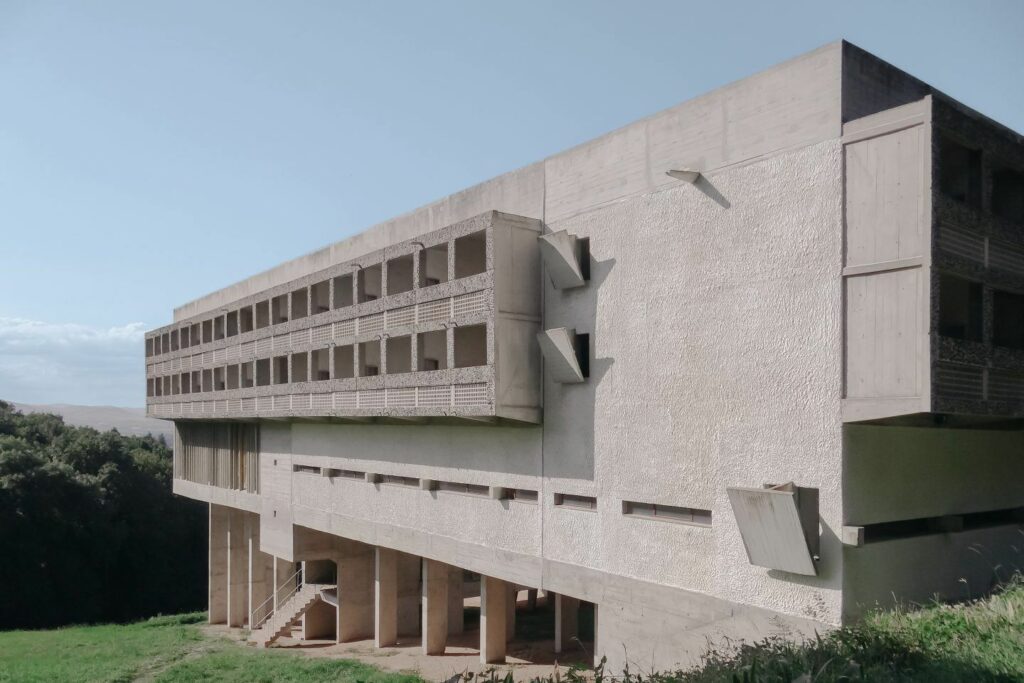
Listed as a UNESCO World Heritage Site in 2016, this Dominican monastery was designed as an autonomous residence for its community of monks. The complex building comprises many different spaces: one hundred individual rooms for worship and solitary rest, a communal library, a rooftop cloister, a church, and classrooms. Each of the one hundred rooms has an outward-facing balcony, promoting the well-being of its occupants, with horizontal bands of windows designed to provide even light and views of the surrounding nature.
House of Culture – Firminy, France
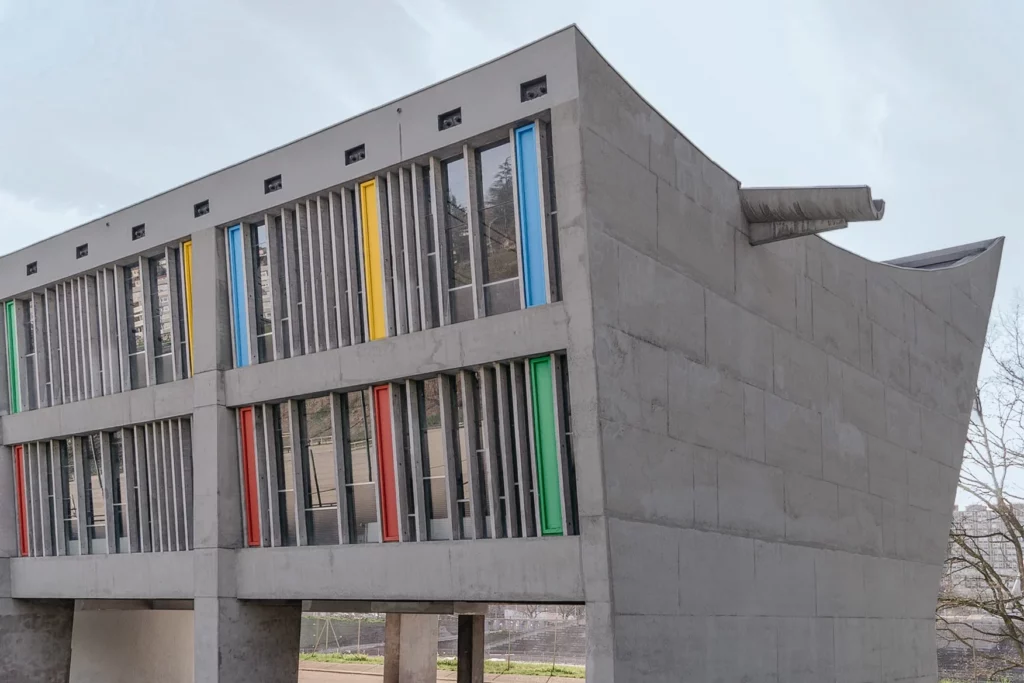
This cultural center, located in Firminy near Saint-Pierre Church, was completed in the year of Le Corbusier's death. The 112-meter-long building was constructed on an artificial hill and features an asymmetrical curved roof that joins the sloping west facade, allowing for tiered seating to be installed inside the center. The Maison de la Culture houses an auditorium, a music hall, a theater, and an art gallery. The exterior windows are interspersed with sporadic panels of primary colors.
Le Corbusier Pavilion – Zurich, Switzerland
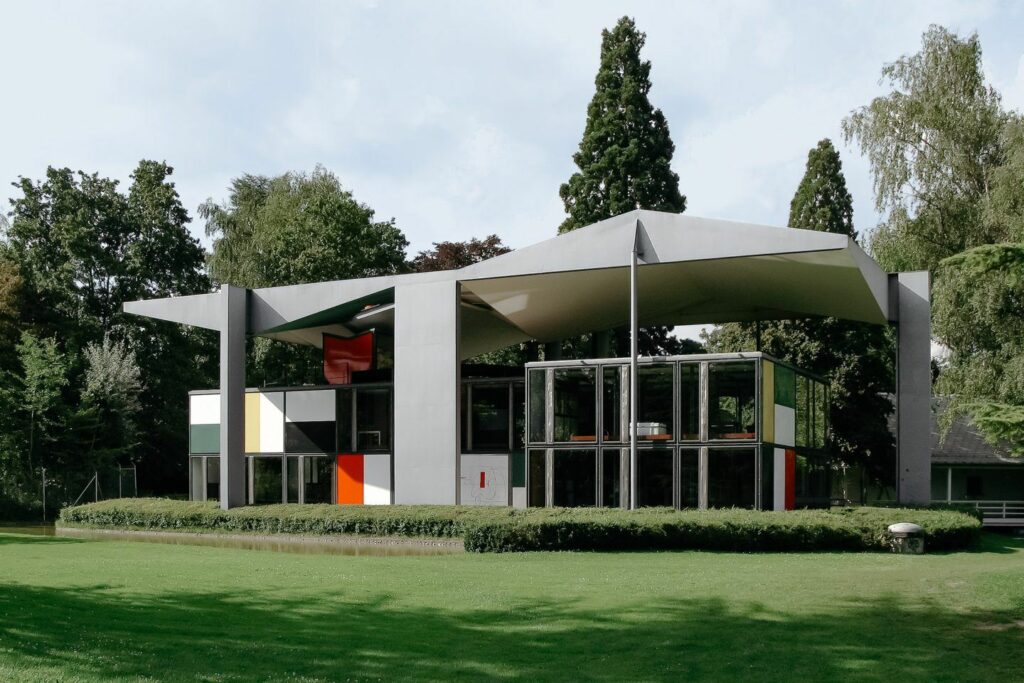
Also known as "Maison Le Corbusier," this project was commissioned by interior designer Heidi Weber to house her own home and art collection. The building is located on a lawn by Lake Zurich and is made entirely of glass and steel. Characterized by its floating roof and colorful Rubik's Cube-like panels, the residence represents a radical departure from Le Corbusier's original 1931 Architectural Polychromy, his framework for the use of purist color schemes.
Notre-Dame-du-Haut – Ronchamp, France
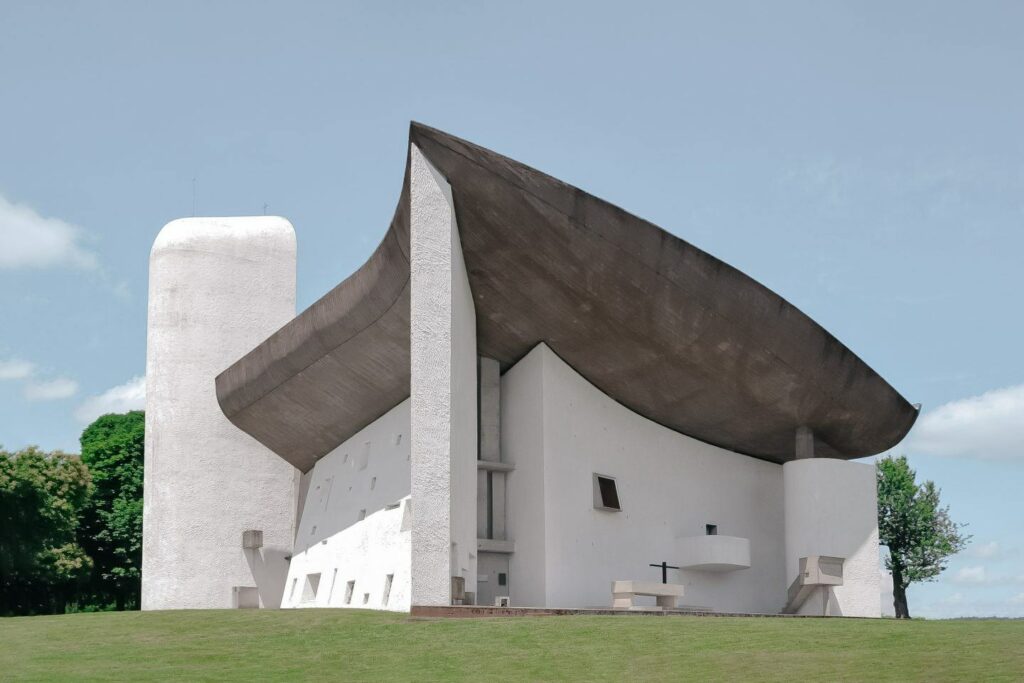
This Roman Catholic chapel, one of Le Corbusier's most radical projects at the end of his life, departs from the functionalist style of his early works. The chapel was built on the site of a pre-existing pilgrimage site that was completely destroyed during World War II. A floating concrete roof is supported by thick curvilinear walls, which feature an arrangement of irregularly shaped windows.