
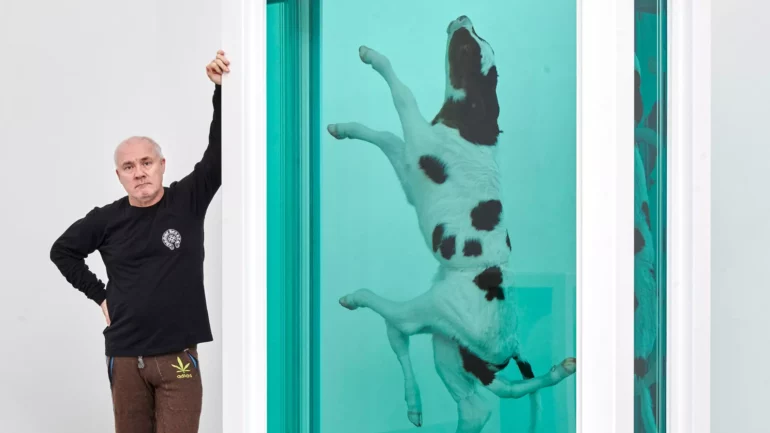
Damien Hirst, the British contemporary art star who burst onto the scene in the 1990s, continues to command astronomical prices. Provoking scandal both with his personality and his macabre, megalomaniacal works, he has managed to exhibit the latter all over the world, from London's Tate Modern to the Gagosian galleries.
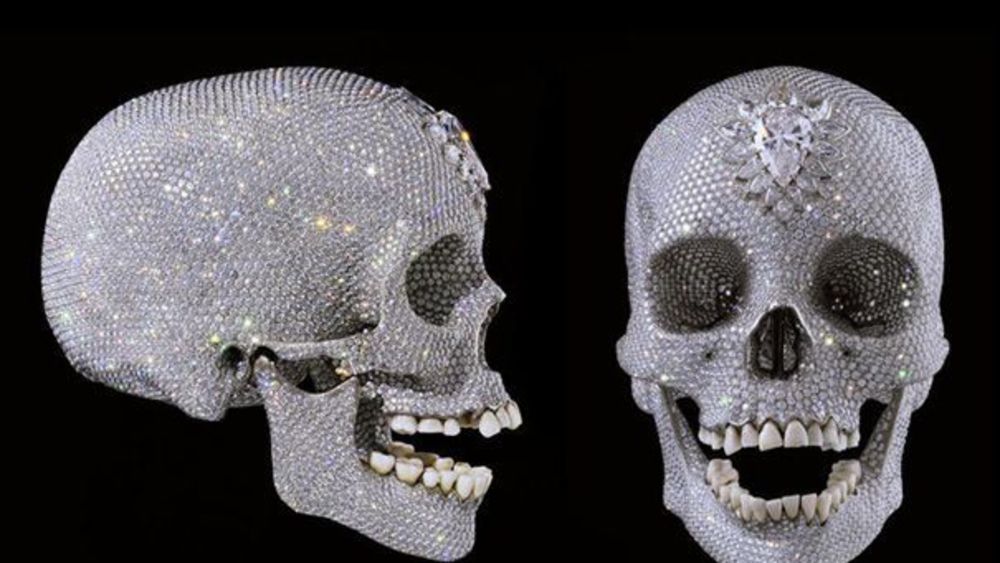
Hirst made a name for himself by cutting dead animals in half and then preserving them in formaldehyde. In museums, these carcasses of sheep, cows, and sharks are displayed in large aquariums with ocean-blue reflections and unique designs. He is also often remembered for his skull entirely covered in diamonds, considered the most expensive work of art in the world, which has greatly inspired the fashion world.
Death and destruction
Damien Hirst is obsessed with death. His cadaverous works show a harsh reality that everyone seems to want to forget. Despite all our technological, economic, social, and legal progress, we remain powerless in the face of this terrible truth: mortality. Walking through an exhibition dedicated to Damien Hirst is a cruel reminder of this fact.
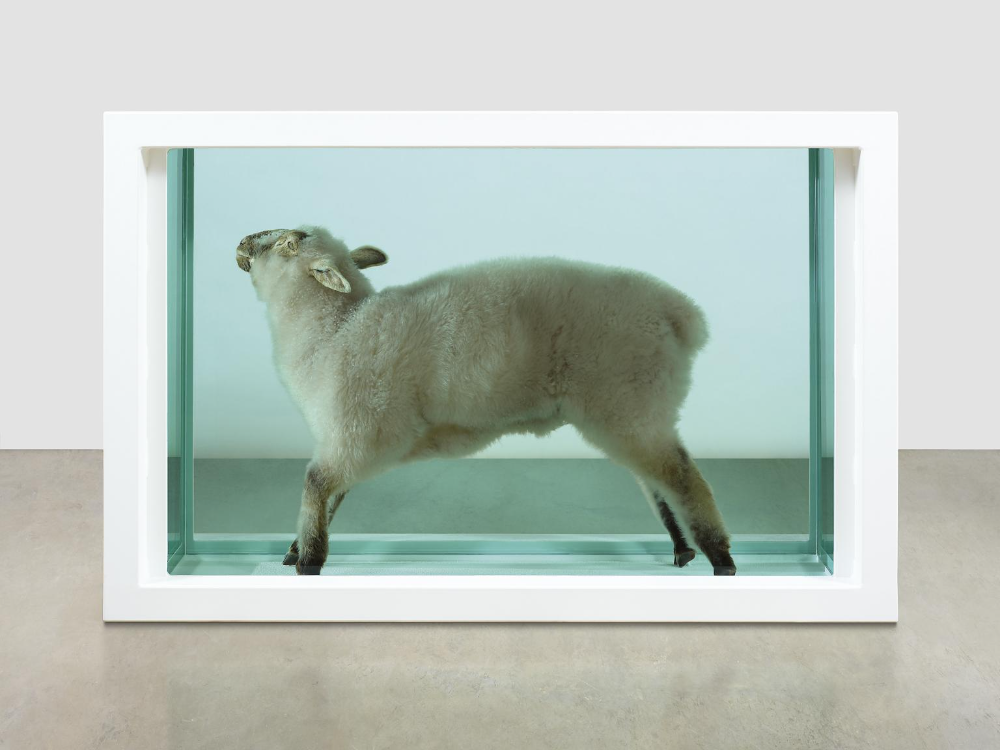
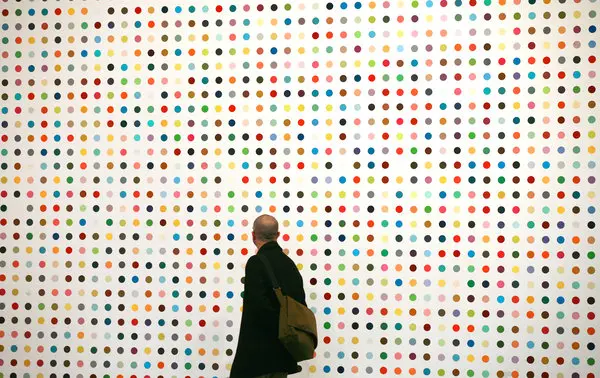
It is also an opportunity to enjoy a truly striking visual experience that cannot be found anywhere else. Unfortunately, theYoung British Artistmovement struggled to reinvent itself at the turn of the 2010s. These spot paintings were produced in excessive quantities, flooding the art market during the 2009 financial crisis as former buyers sought to offload them at bargain prices. As a result, Damien Hirst's market valueplummeted.
The eternal criticism of the financialization of the art market
One of the main criticisms levelled at Damien Hirst concerns his overly business-like approach. British newspapers have no hesitation in naming him the richest artist in the UK. His fortune is estimated to be worth several hundred million euros. Others outright reject his status as an artist, judging his work to be far too conceptual.

What would be a vast hoax was orchestrated by the financial world, with Damien Hirst using the art market as a simple stock market indicator by secretly organizing the repurchase of his works by mysterious holding companies in order to perpetuate the myth. Daniel Buren had this to say about the English artist:
In the 1980s, everything changed. Young artists said to themselves, "If I can't make a living from my art in three years, I'll go back to the bank!" What surprised us older artists the most was that they succeeded... So there are some things I got very wrong: I never imagined that cynicism could be so powerful.
Museums and institutions would have participated in this movement by not wanting to miss out on contemporary art, in order to always embody the avant-garde. These criticisms may seem conspiratorial, but there is some truth to them: there was clearly a "Hirst bubble" for several years, as there was for Murakami and Jeff Koons. Nevertheless, his work remains a monumental visual shock with a real foothold in modern art. You can see more of Damien Hirst's work onArtsy.