
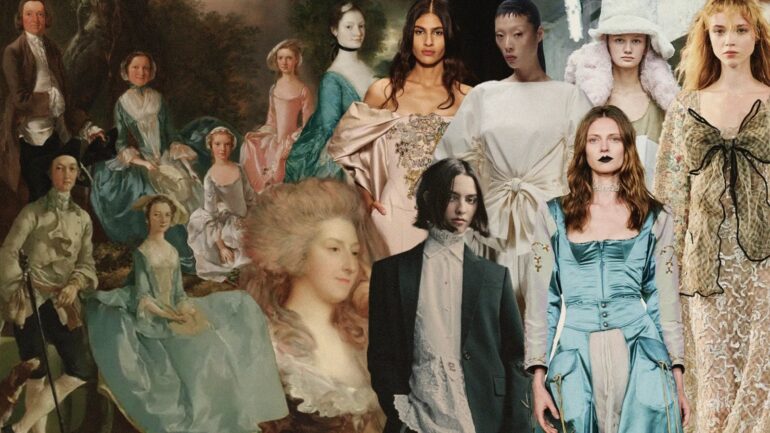
The Frick Collection orchestrates a unique encounter between the art of appearance and pictorial virtuosity, exploring the intimate link between clothing, posture, and identity in the work of Thomas Gainsborough. Through a selection of iconic portraits, the New York institution deciphers the subtle relationship between fashion and social status in the Age of Enlightenment.
A symphony of silk and prestige
Entitled Gainsborough: The Fashion of Portraiture, the current exhibition brings together twenty-five major works that testify to the genius of the British artist. Among the masterpieces is the illustrious Mr. and Mrs. Andrews, an exceptional loan from across the Channel, as well as more intimate paintings, such as this charming depiction of a Pomeranian dog and its puppy. Opened on February 12, this exclusive exhibition will remain on display until Memorial Day, May 25, offering visitors a unique opportunity to admire these masterpieces. Access is by strict appointment only to ensure an optimal viewing experience.
The virtuosity of the material
Born in 1727 into a family of cloth merchants, Gainsborough had an innate understanding of textiles. This expertise is reflected in his absolute mastery of rendering silks, satins, and lace, transforming the surface of the canvas into a tactile experience. The National Gallery highlights the importance of Mr. and Mrs. Andrews (circa 1750), a hybrid work in which the portrait almost fades into the background before the majesty of the agricultural landscape. Paradoxically, the artist harbored a certain weariness for portrait commissions, once confiding his desire to escape to a peaceful village to devote himself solely to his "Landskips" (landscapes) and his viola da gamba.
An aesthetic of suggestion
In contrast to the "Fashioned by Sargent" exhibition, which focused on the juxtaposition of paintings and period costumes, the Frick Collection's approach is one of simplicity. Chief curator Aimee Ng has devised a scenography without costume reconstructions, inviting viewers to focus on "painted fashion." The aim is to understand how clothing, through its drapery and composition, constructs the social identity of the subject directly on the canvas, without the artifice of the physical object.
Loaned treasures and major acquisitions
The event benefits from the support of prestigious institutions such as the National Gallery, Tate Britain, and the Huntington. The Frick Collection is also taking this opportunity to celebrate the enrichment of its own collection with the promised arrival of Mrs. Alexander Champion (1767). This portrait, on display in the permanent galleries, fits naturally into the exhibition's narrative, highlighting the museum's ongoing acquisition efforts.

Style icons and reflections of society
The exhibition highlights prominent figures whose clothing tells as much of a story as their faces. Visitors will be struck by the elegance of Mary, Countess Howe, draped in pink, and the imposing presence of Bernard Howard, future Duke of Norfolk, dressed in black. Both works are being exhibited publicly for the first time. The societal dimension is also present with the portrait of Ignatius Sancho, a man of letters, abolitionist, and notable black figure of the 18th century. This diverse collection allows us to address, beyond aesthetics, issues of class and representation in the Georgian era.
The art of textile illusion
Gainsborough did not simply copy reality; he sublimated it, sometimes dressing his models in imaginary costumes to serve the composition. Unlike his rival Joshua Reynolds, who often delegated the painting of clothing to specialists, Gainsborough used pictorial material as a social witness in its own right. The visit is accompanied by a rich cultural program, including dialogues between Aimee Ng and designer Isaac Mizrahi, and analyses by Anna Reynolds, Surveyor of The King's Pictures, extending the reflection on the style and method of the English master.
Practical notebook
The exhibition is being held at the Frick Collection, located at 1 East 70th Street in Manhattan. The ticket office imposes fixed time slots to ensure a smooth visitor experience. Detailed information about lectures and satellite events is available through the museum's official channels.