
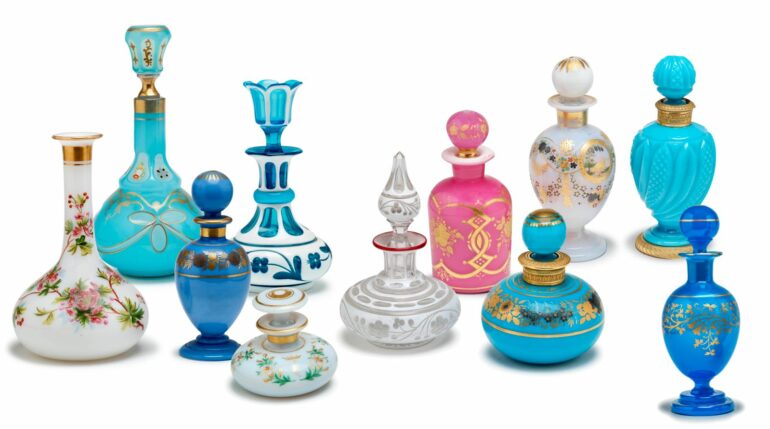
Opalines, these delicately tinted glass objects, embody an art form that is both functional and decorative. Popularized in the 19th century, they symbolize the refinement of the Romantic era. Today, they still captivate with their pastel charm and timeless elegance.
Birth and growth in glass art
The history of opaline glass began in the early 19th century, at a time when the rising bourgeoisie was seeking refined decorative objects. Influenced by the Empire style and then the Restoration, French manufacturers such as Baccarat, Saint-Louis, and Clichy began producing these unique pieces.
Their name comes from their translucent, milky appearance, reminiscent of opal, although they are made of glass tinted with metal oxides. This ingenious technique makes it possible to reproduce the effects of porcelain, which was highly prized at the time, while innovating with new colors. France thus established itself as a leader in the art of glassmaking in the 19th century, exporting these pieces throughout Europe, where they adorned aristocratic salons.
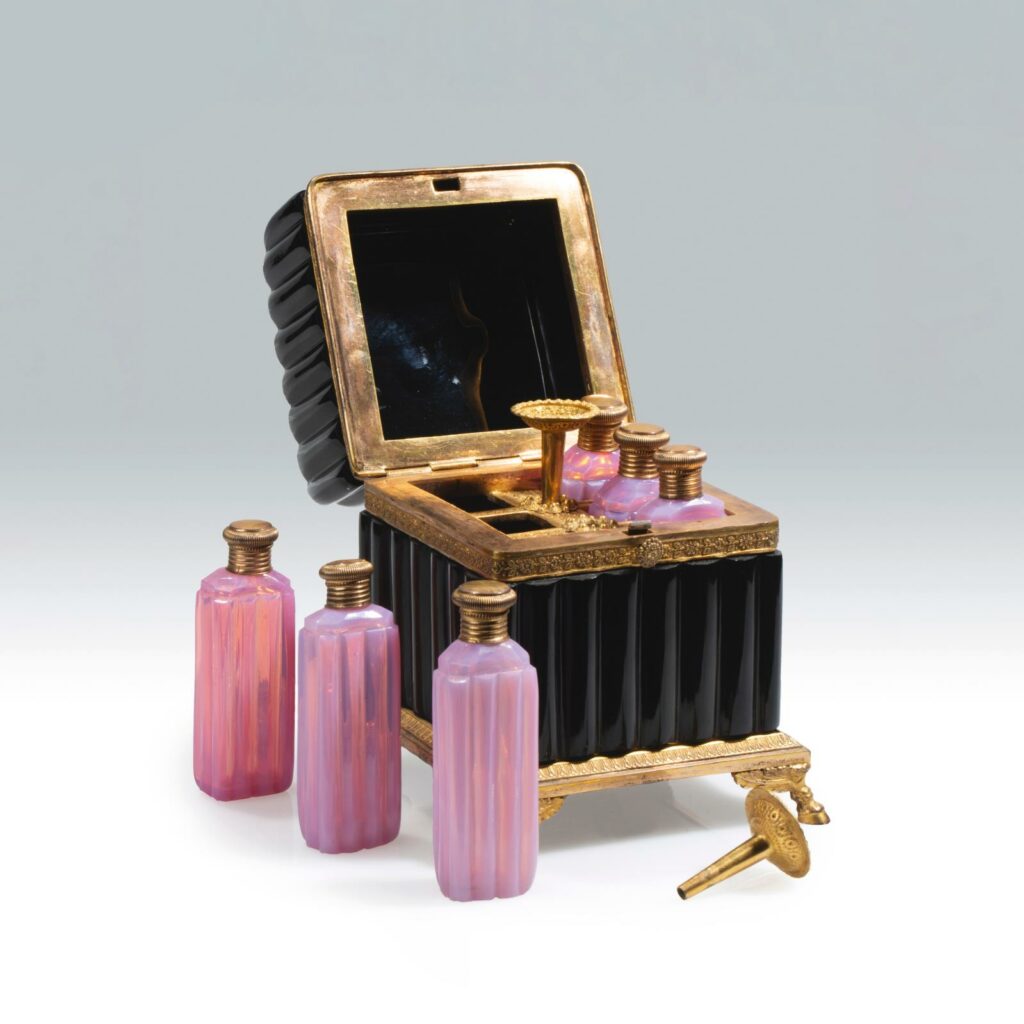
Iconic colors and shapes
Opalines are distinguished by their soft and varied hues:
- Sky blue: often associated with classic-style vases and carafes.
- Powder pink: used for elegant cuts or jewelry boxes.
- Emerald green and pale yellow: highly sought after for candy boxes and perfume bottles.
The shapes are as varied as their uses: vases, clocks, lamps, decanters, candle holders, candy dishes, and even decorative eggs. A famous example is the "Medici bowl," produced by Baccarat, which combines neoclassical shapes with hand-painted gold details.
Some famous examples
- Blue opaline vases from the Saint-Louis factory: Founded in 1586, the Saint-Louis factory is renowned for its opaline creations. Among these, blue opaline vases decorated with gold were highly prized in the 19th century. These pieces, often Medici-shaped, are a testament to the craftsmanship of the time.
- Decorative opaline eggs from Baccarat: The Baccarat crystal factory, founded in 1764, produced opaline objects, including decorative eggs. These pieces were often given as gifts and could contain sweets or jewelry. Their finesse and quality make them highly sought after by collectors.
- Opaline and gilt bronze clocks: In the 19th century, opaline clocks, combining translucent glass and gilt bronze bases, were centerpieces in bourgeois living rooms. These elegant clocks reflected the taste of the time for decorative objects that combined functionality and aesthetics.
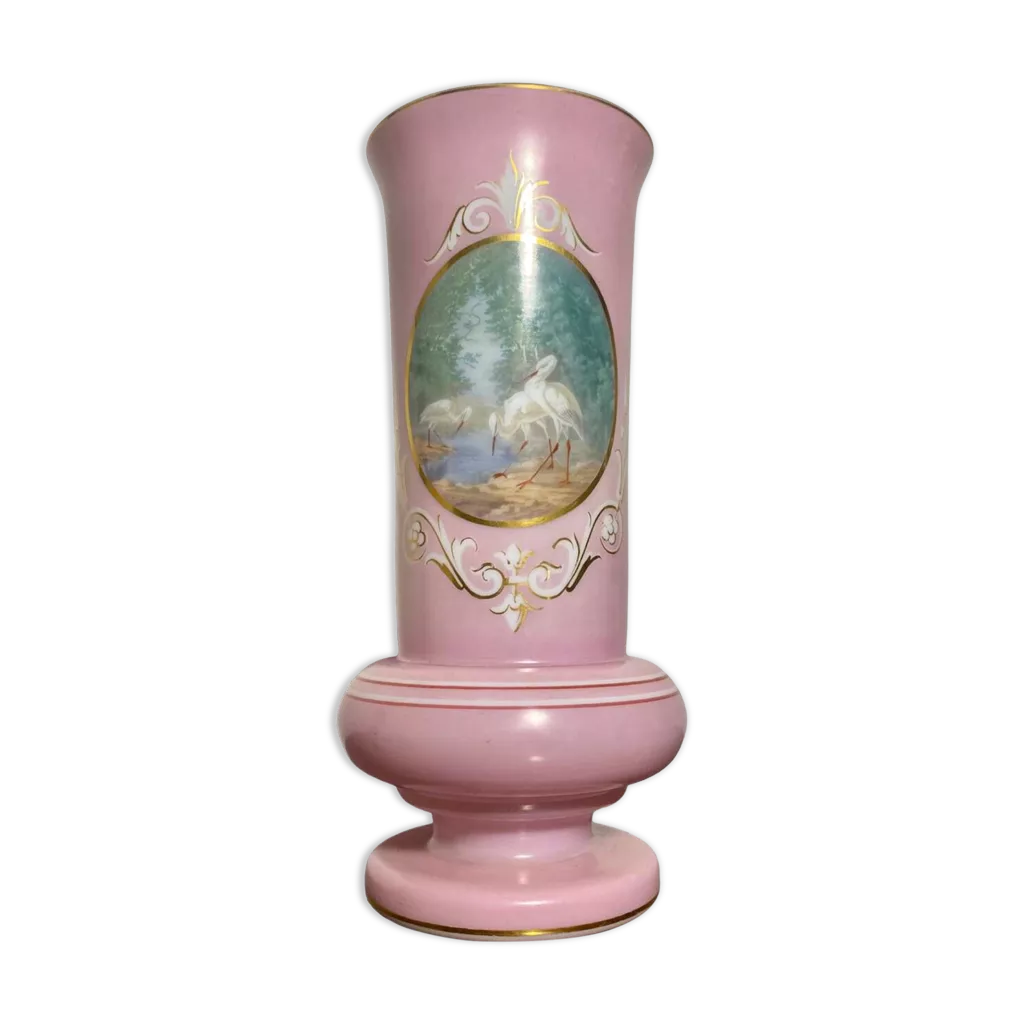
These creations reflect a taste for measured opulence, characteristic of the Romantic style.
The decline and rebirth of opalines
With the advent of industrial production at the end of the 19th century, opaline glass gradually fell into disuse. However, its rarity and artisanal quality sparked renewed interest in the 20th century. Today, it is coveted by collectors and lovers of vintage design.

Auctions regularly hold surprises. A pink opaline lamp by Baccarat, for example, recently fetched €15,000 at a sale in Paris. The most sought-after pieces remain those produced by the major houses, signed or accompanied by certificates of authenticity.
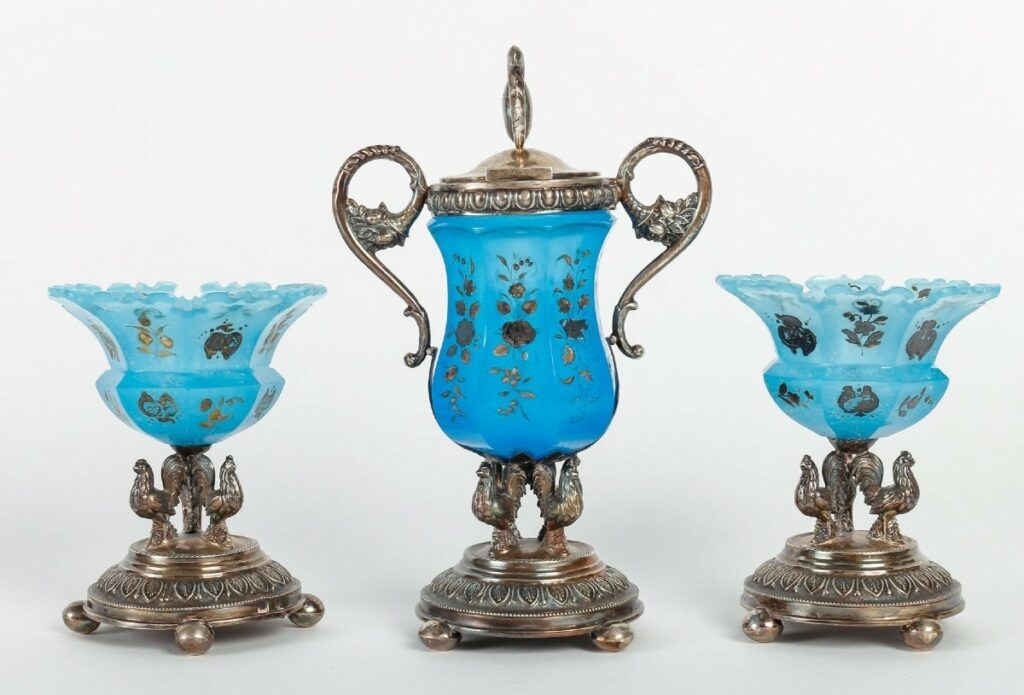
Opaline glass fits perfectly into modern interiors. A sky blue vase can enhance a minimalist console table, while a pink opaline lamp creates a warm atmosphere in a bedroom. Their ability to combine tradition and modernity makes them ideal for lovers of eclectic decor. They remind us that art is not limited to history: it integrates and evolves with our daily lives.
Tips for collectors and enthusiasts
To start an opaline glass collection, it is essential to pay close attention to the details:
- Check the overall condition: the absence of chips or repairs is an essential criterion.
- Choose designer pieces: Baccarat and Saint-Louis, in particular, guarantee superior authenticity and quality.
- Explore specialty markets: flea markets, antique shops, and auctions remain the best places to find treasures.
Modern reproductions are also available, often with less refined finishes and designs. It may be wise to seek expert advice or consult specialized books.
With their unique brilliance and artisanal delicacy, opalines are much more than decorative objects. They embody an era when craftsmanship took the time to transform each piece into a work of art. Today, they continue to captivate, offering a bridge between the past and the present.