
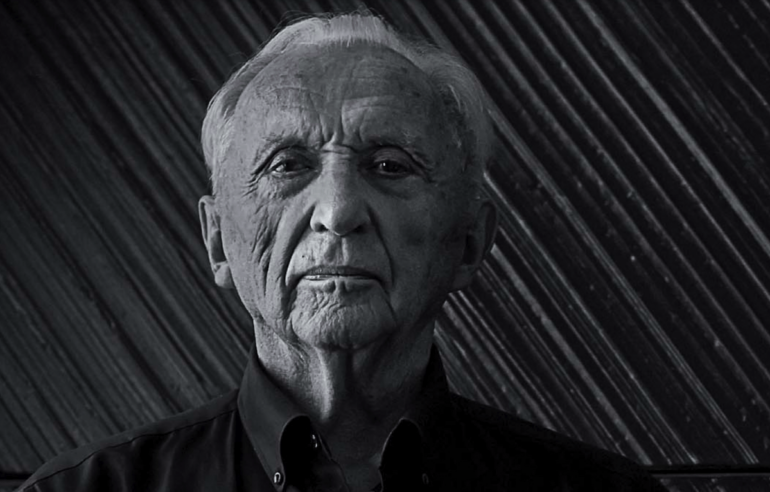
"During prehistoric times, humans went into caves to paint, that is to say, in complete darkness." The outside world only disturbs one's inner world, according to Pierre Soulages, who drew deep inspiration from this prehistoric era. This belief in the inner self would be expressed through the color black throughout his artistic life.
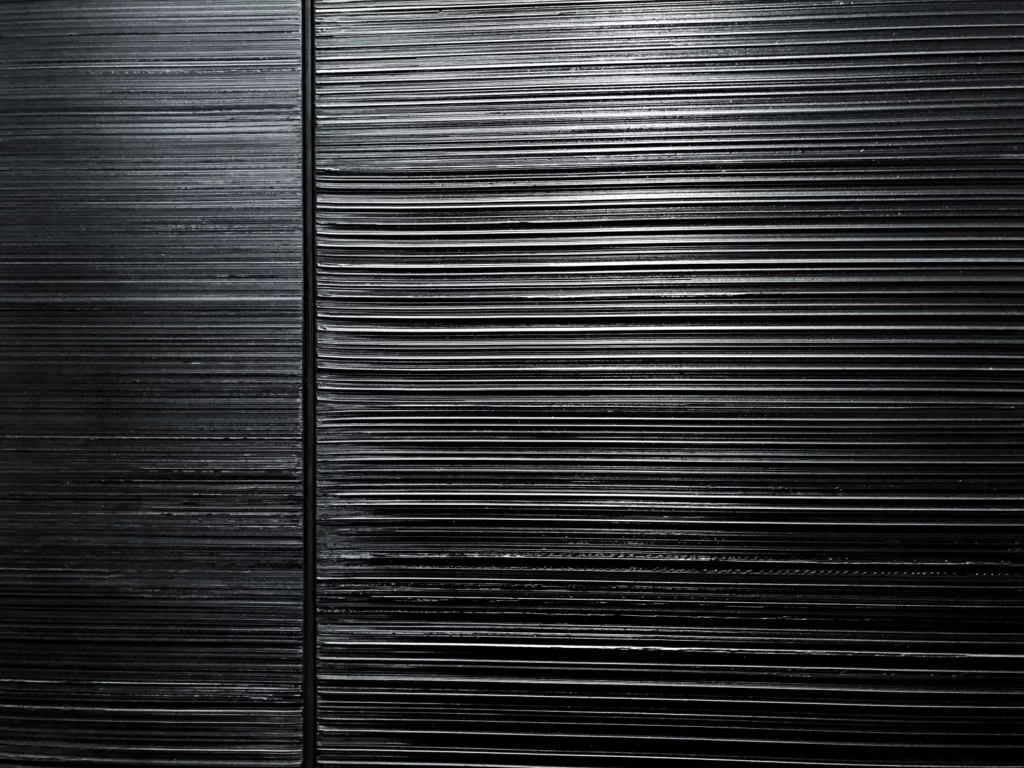
He became known for his abstract paintings called "Outrenoir." They are not based solely on black, but also on the material of black and its surface texture, which create a specific light in contrast and interaction with white. Reliefs, notches, and grooves in the black material create plays of light and color.
In 2009, the Centre Pompidou organizedthe largest retrospective dedicated to the artist. Described as one of the major figures of abstraction and the French art scene of the 20th century, the exhibition also focused on the pre-Outrenoir period, between the 1940s and the late 1970s. Visitors were able to admire his famous tar on glass works, in which Soulages continued to play on the association of opposites: "opaque, rough tar and smooth, transparent glass come together to highlight their differences." On a more intellectual level, it was also a way of representing a Europe in reconstruction in the post-war period.
AN ORIGINAL WORKING METHOD
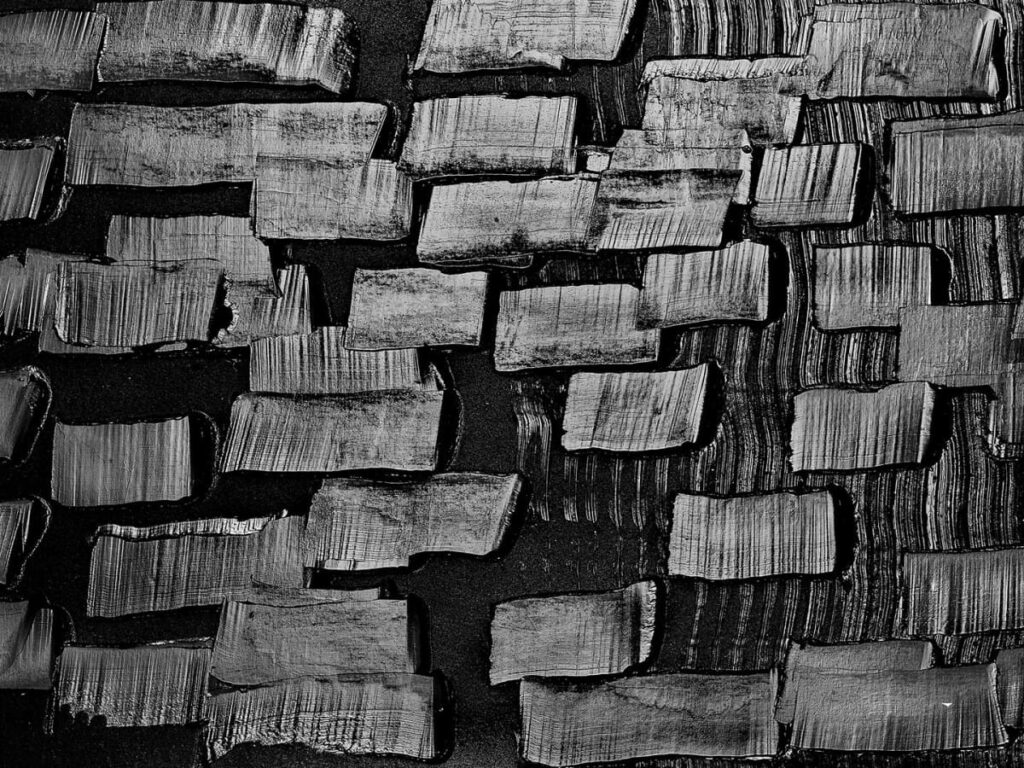
Pierre Soulages did not use traditional tools to paint, but sometimes atypical mediums such as a piece of wood or items he made himself: what happened on the canvas guided his choice of tool. In this case, this piece of wood produced a much more interesting effect than a simple brush for the painter.
When he was working, Pierre Soulages needed to be alone and would not tolerate being disturbed by external factors, including the landscape. Once again, we see references to the work of prehistoric men, alone in their caves.
The reality of a work of art is a three-way relationship: the painting, the painter, and the viewer. For him, the viewer is also part of the work, and therefore must interact with it. This also puts additional pressure on the artist. When Pierre Soulages didn't like a painting, he would decide to burn it and start over. This extreme phenomenon affected up to 80% of his output over a given period.
Unfortunately, photography is not the ideal medium for capturing this burst of light from darkness: you have to see the works in person. You can see many of Pierre Soulages' works at the Fabre Museum in Montpellier. Sentimentally attached to this city wherehe studiedand to this museum where he often visited, he has benefited from numerous donations from the artist. Two hours away by car isthe Pierre Soulages Museumin the city of Rodez, where he was born. That's enough to fill your southern journey!