
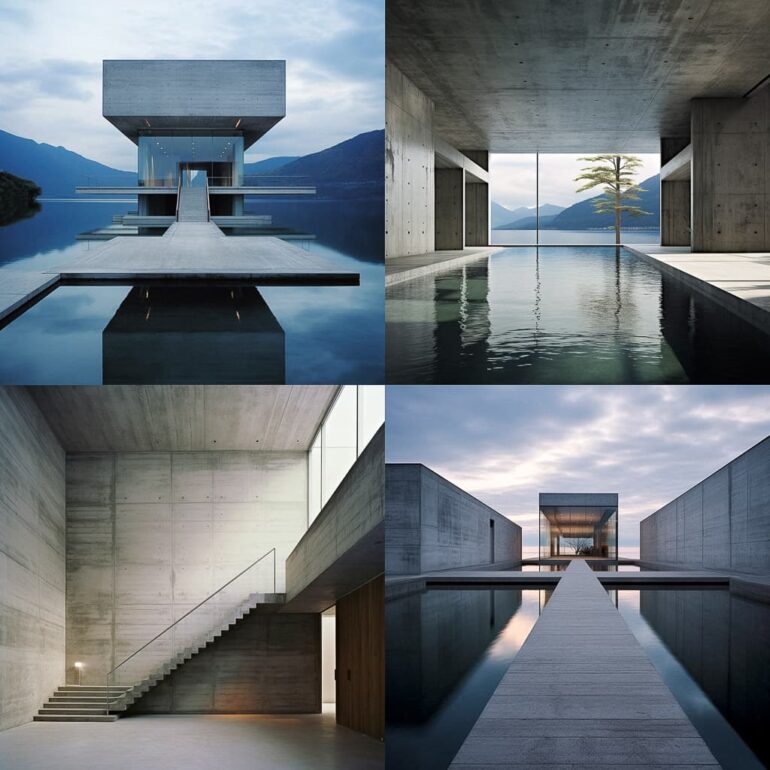
Tadao Ando is a unique figure in the world of contemporary architecture. Born in 1941 in Osaka, Japan, he followed an atypical path: self-taught, he trained himself by traveling around the world in the 1960s, studying the architectural masterpieces of Europe, the United States, and Asia on his own. Unlike many of his contemporaries, he never attended architecture school, which allowed him to develop a deeply personal and intuitive approach.
His style is characterized by the use of raw concrete, a material he magnifies with remarkably precise finishes. But Ando's true genius lies in his use of natural light and the way his buildings interact with their surroundings. He combines minimalism and spirituality, transforming simple elements—concrete, glass, water—into sensory and emotional experiences.
Winner of the Pritzker Prize in 1995, Tadao Ando has left his unique mark on architecture, influenced by both Japanese traditions and international modernist movements. His architecture is a tribute to nature and simplicity, where each building becomes a place of contemplation and harmony.
Church of Light (1989) – Ibaraki, Japan
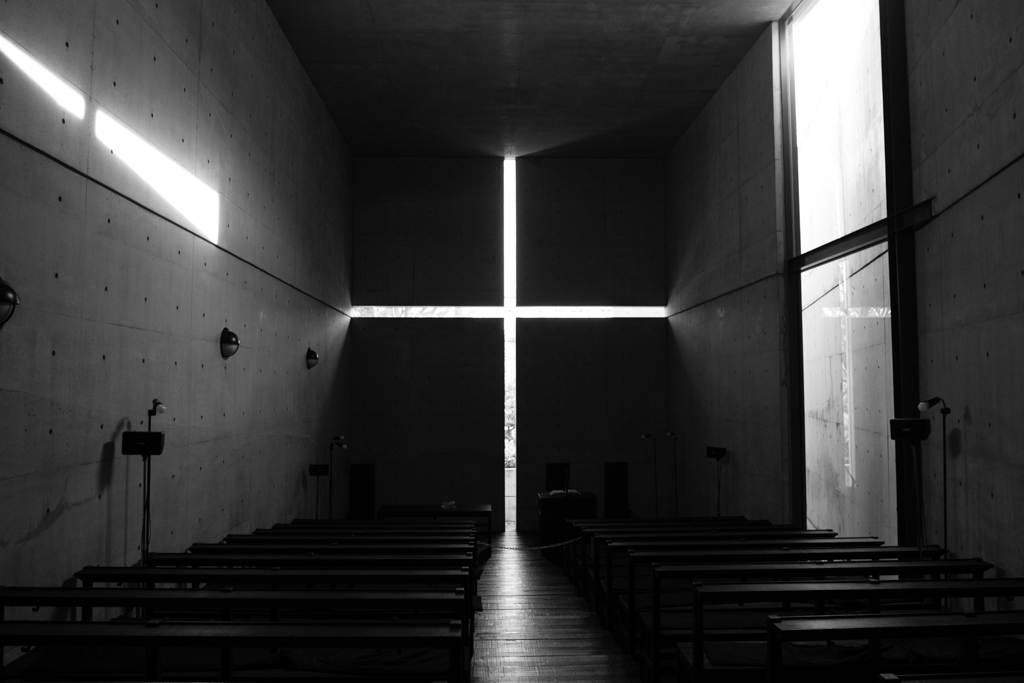
Undoubtedly one of Tadao Ando's most famous projects, the Church of Light is a minimalist spiritual work located in the city of Ibaraki. This raw concrete building is pierced by a cross-shaped opening, allowing natural light to penetrate the prayer space. Here, light becomes an architectural element, transforming the spiritual experience into an intimate encounter with the material and the immaterial.
The Benesse Museum (1992) – Naoshima, Japan
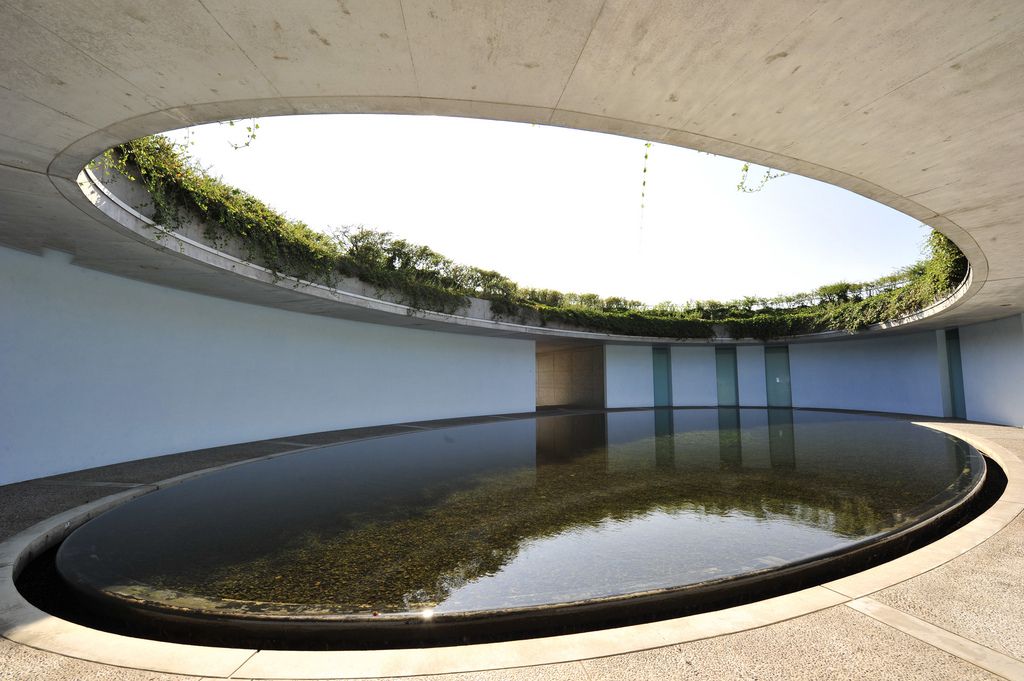
Located on Naoshima Island, this museum is at the heart of the region's cultural and artistic revitalization project. Tadao Ando designed a space that blends harmoniously with the surrounding landscape, integrating contemporary art and nature. The building is semi-underground, offering panoramic views of the Seto Inland Sea while minimizing its environmental impact.
The Langen Foundation (2004) – Neuss, Germany
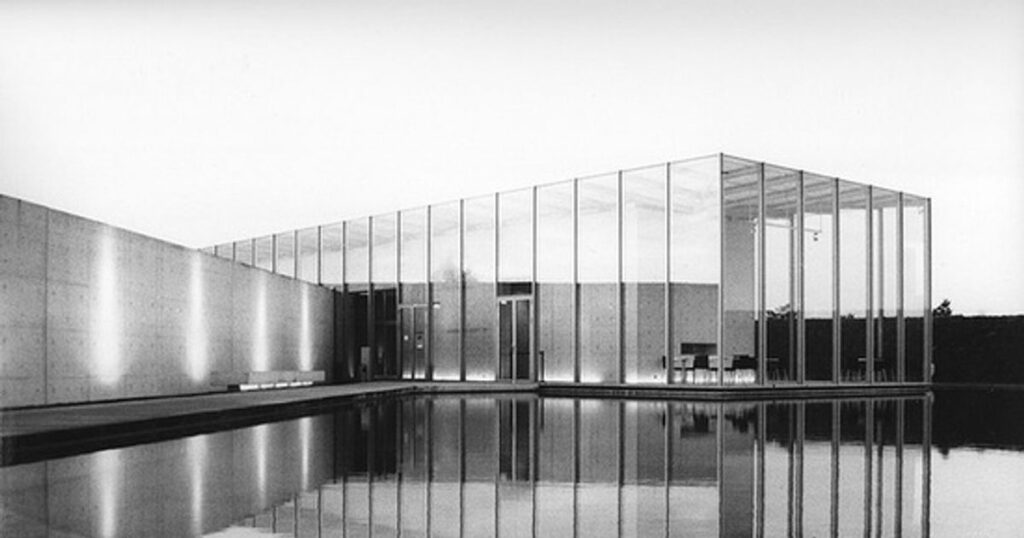
This museum, located on the site of a former military base, is a remarkable example of Ando's ability to transform a place steeped in history into a space dedicated to art and contemplation. The structure combines concrete, glass, and steel, creating a subtle interplay between transparency and solidity. The interaction between the interior spaces and the surrounding gardens invites reflection on memory and serenity.
The Bourse de Commerce (2021) – Paris, France
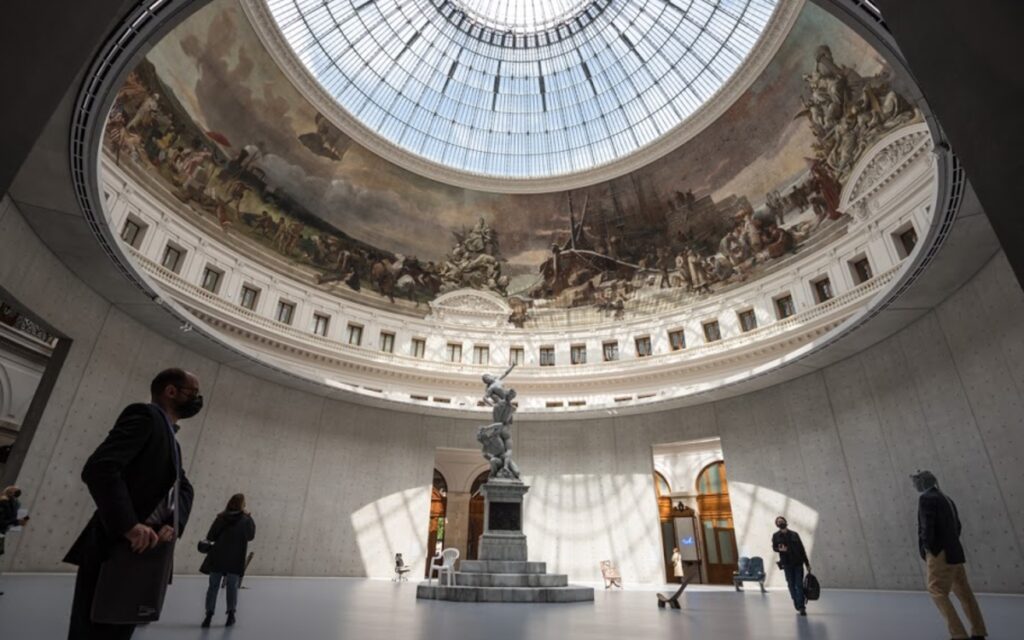
One of Tadao Ando's most publicized recent projects, the renovation of the Bourse de Commerce in Paris, transformed this historic building into an exhibition space for François Pinault's contemporary art collection. Ando integrated a cylindrical concrete structure into the center of the rotunda, creating a striking contrast between modernity and heritage. Natural light, a central element in his work, floods the exhibition spaces through the restored dome.
The Church on the Water (1988) – Hokkaido, Japan
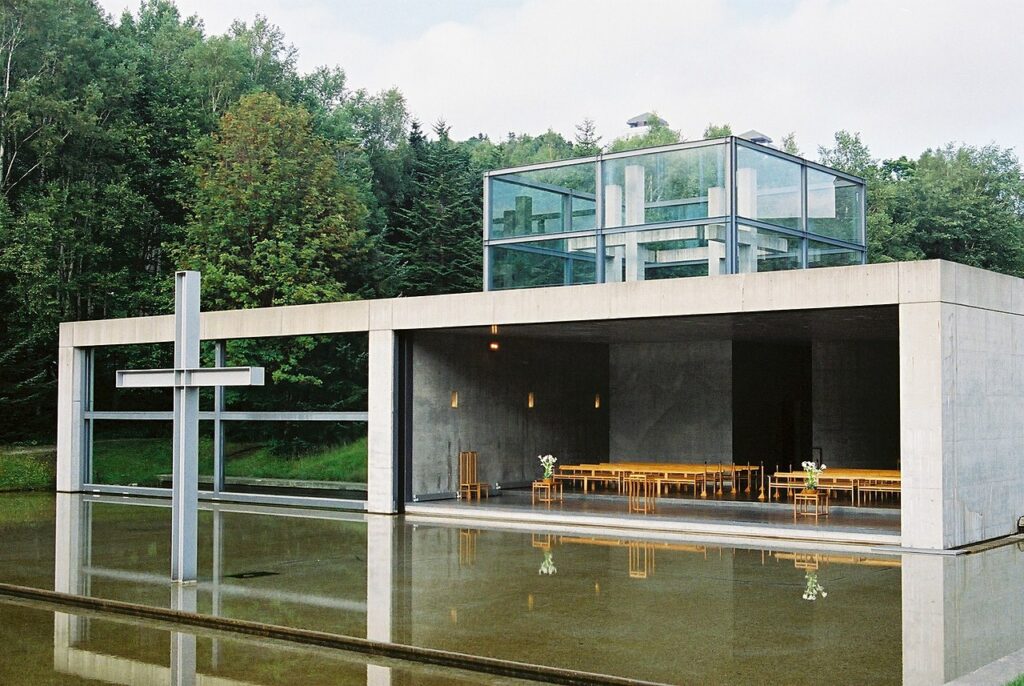
This church in northern Japan is another example of Ando's ability to merge architecture and nature. The building, made of raw concrete and glass, opens onto a lake that reflects light and accentuates the effect of calm. The water becomes a spiritual mirror, reinforcing the introspective dimension of the space.
The He Art Museum (2020) – Foshan, China
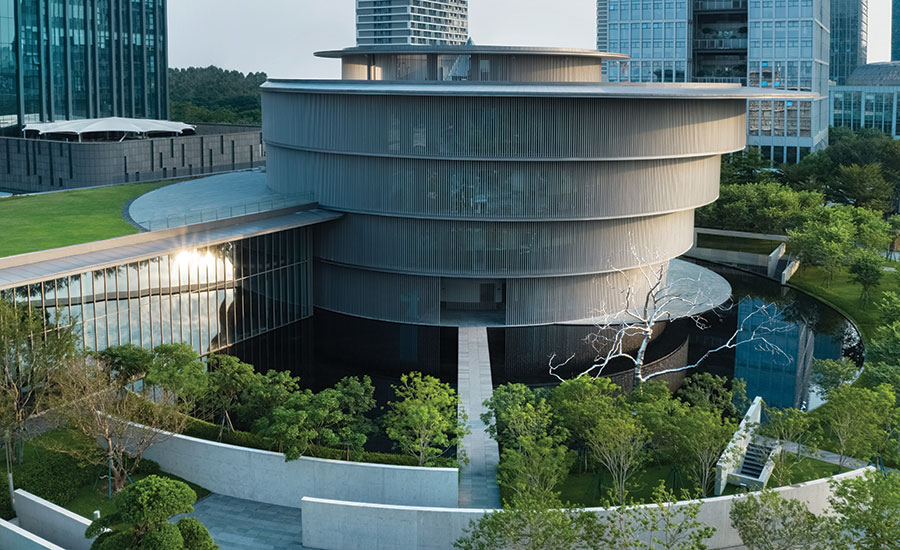
The He Art Museum, located in Guangdong Province, is a contemporary exploration of Chinese culture through the lens of Ando's architecture. The building is distinguished by its overlapping circular curves, representing the connections between heaven, earth, and humanity. The raw concrete contrasts with the warmth of the Chinese art displayed inside.
A philosophy rooted in harmony
Tadao Ando is not only an architect, but also a thinker about space. His creations invite introspection and a rediscovery of the connection between humans and their environment. Each project, whether spiritual, cultural, or residential, reflects his commitment to architecture that serves the human experience.