
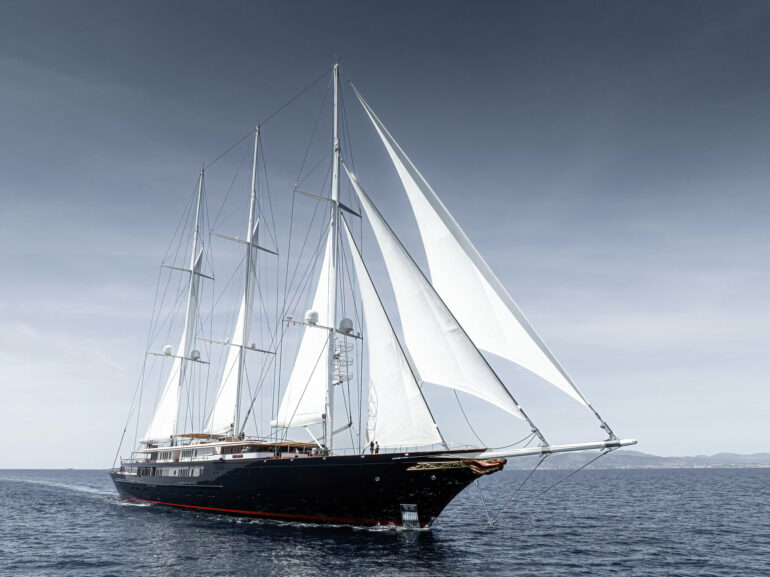
At the crossroads of technological ambition and maritime classicism, Jeff Bezos' superyacht Koru has done more than just set sail: it has sent shockwaves through the nautical industry. Delivered by Dutch builder Oceanco in April 2023, this giant of the seas is not just a billionaire's toy. It is a contemporary testament to the quest for naval greatness, reminiscent of the era of legendary schooners. The name Koru, meaning "new beginning" in Maori, underscores its owner's intention to mark a transition far beyond his career at Amazon. However, this 127-meter-long extravagance, one of the largest sailing ships in the world, has raised questions about discretion and ecology in the luxury world.
A unique design that echoes maritime classicism
The Koru, whose aesthetics are inspired by Barry Diller's legendary yacht Eos, is a three-masted schooner that breaks with the often futuristic lines of motor yachts. This classic architecture is a choice that emphasizes historical roots, even though it is enhanced by modern technology. It was designed by the firms Dykstra Naval Architects for the exterior and Lateral Naval Architects for the naval design, ensuring an impeccable pedigree. The use of a midnight blue hull and a long bowsprit gives it an elegant yet powerful look.
This modern interpretation of a vintage sailing ship, with its masts over 70 meters high, is part of a tradition that luxury is reinventing. The controversy in 2022 surrounding the planned dismantling of a historic bridge in Rotterdam, the Koningshavenbrug, to allow the masts to pass through, highlighted this tension between the ambition of a private project and the preservation of public heritage. Ultimately moved without its masts, which were installed further away, the Koru sailed amid criticism.
The Abeona support yacht: the necessary duplicate
The concept of a superyacht no longer stops at the main vessel, as the Koru perfectly illustrates. It is inseparable from its support vessel, the 75-meter Abeona, built by Damen Yachting. Named after the Roman goddess of travel, this vessel serves as a high-tech pantry and garage for nautical toys.
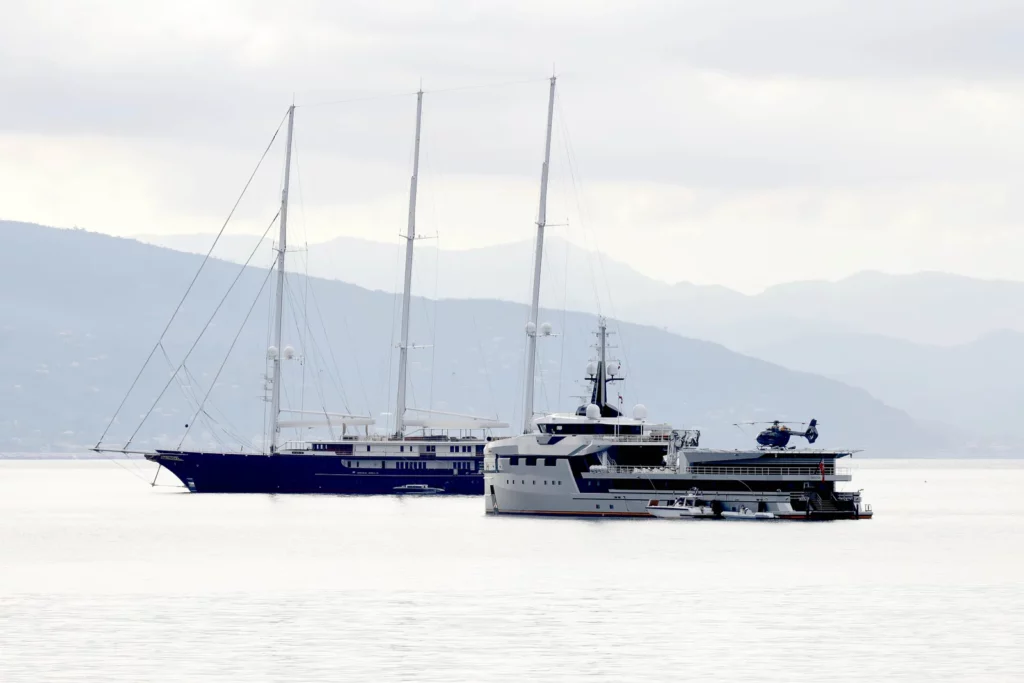
The Abeona allows the Koru to maintain clean lines by moving less attractive or bulky equipment out of sight. It carries a helipad and helicopter hangar, as well as all the necessary diving equipment. It also provides accommodation for part of the crew, which numbers around 40 people in total for both ships. This logistical strategy reflects the sophistication required by today's standards in high-end yachting, where space and privacy are rare commodities.
Luxury, technology, and environmental contradictions
The Koru stands out with its volume of over 3, 493 gross tons and its capacity to accommodate 18 guests. Inside, the details are designed by Mlinaric, Henry & Zervudachi, prioritizing comfort in a refined and timeless style. It features a swimming pool on the aft deck and numerous luxurious amenities.
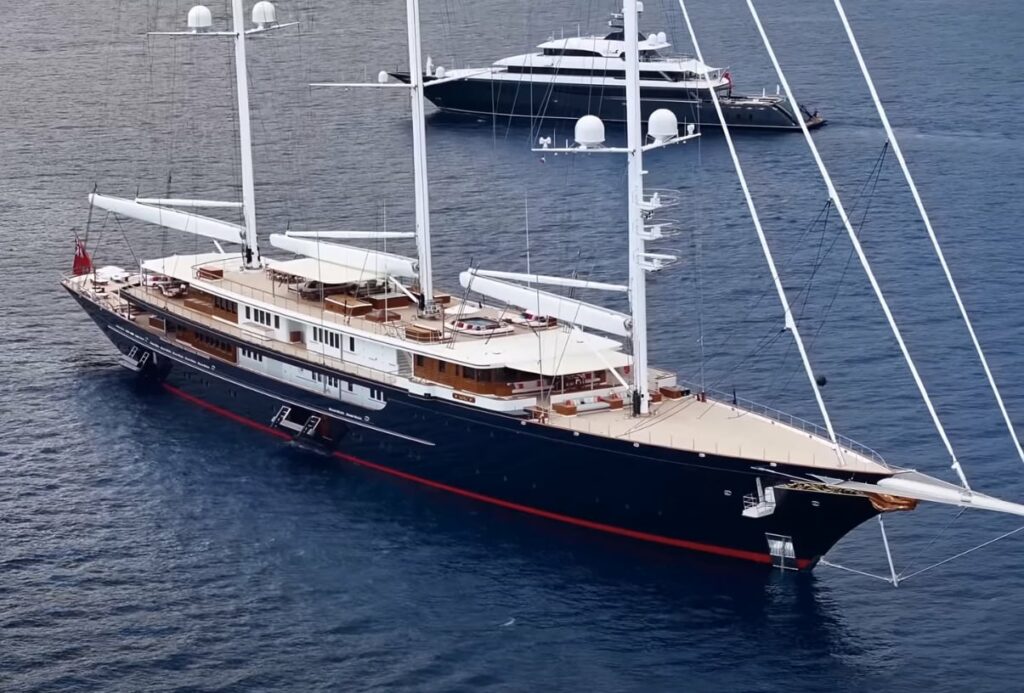
Despite this opulence, the yacht incorporates technologies focused on sustainability. It is equipped with a kinetic energy recovery system, converting wave motion into electricity, in addition to its low-emission engine. However, the presence of water cannons, initially mentioned to repel potential pirates, serves as a reminder that sailing on the high seas remains a matter of safety and pragmatism. It is difficult to ignore the paradox between these ecological initiatives and the carbon footprint inherent in the construction and operation of such a giant of the seas, not to mention the support vessel Abeona.
The Koru is not just a means of transport; it is a symbol of power and the new technological aristocracy. Today, it sails between the Balearic Islands and the Mediterranean, attesting to this new geography of luxury where the discretion of a huge schooner is preferred to the noise of a motor yacht. It stands as the heir to the great sailing ships, reinterpreting the panache of maritime history in the digital age, without escaping the critical scrutiny of observers.