
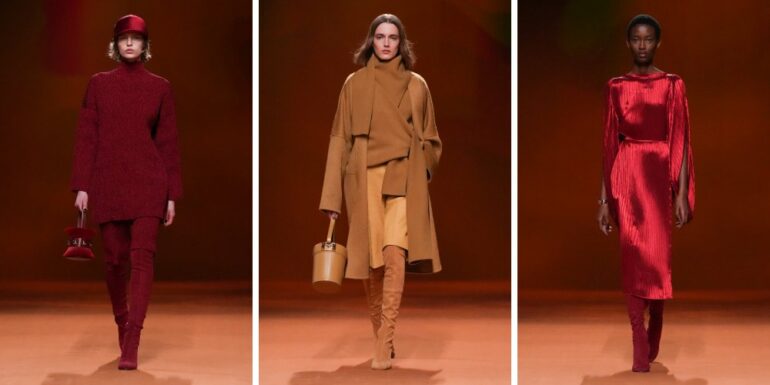
Hermès, the iconic French luxury brand, recently announced its intention to venture into haute couture, a field previously unexplored by the company. This decision, made official during the presentation of the company's annual results in February 2025, marks a major strategic shift for Hermès.
Strategic diversification into haute couture
Historically renowned for its leather goods, silk scarves, and luxury ready-to-wear clothing, Hermès had never officially joined the exclusive circle of haute couture houses. This absence was surprising, given the prestige and craftsmanship associated with the brand. However, haute couture, defined by the creation of bespoke garments of exceptional quality, requires specific recognition and adherence to strict criteria established by the Fédération de la Haute Couture et de la Mode.
Hermès' entry into this sector demonstrates its desire to showcase its craftsmanship and strengthen its position in the very high-end market. As Axel Dumas, CEO of Hermès, pointed out during the conference with analysts: "What interests us in haute couture is the craftsmanship. We already have a very, very high standard, incredible leather quality, and we said to ourselves: why not?"
A project in the works for 2026–2027
Although the idea of incorporating haute couture was not initially part of Hermès' strategy, it has been maturing within the creative teams for some time. Axel Dumas has indicated that the launch of this new activity is planned for 2026, or even 2027 if necessary. This move will enable Hermès to offer unique, made-to-measure pieces and demonstrate the extent of its craftsmanship expertise.

Strengthen brand image through exclusivity
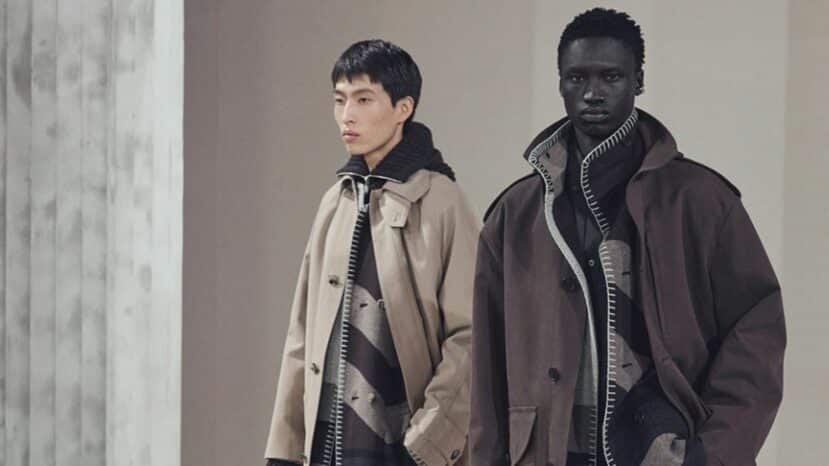
By venturing into haute couture, Hermès aims to consolidate its unique and exclusive brand image. This diversification should also help attract customers looking for exceptional pieces, while affirming Hermès' position as a key player in the global luxury market, as the company has just unveiled exceptional financial results.
Hermès' entry into haute couture is not just a publicity stunt. With this strategic decision, the century-old fashion house is not simply exploring a new segment: it is shaking up the luxury market and putting pressure on the major fashion houses already well established in this exclusive field. With this expansion, Hermès is strengthening its independent position vis-à-vis LVMH, its long-standing rival. We remember the standoff between the two groups when LVMH attempted to take control of Hermès in the early 2010s. Since then, tensions have subsided, but ambitions remain.
LVMH, which owns Dior and Givenchy in haute couture, could see Hermès' entry as an incentive to up the ante in the ultra-luxury market. This could notably translate into a greater emphasis on craftsmanship, bespoke manufacturing, and exceptional materials, areas in which Hermès already excels.