
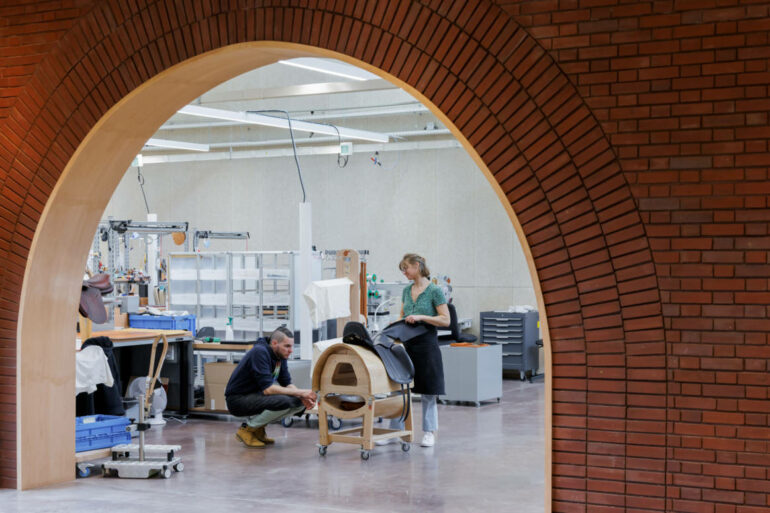
In the Norman town of Louviers, France, luxury brand Hermès has opened a new leather goods workshop: the Maroquinerie de Louviers. A true architectural gem that preserves and blends into the landscape, this new facility in the region combines the spirit of passing on the house's exceptional expertise with its environmental ambitions.
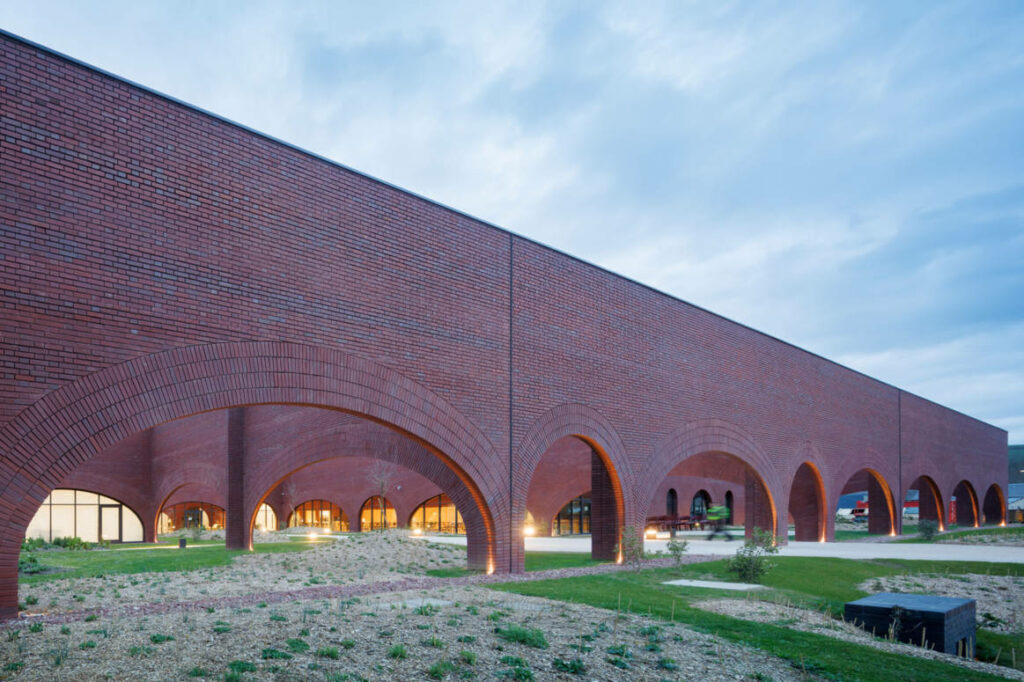
Built on an industrial wasteland and covering an area of 6,200 square meters, the Maroquinerie de Louviers is an imposing, minimalist building with a wooden frame, exuding creative energy and a sense of serenity at first glance. It is the company's 21st leather goods workshop and the only one outside Paris to manufacture horse saddles. Although it accounts for only a small part of the company's turnover, saddlery has been at the heart of Hermès' business since the first half of the 19th century. We are at Hermès' historic Normandy hub, in the small town of Louviers, in northwestern France, about 60 miles from Paris.
Hermès has a long history in the region. For over a century, this small corner of France has played a crucial role in the company's growth and success. Here, skilled artisans have dedicated their lives to producing the world's finest leather goods, working with traditional techniques to create timeless products coveted by equestrian enthusiasts everywhere.
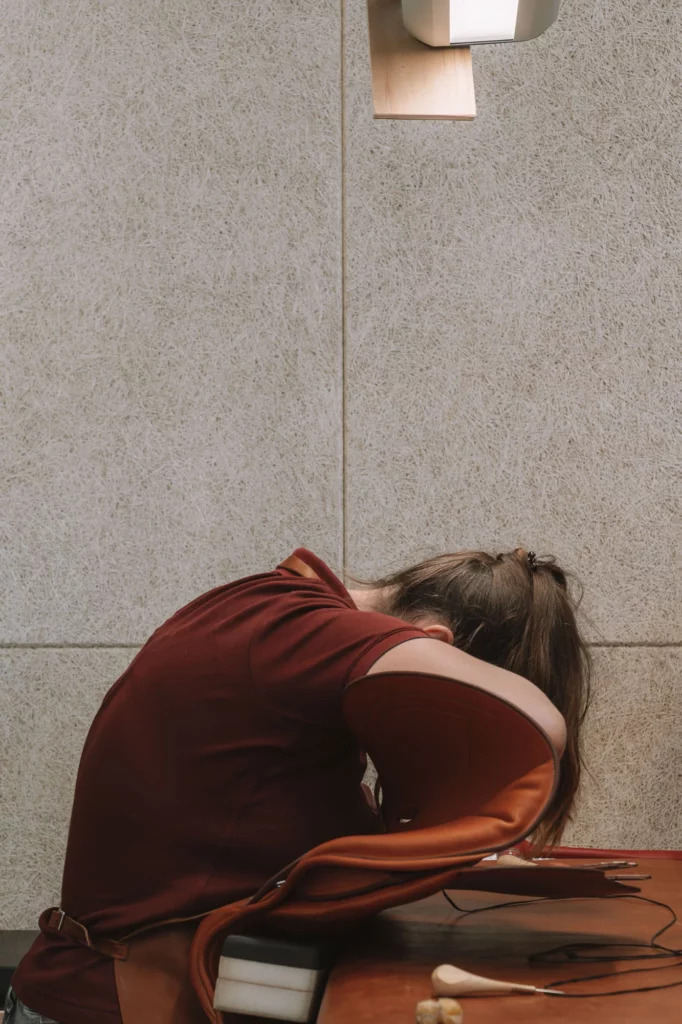
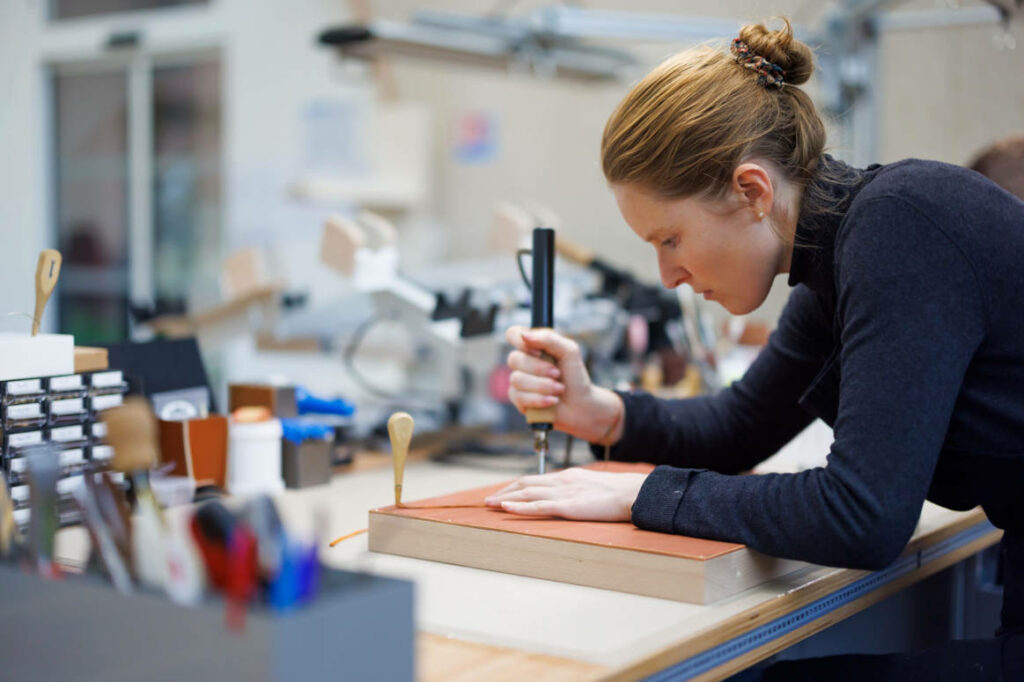
In Hermès' long history, the leather goods workshop is the latest in a long series of projects designed to strengthen the company's local roots and preserve Norman traditions and culture. "We are proud to invest in the region and create jobs for skilled artisans who share the brand's passion for excellence," explains a manager. Operational since January 2023, the workshop already has 170 artisans and is expected to welcome up to 260 in the coming years. Trained in traditional techniques, including hand sewing, at the local learning center, they are not only responsible for manufacturing the luxurious leather goods that have made Hermès famous, but also for preserving their unique expertise for future generations.
Walking around the perimeter of the building, it is difficult not to be captivated by its refined symmetry and beauty. As it slowly and gradually reveals itself, one can appreciate its remarkable textures and, above all, its overall balance. With a subtle industrial touch, the studio was designed by the talented and visionary architect Lina Ghotmeh. Born in Beirut and based in Paris, where she runs her eponymous architecture firm, Lina Ghotmeh has made a name for herself with her innovative designs inspired by Lebanese heritage and her sustainable approach to architecture. One of her most notable projects is the Estonian National Museum in Tartu, Estonia, whose captivating design evokes the idea of a "singing forest" with its undulating roof and tree-like columns. Known for her use of organic forms and materials, as well as her ability to seamlessly integrate technology into her projects, Ghotmeh considers her work to be "archeology of the future." "Each of her projects is born out of a thorough research process, draws its aesthetics from its close relationship with nature, and expresses the essence of the materials from which it is crafted," explains our guide.
A true technical feat, the building features an iconic material: brick. Ghotmeh used more than 500,000 bricks in its construction. Incredible for their durability, versatility, and ability to withstand all weather conditions, they are phenomenal building materials: durable, recyclable, and with excellent thermal insulation properties. Reflecting the project's local roots, the bricks used for La Maroquinerie come from the region in order to minimize the impact of construction, but also to celebrate the expertise and long history of Norman brickmakers. The building's bricks, which provide a clear visual anchor for the center while blending in harmoniously, create a fascinating palette of red and purple hues whose brightness and texture change throughout the day and seasons, making them a feast for the eyes and the passing photographer.
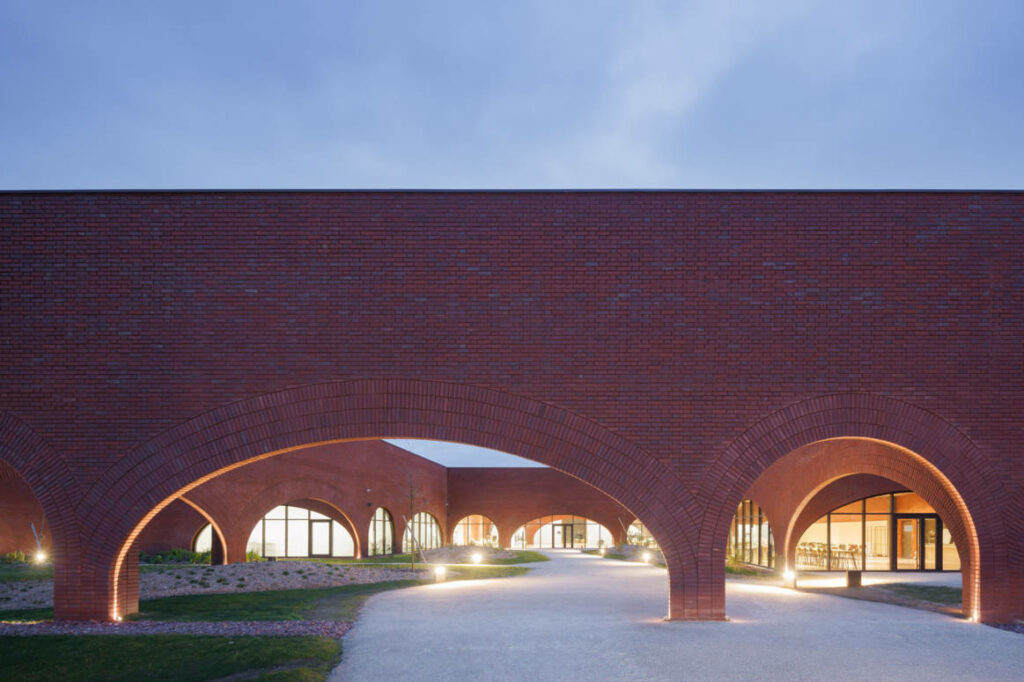
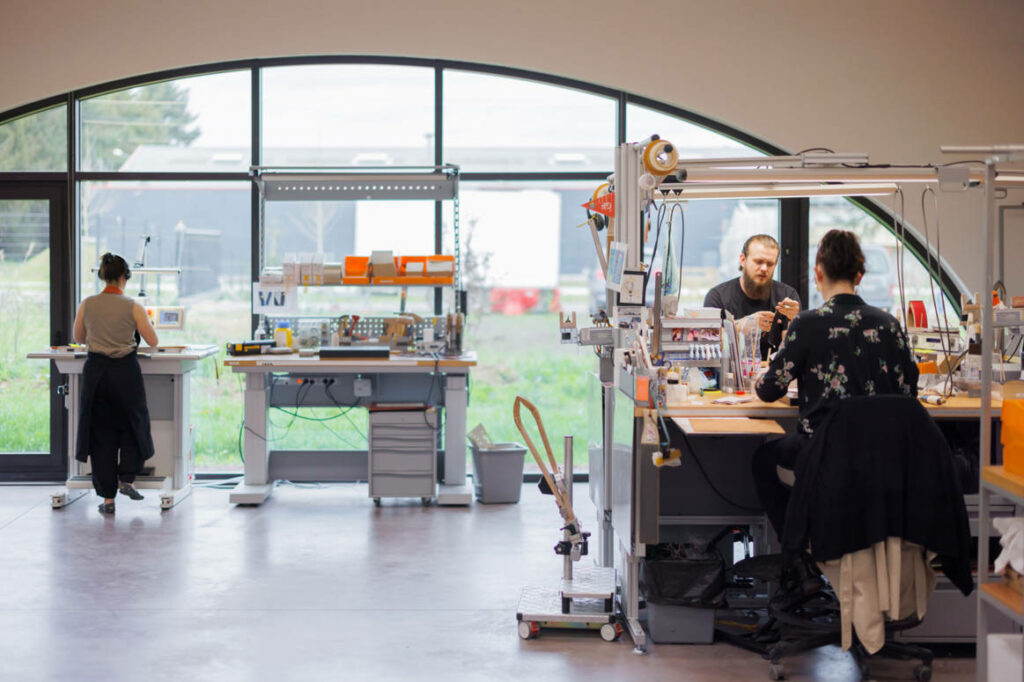
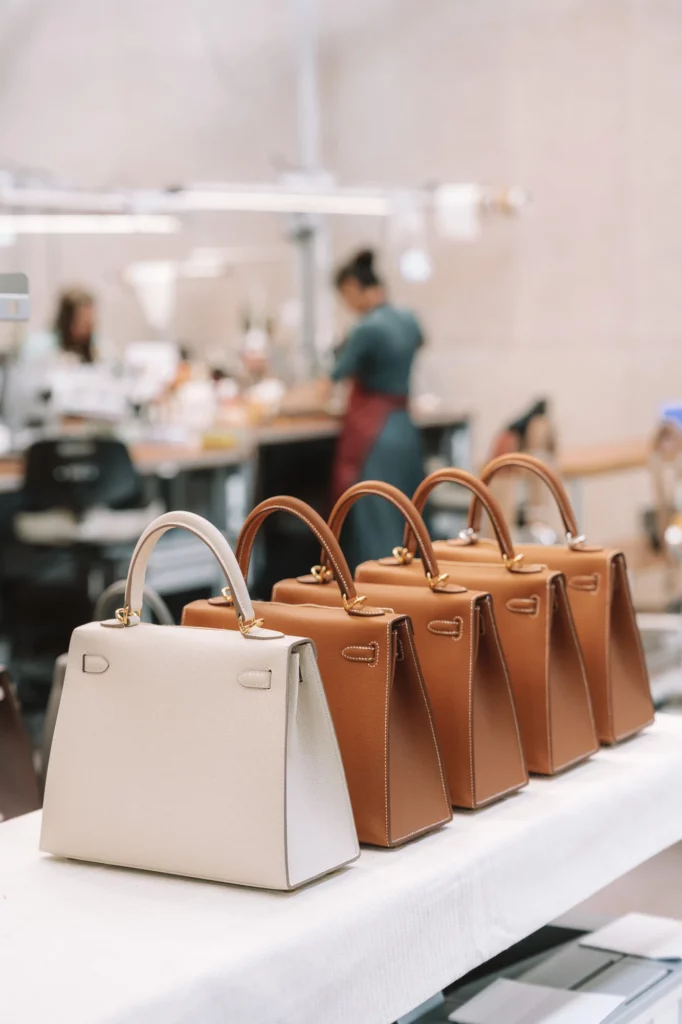
Ghotmeh's fascinating narrative method is immediately apparent in the building's appearance, which echoes motifs dear to the house. The square shape of the workshop recalls Hermès' silk square, while the graceful arches that define the volume evoke the trajectory of a jumping horse. Throughout, timeless shapes and clean lines recall the rigor of the artisans and their expert hands, as well as the constant pursuit of perfection and excellence in leatherwork. The center of the workshop opens onto a reception area that serves as an exhibition space. In this peaceful and balanced setting, French visual artist Emmanuel Saulnier has installed a captivating work of art composed of seven stainless steel needles suspended from leather stirrup straps, custom-made by Hermès' bridle makers. The numerous workshops surrounding the courtyard of the factory are revealed as you stroll around. Inside these workshops, the atmosphere is one of concentration and calm, with artisans working diligently to create each piece by hand, using the finest materials and techniques passed down from generation to generation. From small leather goods to saddles and bridles, everything is made with the utmost care and precision, including Hermès' most famous creation, the "Birkin bag," one of the most coveted handbags in the world.
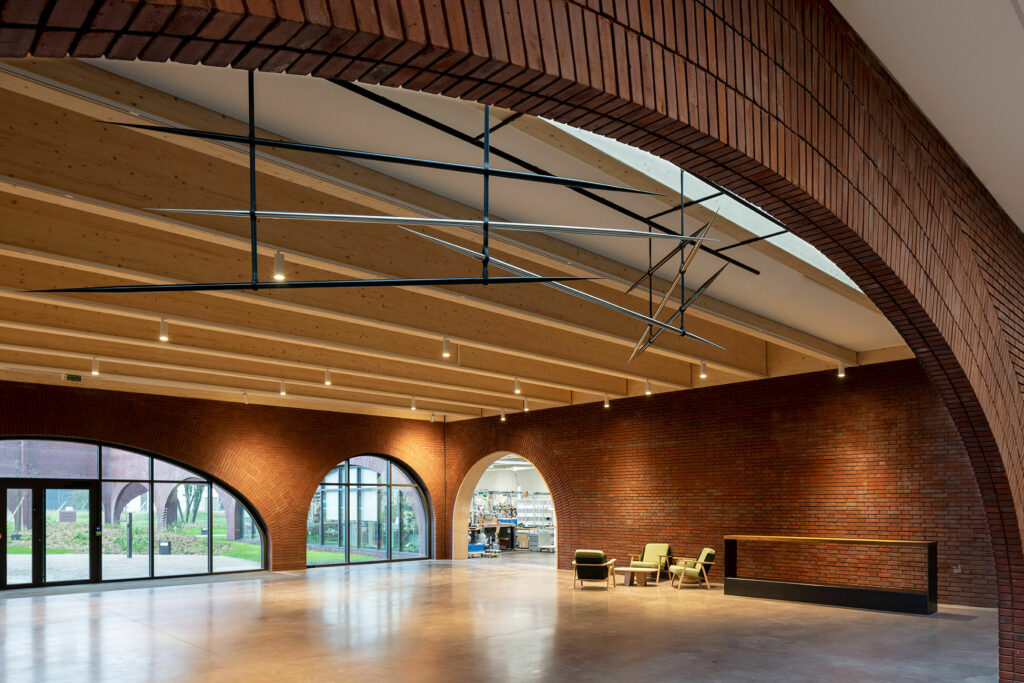
"At the heart of the workshop is a commitment to craftsmanship and quality, as well as sustainability and ethical practices. From its construction to its daily operation, everything has been designed so that the building embraces, extends, and complements its natural environment," explains one of the company's managers. Designed in line with Hermès' values, the project was conceived in a bioclimatic manner, taking full advantage of natural light and ventilation to limit lighting and heating requirements, and using geothermal energy and solar panels to ensure the factory's energy independence. "We have implemented a series of eco-friendly practices to minimize our impact on the environment. It now produces more energy than it consumes, with low carbon emissions," she continues.
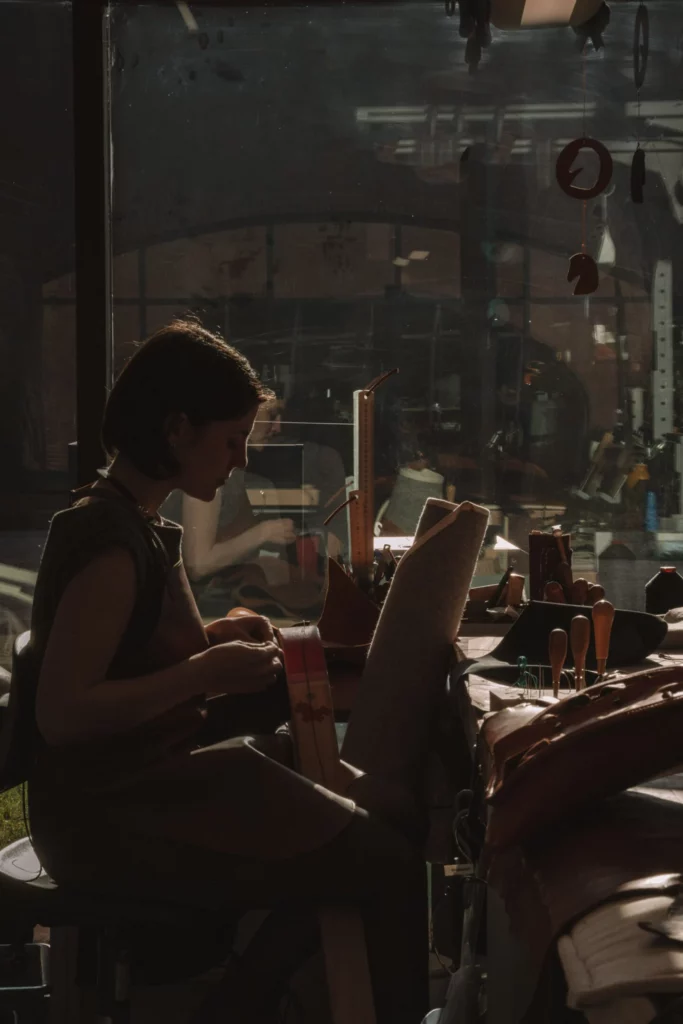
"The Louviers Leather Goods Factory embodies the company's ambitions in terms of sustainable development, as well as its commitment to beautiful things and the well-being of its employees," she adds. Serene and bright, the complex is described as a "living space for artisans," a place that stimulates growth and where creative minds can build testimonials and acquire knowledge while sharing stories and laughter. Surrounding it, three hectares of undulating gardens with gentle valleys and ponds created by Belgian landscape architect Erik Dhont reinforce the omnipresent feeling of serenity, community, and harmony with nature, while preserving local biodiversity and the environment.
Under the refreshing shade of the trees, the Maroquinerie de Louviers unfolds fully as a testament to the power of architecture to create spaces that not only function well, but also inspire and uplift those who inhabit them. Since 1837, Hermès has remained faithful to its artisanal model and humanist values that celebrate excellence in craftsmanship, creative freedom, and a spirit of innovation. Confirming the house's expertise, the Normandy workshop underscores the house's commitment to contributing sustainably to regional development, pushing the boundaries of what is possible in terms of products and production, while remaining faithful to its heritage traditions. Ghotmeh's building is more than just an illustration of this commitment; it is a model for other companies in the sector to follow.