
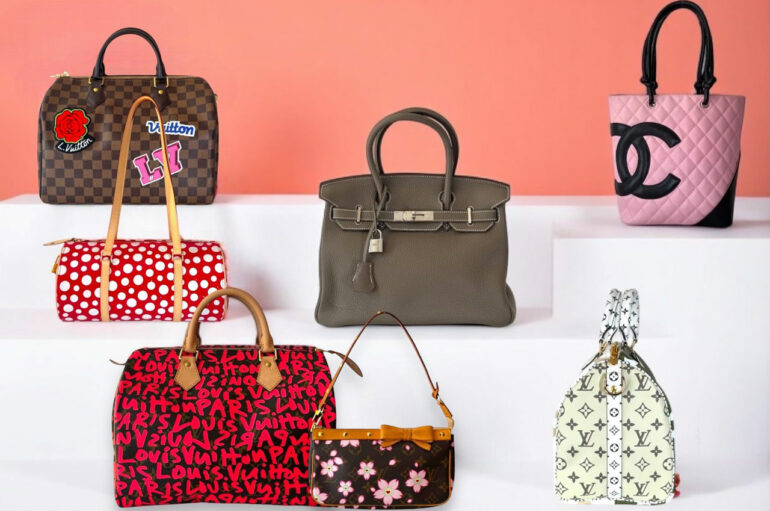
While the traditional luxury sector experienced turbulence in 2024, with a 2% decline in global sales and major names such as Gucci and Dior struggling, the auction market remains buoyant. Faced with these challenges, Sotheby's and its competitors are redefining their strategy, focusing on innovative segments and the strong comeback of vintage luxury.
The decline in the retail market can be seen in the fall in sales of iconic brands such as Gucci, which has recorded sharp declines, particularly in its ready-to-wear and accessories collections. Similarly, Dior has seen its figures drop, impacting the overall image of the luxury sector. However, at the same time, auctions are proving to be an eminently dynamic refuge. Sotheby's recently announced its largest sale of Breguet watches in 30 years, to be held next November to celebrate the 250th anniversary of the Swiss watchmaker.
This shift reflects a profound change: luxury is no longer just a status symbol, but has also become an investment and a source of wealth. The auction scene, long considered elitist, is adapting to welcome this new, younger, and more diverse clientele, who are looking for rare items, lifestyle pieces, or second-hand goods with high heritage value.
Vintage and resale: a strategy for accessibility and expansion
Sotheby's new Paris premises, inaugurated in the 8th arrondissement, illustrate this shift. Located close to the luxury districts of Avenue Montaigne, they have been designed to "be more accessible by responding to the desires of our collectors," explains Marie-Anne Ginoux, secretary general of Sotheby's France. The offering has thus been expanded to include paintings, designer bags displayed in art galleries, jewelry, and even wine, reflecting a strategic repositioning aimed at attracting customers seeking diversification.
This shift towards vintage and the second-hand market is no coincidence. According to a study by the Boston Consulting Group and Vestiaire Collective, the resale value of clothing, shoes, and accessories tripled between 2020 and 2022, reaching between €100 billion and €120 billion. Artcurial, a pioneer in this field, is several years ahead of the curve and has been organizing sales of vintage Hermès items since the early 2000s, foreshadowing this trend.
This movement has been accelerated by the COVID-19 pandemic, which has prompted consumers to sort through their closets, favoring vintage items for ecological and economic reasons. Thus, even though the traditional art market focuses on works of exceptional value, luxury items with a strong heritage and lifestyle component are becoming increasingly attractive.
A younger and more diverse clientele
The figures attest to this trend: Sotheby's organized 282 specialized sales in 2020, compared to 139 in 2019, reflecting exponential growth. Younger customers are primarily looking for unique, rare, and iconic pieces. As a result, the focus is on items that are no longer produced or available, such as iconic watch models and timeless jewelry pieces.

Watch aficionados are particularly drawn to prestigious brands such as Rolex, Cartier, and Patek Philippe, as well as independent watchmakers such as De Bethune and Akrivia. Rarity and craftsmanship are becoming key criteria, amplifying the value of pieces at auction.
Watches and jewelry, stars of sales
Hermès bags, particularly the Kelly and Birkin models, are experiencing spectacular growth. In stores, these items often have long waiting lists, with prices that can remain unchanged for several months. On auction platforms, their value skyrockets, sometimes reaching three times their initial retail price. For example, the famous Kelly 20 and Kelly Pochette have seen their prices increase by 67% and 115% respectively in five years.
The market for Hermès bags, particularly limited editions or flashy colors, remains very dynamic. Last year, a Tyrian pink Kelly bag sold for €16,400, illustrating this phenomenon of speculation and investment.
Towards a more heritage-based and personalized luxury experience
A commitment to authenticity and tradition also drives customers. Buyers favor pieces from brands renowned for their craftsmanship, iconic designs, or limited editions. The search for something "cool" or "rare" becomes a quest for those who see these objects as a safe haven or a legacy to pass on.
The luxury market, faced with an uncertain economic climate, is demonstrating remarkable adaptability. In-store and online sales, focused on vintage items, heritage, and personalization, are reshaping the sector. At the same time, auctions, whether for watches, bags, or jewelry, remain an effective indicator of this profound change: luxury has not had its final say; it is reinventing itself to attract a new, younger clientele that is more eager for uniqueness.