
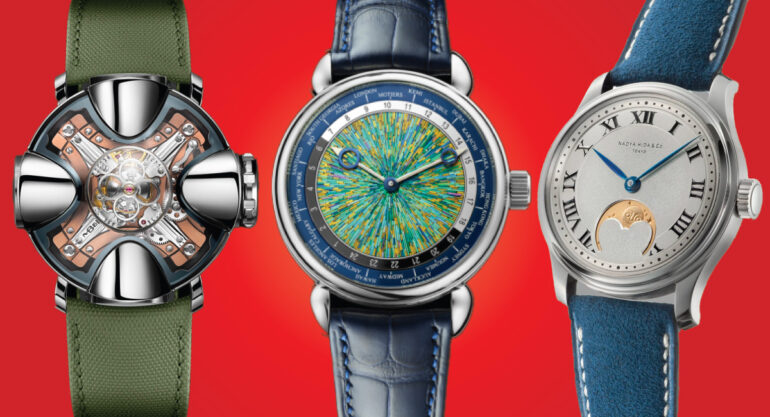
A new generation of independent watchmakers is challenging market conventions, prioritizing authenticity, sustainability, and innovation in the face of domination by the major Swiss brands. Far from the race for social status that once characterized watch purchases, a more connected and demanding clientele is now turning to sincerity of design, transparency, and mechanical ingenuity. At the forefront of this quiet revolution, micro-brands and independent artisans are redefining the contours of contemporary luxury.
The emergence of a new luxury paradigm
This shift is part of a profound rethinking of the codes of desirability. According to the Khaleej Times, more than 60% of wealthy collectors under the age of 40 are abandoning the beaten track in favor of lesser-known brands. They seek the thrill of the unknown, the warmth of craftsmanship, and the expression of strong individuality rather than a simple logo of recognition. Far from denying Swiss expertise, this approach illustrates a desire to embrace a more personal and emotional vision of watchmaking.
The fair price of excellence and transparency
By breaking free from the monolithic model of large groups, these mavericks favor limited series and direct dialogue with buyers. Their creations are priced to reflect the high standards of craftsmanship rather than lavish marketing expenses. WatchPro notes that companies such as Paris-based Beaubleu have made traceability, eco-responsibility, and local assembly their guiding principles. By curbing overproduction and guaranteeing local monitoring, they appeal to aesthetes in search of objects with soul, as opposed to sterile speculation.
Reinvented expertise and bold aesthetics
The true hallmark of these workshops lies in their absolute creative freedom. Studio Underd0g has made its mark with chronographs in playful and irreverent colors. In a more classic but equally sophisticated vein, Kurono Tokyo and Scotland's anOrdain transcend age-old techniques such as urushi lacquer and Grand Feu enamel to offer incredibly sophisticated dials, making fine craftsmanship accessible to a modern audience, as highlighted by Tatler Asia.

Acceptance by market authorities
Long confined to insider circles, this excitement is now out in the open. The prestigious auction house Phillips Perpetual is celebrating this recognition with its Independent Spirit exhibition (scheduled for mid-March 2025 in London), honoring masters such as Raúl Pagès, Theo Auffret, David Candaux, Konstantin Chaykin, and Charles Frodsham. This recognition proves that the market for major collectors now validates the technical and artistic virtuosity of these independent creators.
Contemporary challenges and historical roots
While enthusiasm is undeniable, the path to independence remains fraught with complex challenges. Maintaining a level of craftsmanship that rivals that of historic manufacturers requires a rigorous chain of control. Added to this are the issues of limited distribution and the need to build international visibility. However, this dynamic echoes the history of decorative arts: as early as the 18th century, independent workshops were already shaking up the official jewelry world with their extraordinary inventiveness.
Today, the quest for meaning and rarity takes precedence over mere prestige. The watchmaking landscape has been wonderfully enriched as a result, offering a tangible response to those seeking the art object behind the measuring instrument. It remains to be seen whether this fundamental shift will succeed in permanently reshuffling the deck in the face of the watchmaking oligarchy, or whether it will cultivate its aura by remaining the best-kept secret of purists of fine mechanics.