
Fall/Winter 2026 marks the return of the fur collar, no longer as a simple defense against the cold, but as a powerful status symbol. Combining spectacular aesthetics with unapologetic pragmatism, this accessory reinvents the silhouette with a keen awareness of sustainability and a desire to make luxury accessible.
Accessories as architectural signatures
This season's catwalks have brought back a detail that instantly evokes understated luxury: fur collars or stoles, treated as sculptural embellishments rather than purely functional garments. First spotted in Copenhagen before conquering New York, this trend celebrates the removable piece. It has the unique power to transform a classic coat into a statement piece, offering a couture look without requiring the investment of a complete outfit.
The new grammar of the "rich girl"
The collar stands out as the outward sign of carefully calculated elegance. Designers have explored bold volumes: oversized draped collars, belted stoles, and tubular shapes that deliberately restrict movement to emphasize a certain luxurious idleness. At the same time, we are seeing a return of stand-up collars and ruffles, crafted from materials such as pleated organza and recycled shearling. This approach reflects a desire to reinvent the classic neckline with complex textures.
Between theatricality and minimalism
Duality is the order of the day. On the one hand, houses such as Ralph Lauren are playing the maximalist card by combining leopard prints and faux fur on long coats, while Anna Sui and Michael Kors are offering stoles as lounge accessories to be worn outdoors. On the other hand, the Scandinavian school favors a more subtle approach, using exaggerated collars to conceal the button fastenings of sleek coats. This ambivalence proves that collars can be used to create both spectacular looks and discreet upgrades.
The knighthood by style icons
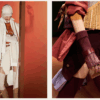
The transition from the runway to the street was made possible thanks to the boldness of influential figures. Rihanna led the way in an AWGE fur-trimmed leather trench coat, asserting a radical style. In Paris, Dua Lipa made a lasting impression in a Valentino shearling coat, while Selena Gomez revived the "rich girl" aesthetic via Instagram in early February 2026. From Miley Cyrus to Zoë Kravitz, the adoption of similar pieces, whether bohemian or minimalist, illustrates the fluidity of this trend, which now navigates freely between haute couture and urban culture.
Thermal illusion and material consciousness
It is essential to note that the primary function of these pieces is not thermal. These stoles, sometimes rigid or tubular, offer limited protection and restrict movement. Their role is eminently symbolic: to add texture and visual richness. This phenomenon is accompanied by a material reflection, with the increasing use of recycled shearling and pleated technical materials. This approach questions the boundary between ostentation and responsibility, as these pieces are poised to enter the mainstream market.
A democratized code of distinction
While this type of collar has its roots in costume history—evoking Victorian coats and the glamour of old Hollywood—its current reinterpretation is decidedly modern. It acts as a stylistic "hack" that can elevate an existing wardrobe. The accessory's modularity facilitates its circulation between market segments, transforming an ancient code of distinction into an accessible visual strategy. The future of this trend will lie in designers' ability to maintain this balance between the prestigious allure of yesteryear and contemporary sustainability imperatives.