
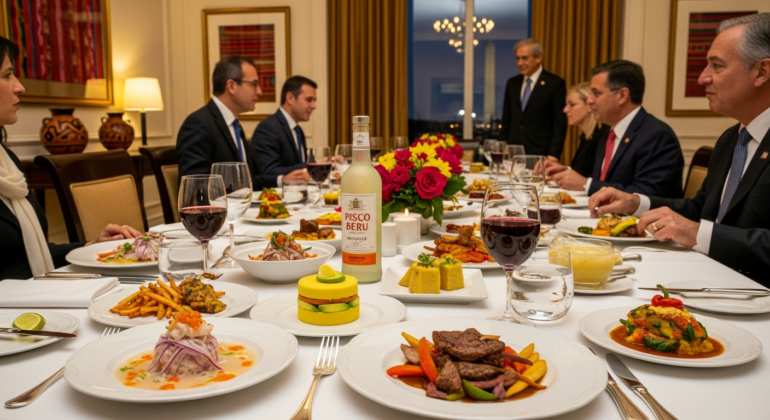
Gastronomy as a diplomatic tool
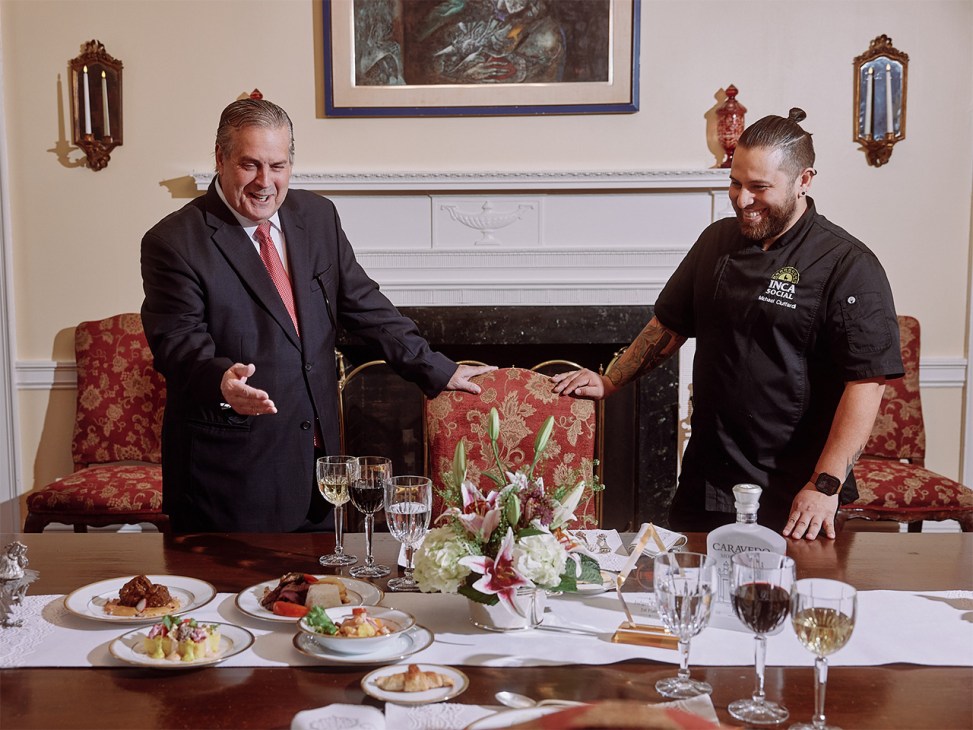
Attracting distinguished guests to receptions at the Peruvian Embassy in Washington is no problem for Alfredo Ferrero. “They know they’re going to eat very well here,” the ambassador says with a chuckle in his resonant voice, his gaze fixed on the plates set before him. This five-course feast is the creation of Peruvian chef Michael Ciuffardi, the embassy’s official chef for diplomatic events. Last July, his talent was recognized at the Embassy Chef Challenge, a prestigious competition bringing together chefs from 34 diplomatic missions in the U.S. capital. Another gold medal for the global reach of Peruvian cuisine.
A historic setting to celebrate a bicentennial
This year is of paramount importance, marking the bicentennial of diplomatic relations between Peru and the United States. These are all opportunities for Chef Ciuffardi to dazzle guests on the famous “Embassy Row.” The embassy’s main building, a magnificent early 20th-century Italian neoclassical structure, houses an art gallery that provides the perfect setting for art openings and canapé tastings. However, for the most exclusive gala dinners, distinguished guests are invited to northwest Washington, to the ambassador’s official residence: a majestic three-story property featuring neo-colonial architecture, built in 1928.
A dish with three distinct flavors: the coast, the Andes, and the Amazon
As he puts the finishing touches on his ceviche, Michael Ciuffardi—who also oversees the kitchens at Inca Social restaurants in Virginia—points out that Peruvian cuisine is an open history book. Each recipe reflects his country’s geographical richness and multicultural heritage. “Our culinary evolution stems from the deep respect we have for our local ingredients, combined with our ability to incorporate the expertise of other cultures,” he explains. This diversity is rooted in Peru’s three major climate zones, offering seafood such as octopus and mahi-mahi from the Pacific coast, all the way to chili peppers and grains native to the Andean peaks. When creating diplomatic menus, the golden rule is strict: “To represent the coast, the Andes, and the Amazon on every plate,” the chef concludes.




Peruvian-style soft power
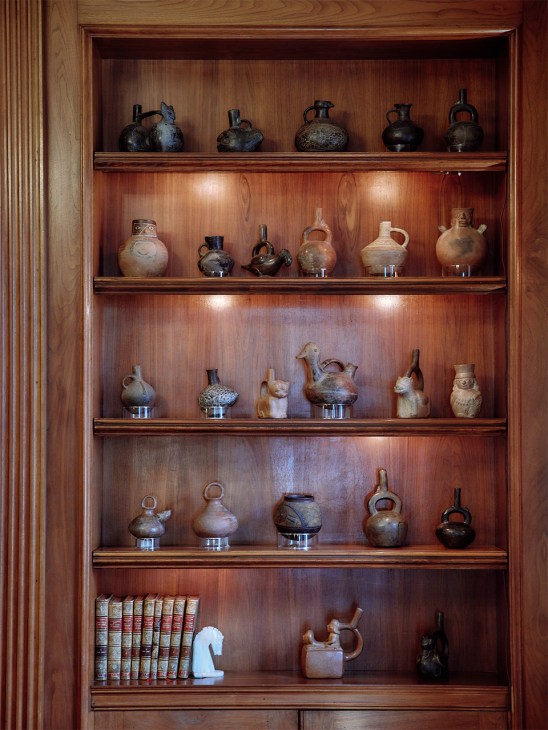
For Ambassador Alfredo Ferrero, this culinary heritage naturally serves as a tool for influence. “It’s one of the best ways to promote Peru,” emphasizes this charismatic diplomat. “We are convinced that our cuisine is a powerful tool for boosting tourism and our exports. It is also a fundamental pillar of our diplomacy.” The warming of relations with Washington is proof of this: when it comes to international relations, the truth is sometimes found at the bottom of a plate of excellent ceviche.
Ambassador: Alfredo Ferrero
Number of diplomats: 11
Establishment of official relations: May 2, 1826
Key bilateral issues: Security and defense, trade, investment, technology, economic and cultural influence