
Make Texture a preferred source on Google to support us
Add Texture to GoogleSingapore, renowned for its immaculate storefronts, is facing a surge in increasingly sophisticated counterfeits, making the verification and purchase of luxury watches more complex and requiring greater expertise.
Singapore: A Hotbed for Counterfeit Watches
While the city-state prides itself on order, licensing, and impeccably organized storefronts, it is nonetheless, according to an OECD study, among the leading countries of origin or transit for counterfeit goods. This unexpected contrast fuels a very active secondary market, concealing traps of rare sophistication.
The challenge no longer lies in identifying crude copies, but in tracking down high-end counterfeits. We’ve entered the era of “super-clones”—watches that mimic the weight, appearance, and sometimes even the mechanical ticking of an authentic Rolex with formidable precision. In this environment, where authorized dealers often run low on stock, the temptation to turn to the gray market can quickly override caution.
The Limitations of the Naked Eye and Surface Checks
Specialized guides often reiterate standard checks: the Cyclops lens must provide a clear magnification of the date, the engraved flange must be flawlessly executed, and the serial numbers must have a perfectly uniform engraving depth. Water resistance also remains a key indicator, as genuine timepieces are designed to withstand strict pressure tests that replicas generally struggle to pass.
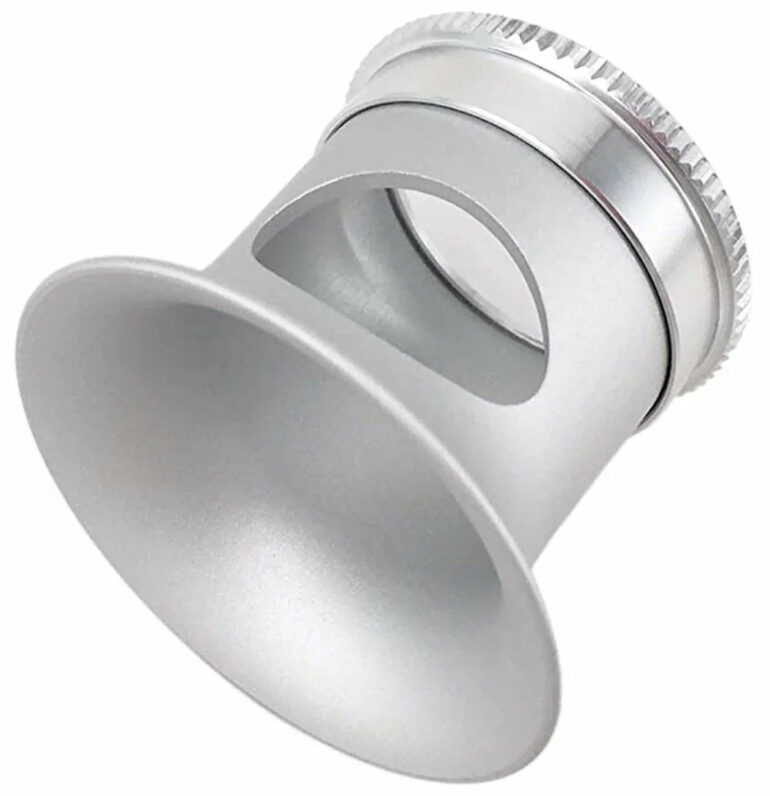
A genuine Rolex also features mechanical details that are difficult to counterfeit. The Microstella adjustment system on the balance wheel, for example, relies on four screws made of genuine gold. The movement’s finishes—perlage, Côtes de Genève, or the integration of the blue Parachrom hairspring—are unmistakable visual signatures. Since 2002, the brand has even incorporated a laser-engraved crown into the crystal at the 6 o’clock position—a nearly invisible detail that requires a magnifying glass and specific lighting; an engraving that is too obvious serves as an immediate red flag.
However, these once-defining characteristics are no longer sufficient. Counterfeiters have learned to refine the exterior to better conceal the inner workings, easily deceiving the untrained eye.
The Myth of the “Full Set” and the Danger of Hybrid Watches
For a long time, the presence of the original box and paperwork served as a symbol of authenticity. Today, this belief is based on a false sense of security. Unscrupulous networks produce hyper-realistic packaging, warranty cards with NFC chips, and fake holograms. The famous “full set” is no longer proof of authenticity: it’s now essential to examine the timepiece itself rather than relying on its accessories.
The situation is further complicated by the emergence of “Franken-watches,” formidable hybrid timepieces. Some sellers have no qualms about pairing an authentic case or dial with a non-compliant movement or internal components. In the face of such manipulations, vigilance is essential, because in this field, the exterior offers no guarantee of the interior.

The Crucial Importance of Regulated Channels
In this climate of uncertainty, the reliability of the retailer is just as crucial as the quality of the watch. In Singapore, professionals regulated by MinLaw provide a secure framework, subject to rigorous audits and cross-checks of provenance against international databases. A physical store, a transparent invoice, and documented traceability provide concrete safeguards, far removed from the risks inherent in hasty transactions on private platforms.
While purchasing through a regulated network does not completely eliminate the risk of counterfeits, it drastically reduces it by offering concrete guarantees and recourse in the event of a dispute.
In-depth technical expertise: the ultimate safeguard
Ultimately, all watch experts agree: to definitively authenticate a luxury watch, it is essential to open it. Only a meticulous examination of the movement, combined with several technical checks requiring specialized equipment, can confirm the authenticity of the finishes and internal architecture. For recognized specialists, this step is standard practice to rule out any risk of hybrid components or questionable assembly.
The cost of professional authentication—particularly when it involves opening the case and conducting a water resistance test—must be viewed as an essential investment. In the world of fine watchmaking, certainty comes at a price, but uncertainty can cost infinitely more. When dealing with highly coveted icons such as the Submariner, the GMT-Master II, or the Daytona, the only reasonable approach is to rely on a thorough technical inspection to preserve the value and integrity of your purchase.