
Make Texture a preferred source on Google to support us
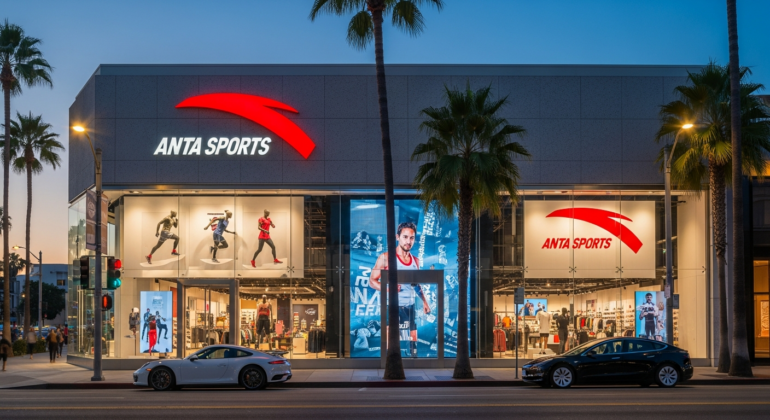
Add Texture to GoogleAnta Sports is setting out to conquer the U.S. market. The Chinese sportswear giant—now the world’s third-largest player in the sector by market capitalization—has opened its first company-owned store under the Anta brand in North America, in Beverly Hills. A historic turning point, as highlighted in a company press release, marking a break from the traditional strategy based on the wholesale model in the United States. It’s a real gamble, given that the U.S. market has historically been dominated by giants like Nike and Adidas.
A New “Brand + Retail” Model
Officially opened on February 13, the new store makes no secret of the group’s ambitions: a space of approximately 3,000 square meters and Anta’s transition to what the company defines as the “brand + retail” model, designed to strengthen the brand’s independence. The long-term goal is clear: “The Beverly Hills flagship store represents Anta’s first permanent retail presence in the United States and will serve as a base for the brand’s future expansion, partnerships with athletes (already established with NBA stars such as Kyrie Irving and Klay Thompson, ed.) and engagement with consumers nationwide,” the company explains in a statement.
Designed to be more than just a shopping destination, the store aims to be a community and cultural hub. Future programs will include running clubs, athlete-led activations, and initiatives celebrating the intersection of Chinese-American heritage, sports, and performance innovation. This opening is part of a major global expansion strategy, as Anta operates more than 12,000 stores across China, thereby strengthening its reach, credibility, and long-term commitment to the U.S. market.
“Opening our first U.S. flagship store in Beverly Hills is a defining moment for Anta,” said Samuel Tsui, CEO of Anta Brand. “This store represents our commitment to the U.S. market and our belief that sports, culture, and innovation in performance belong on the world’s biggest stages. Beverly Hills is the ideal location for this vision.”
Rising to Prominence Thanks to Salomon and Arc’teryx
The group’s recent success outside Asia—and certainly in Europe—has also been fueled by the performance of brands like Salomon and Arc’teryx (which have already expanded their retail presence in Milan with several stores). These brands have experienced explosive growth in recent years, gaining popularity even among customers outside Anta’s core target market. According to data from DeepMarketInsight, Anta Sports is now the third-largest group by market capitalization in the sportswear sector, with a market value of $32.66 billion (approximately 30.37 billion euros).
As of mid-2025, the global sports apparel sector remained dominated by Nike ($107.03 billion in market capitalization) and Adidas ($43.42 billion), followed by Lululemon ($27.5 billion) and Asics ($17.3 billion). Despite this, Anta’s growing strength is evident from its results for the first six months of 2025: the group reported revenue of 38.5 billion yuan (approximately 5 billion euros) and 14.3% growth, exceeding analysts’ estimates of 38.1 billion yuan.

As noted in the financial report, this marks the group’s twelfth consecutive year of growth, consolidating its leadership in the Chinese market. In China, the momentum of the brands in its portfolio (Arc’teryx, Salomon, Wilson) was even more pronounced, with revenue up 23% in the first quarter of 2025. Specifically, the Anta brand generated 16.95 billion yuan, an increase of 5.4%, outperforming the industry average.
The Strategic Acquisition of a Stake in Puma
The group’s rise will now be driven not only by the growth of its brands but also by the ambitious acquisition of a 29.06% stake in Puma, further strengthening its competitive position on a global scale. Here, too, the challenge remains significant, given the German group’s continued decline in sales. However, the deal—valued at approximately 1.5 billion euros—is expected to help Puma increase its sales in the lucrative mainland Chinese market, while Anta expands its multi-brand strategy.
“By working with Puma, we look forward to learning from one another and collaborating to fully realize the brand’s potential. This will further accelerate the globalization of Anta Sports and help drive the next chapter of growth for global sports markets, including China, creating sustainable value for consumers and shareholders of both companies worldwide,” commented Ding Shizhong, chairman of Anta Sports.
Now, it is up to the Asian giant to turn Puma’s fortunes around, as the company has been struggling for some time (in the third quarter of the year, the company reported revenue of 1.9 billion euros, down 15.3% at current exchange rates). But in the meantime, the intention to challenge Nike and Adidas—future direct competitors—seems abundantly clear.