
Make Texture a preferred source on Google to support us
Add Texture to GoogleThe Buzz Surrounding Matthieu Blazy and the 2025 Revival
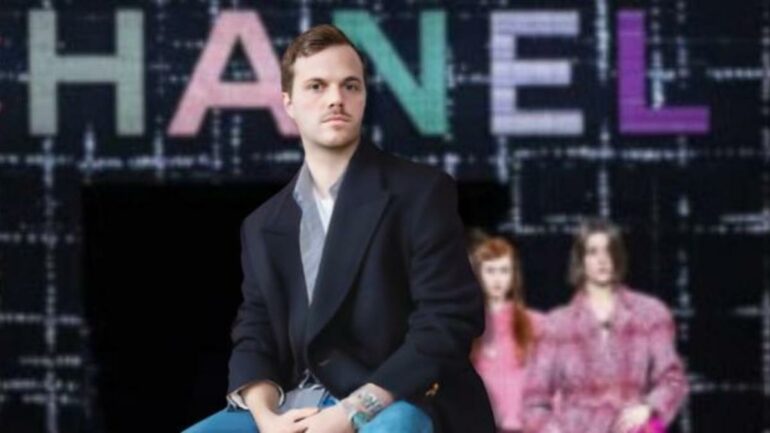
Some are calling it Chanel mania or Blazymania. The concrete effects of the huge buzz surrounding new creative director Matthieu Blazy—who presented his first collection in October, with products hitting stores early this year—won’t truly be visible until the 2026 financial reports. Estimates, according to Morgan Stanley analysts cited by Business of Fashion, could even reach double-digit growth. However, 2025 has already highlighted a growing “hype,” to such an extent that the company closed its fiscal year with revenue up 3% at current exchange rates, reaching $19.3 billion (approximately €16 billion), representing a 1.8% increase at constant exchange rates. This result reverses the negative trend of 2024, when revenue had declined by 4.3%. Also in 2025, Chanel recorded a 5% increase in operating profit, which reached $4.7 billion, up from $4.5 billion in 2024, although this figure remains below the levels achieved between 2021 and 2023. Net income, meanwhile, fell by 14.3%, coming in at $2.9 billion in 2025.
Chanel Compared to Its Main Competitors
Chanel’s growth rate in 2025 was lower than that of Hermès, which saw its sales increase by 5.5% at current exchange rates (+8.9% at constant rates) to reach €16 billion, but it outperformed LVMH’s fashion and leather goods division, which posted an 8% decline at current exchange rates (-5% at constant rates) to €37.7 billion.
Regional momentum and pricing strategy
Over the twelve months of 2025, the increase in sales was primarily driven by 7.2% organic growth in the Americas. Europe was more subdued with a 2.5% increase, driven by France, Italy, and Spain, while revenue declined by 0.8% in the Asia-Pacific region, which nevertheless remains Chanel’s most important region in terms of sales. As reported by news agencies, Chanel implemented an overall price increase of 3%, and 2% specifically for fashion products in 2025, and anticipates similar increases for this year. Furthermore, Chanel’s business in the Middle East, which accounts for approximately 4% of its revenue, has shown resilience despite the context of the war with Iran.

Massive investments in production and the distribution network
“In 2025, we witnessed a true creative surge across all our operations,” CEO Leena Nair told Reuters, noting that investments made in 2024 had laid the groundwork for this sales recovery. Throughout the year, the company continued its productive investments. As WWD notes, the group injected $700 million into its manufacturing network. The total number of suppliers under its control now stands at nearly 75. In 2025, the brand acquired a majority stake in leather goods manufacturer Renato Corti and a minority stake in silk producer Mantero Seta, in addition to a stake in Scottish cashmere spinner Todd & Duncan. The house also opened a new perfume production facility in France and is currently building its new global headquarters in London, scheduled for completion by the end of 2026. On the retail front, Chanel opened 41 boutiques in 2025 and plans to open 30 new ones this year.
Outlook for 2026: Success That Is Shaking Up the Luxury Sector
For 2026, as anticipated, analysts expect further growth driven by the resounding success of Blazy’s collections, which have already generated lines outside Chanel boutiques in March. Growth that, according to Reuters, could thwart Dior and Gucci’s attempts at a comeback. “Pessimists (a view we share for the moment) would argue that, against a backdrop of sluggish growth for the sector, Chanel’s resurgence must inevitably come at the expense of its competitors,” note Morgan Stanley analysts quoted by the agency. But for those who see the glass as half full, this momentum is a positive sign: “I consider it a good indicator for the luxury sector that Chanel is generating a level of interest we haven’t seen in several years,” said Harsharan Mann, portfolio manager and head of the consumer goods sector at Aviva Investors in London.