
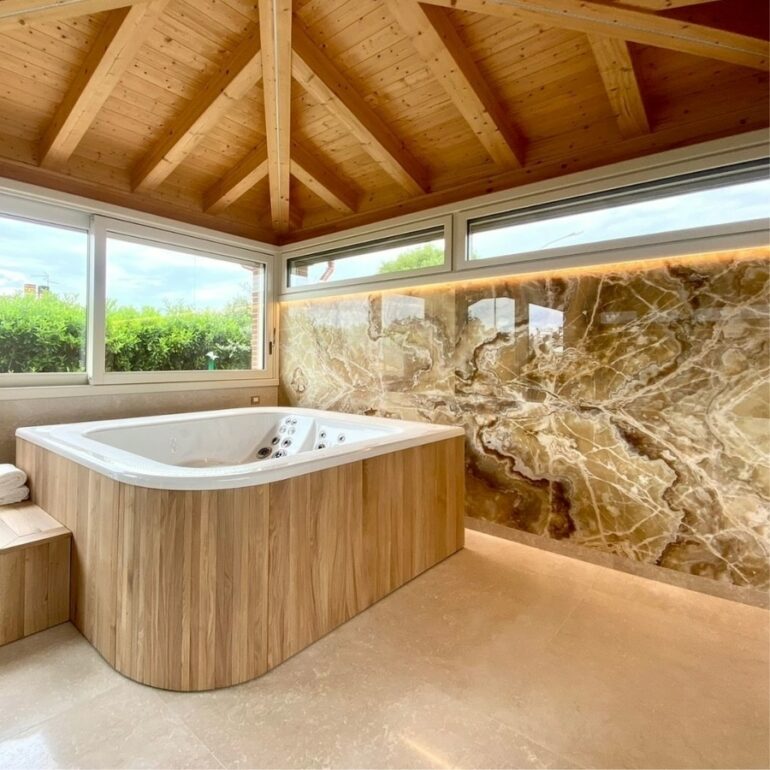
Major luxury brands are redefining their relationship with well-being by creating temporary, personalized retreats that blend sensory experiences with storytelling to appeal to aesthetes and influencers.
Well-being as a New Form of Experience
The luxury industry has fully grasped that simply offering a product is no longer enough: today, it’s about creating an experience that embodies a certain mindset. This summer, the beauty, fashion, and hospitality sectors are seeing beaches, spas, and gardens transformed into true havens of escape. People come here as much to escape the hustle and bustle as to discover new collections. While the approach draws inspiration from an almost aristocratic tradition of vacationing, its execution is decidedly contemporary.
Jo Malone London perfectly exemplifies this evolution. In Seoul, the brand unveiled a pop-up inspired by its Veggies collection, inviting visitors to explore various scent-themed spaces and experiment with scented pads. Centered around the fragrances Scarlet Beetroot, Velvety Butternut, and Carrot Blossom, the brand reinvents the spirit of the vegetable garden. The English garden thus becomes an immersive space, designed to make a splash on social media. Ultimately, the product doesn’t disappear; it becomes decor, a ritual, or an experience.
The Rise of Immersive Experiences
This concept extends far beyond the boundaries of perfumery. In Paris, the Dior Spa at Cheval Blanc offers its treatments in six suites, each designed as an intimate immersion into the world of Dior. The venue focuses on bespoke programs, proving that the spa has moved beyond its status as a mere stopover. It asserts itself as a narrative space with its own codes and signature rituals, with the ultimate promise of a moment of absolute peace.
In the same vein, the summer season sees a proliferation of locations where brands are taking over hotels, beach clubs, and coastal estates. Dior in Capri, Burberry on the Athenian Riviera, Gucci in Monaco, Jacquemus in Bodrum, or Missoni in Ibiza: the message resonates identically everywhere. The fashion house is no longer content to simply put its name on an object; it dresses a moment of freedom, captures a particular light, and reinvents a way of inhabiting the landscape.
The Riviera: A Laboratory for Experiences
The coast remains the preferred playground for this new economy of attention. In Capri, Dior continues its dialogue with the terrace of Il Riccio, in a setting that blends the heritage of Toile de Jouy with the Mediterranean imagination. In Monaco, Gucci celebrates the 60th anniversary of its Flora pattern—originally designed for Princess Grace—by enhancing La Rose des Vents. This choice is no accident: it skillfully links glamorous memories to an iconic setting.
For its part, Burberry has applied a bluish version of its famous tartan pattern to the lounge chairs, bicycles, and even the tennis courts at the One&Only Aesthesis. While the visual effect is striking, it also reveals the limits of the endeavor. By dominating the landscape, the brand sometimes risks overshadowing the spirit of the place, verging on the artificial. Refinement demands a sense of balance that this omnipresence can sometimes undermine.

The Spa Beyond the Walls
A more profound shift is evident this season: brands are no longer just selling treatments, but entire ecosystems. La Prairie, for example, has opened oceanfront treatment rooms in Montauk, expanding its body care offerings. Elemis takes the experience even further with a floating treatment room on Montauk Lake, incorporating the movement of the water into the treatment protocol. The treatment becomes an atmosphere in its own right.
Even more urban initiatives are playing this card. In London, Diptyque has transformed a section of New Bond Street into a water garden, while Bodyism organizes outdoor yoga sessions at Templeton Garden, capped off with a convivial brunch. In New York, Bryant Park continues to offer its free classes, this time sponsored by Halara. This free-of-charge approach is strategic: it attracts customers and builds loyalty by lending credibility to the overall experience. The summer of wellness is not merely a brief interlude in the luxury calendar; it is now its most subtle showcase.
An Aesthetic of Slowing Down
The common thread running through these initiatives goes beyond an obsession with detail or style: it is a true aesthetic of slowing down, carefully orchestrated by the brands. While luxury has always known how to sell time, space, and that sense of distance unique to exclusivity, it now does so through a gentler, more sensory, and almost therapeutic language.
This use of gardens, waterfronts, and historic estates lends a sense of depth—even if fleeting—to these campaigns, while weaving a commercial logic into the heart of a soothing narrative. While the result is as alluring as it is ingenious, it’s important to keep in mind that this strategy follows very specific rules: in this world, escape and relaxation are never left to chance.