
Make Texture a preferred source on Google to support us
Add Texture to GoogleA Watch Fair That Breaks Records
The curtain falls on Watches and Wonders 2026 with figures up from previous editions, totaling approximately 60,000 visitors (+9%) and 25,000 tickets sold during the three days open to the public (+9%). The event dedicated to the international watchmaking ecosystem, held as usual in Geneva, served as a showcase for 66 watch brands and also welcomed 1,750 journalists (+9%), 6,000 retailers, while the city center was bustling with more than 10,000 people.
A contemporary laboratory and a media success
Much more than a simple exhibition, the show has established itself as a true cultural hub for the timepiece industry, with the continued presence of historic houses and the addition of 11 new brands, transforming the event into a true contemporary laboratory of watchmaking. “Watches and Wonders is always a source of inspiration, as it allows us to observe the evolution of brands up close,” comments Fabrizio Noris, CEO of the historic Milanese watchmaker Verga 1947. “This year once again confirmed significant growth in terms of participation and influence,” he continues, “with a very strong presence of Asian visitors. "Thanks also to the participation of numerous celebrities—including Federica Brignone, Patrick Dempsey, Roger Federer, George Russell, Jannik Sinner, and Usher—widespread media coverage, and highly impactful creations, the 2026 edition generated an excellent international response, reaching nearly one billion people (900 million, representing a 29% increase) via the hashtag #watchesandwonders2026.
A market in transition
The opening of Watches and Wonders 2026 coincided with the Swiss watch industry returning to normal following the post-pandemic peak. According to data from the Federation of the Swiss Watch Industry (FH), exports in 2025 totaled 25.6 billion francs (approximately 26.5 billion euros), down 1.7% and in negative territory for the second consecutive year, against a backdrop marked by significant uncertainty, weakness in the Chinese market, and the impact of costs—including fluctuations in the price of gold. “ The market is going through a readjustment phase, but there remains significant uncertainty regarding actual demand and price trends,” Noris continued. The decline also affected volumes, which fell to 14.6 million units (-4.8%), confirming a more selective demand. After the peak in 2023, the sector has thus stabilized at lower levels, in a still fragile equilibrium: initial data for 2026 show a market in slight decline (-1% in March), but with signs of resilience on a quarterly basis (+1.4%). “What I’ve noticed,” the executive explains, “is a significant increase in prices: the risk is that the market will gradually drift away from the consumer. ” More than a crisis, this is a readjustment, as Noris confirms, even if the question of profitability remains open, under increasing pressure in a context of rising prices.
Back to the basics and 2026 trends
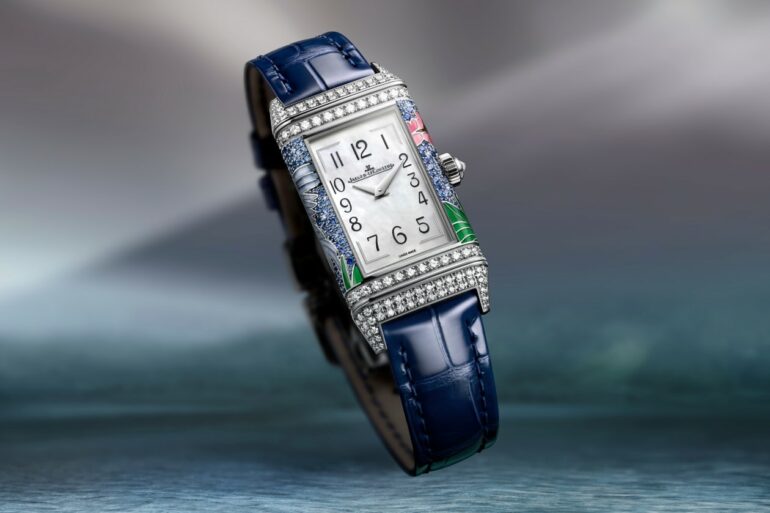
Finally, looking at the fair, the 2026 edition highlighted the fundamentals of watchmaking: two- or three-hand models, ultra-thin cases, skeletonized movements, vintage-inspired designs, and more compact dimensions. The models were designed with a gender-neutral approach, while color emerged as a distinctive element. On the technical front, chronographs and perpetual calendars dominated the complications. “Among the most interesting new releases, I saw some very compelling offerings from Patek Philippe, while Rolex focused its attention on celebrating the 100th anniversary of the Oyster,” notes Noris. “Even on the fringes of the show, remarkable pieces were spotted, such as the new Laureato from Girard-Perregaux, which is particularly captivating.”
The Rise of Independent Watchmakers
Alongside the major brands, the influence of independent watchmakers is growing: “Brands like H. Moser & Cie. are making a significant leap forward in terms of positioning,” notes the CEO, “including from an exhibition standpoint, while players like Gerald Charles continue to offer highly distinctive products. ” Finally, among the trends, there is also a strong use of natural stone dials, particularly in the most exclusive and non-catalog collections. “It is essential that the sector continue to innovate and diversify its offerings to avoid standardization, which could reduce overall appeal,” concludes Noris.