
Make Texture a preferred source on Google to support us
Add Texture to GoogleThe twelfth edition of NADA New York, marked by an expanded program and a wide variety of emerging talent, reflects an art market in the midst of transformation. In this dynamic landscape, collectors’ attention is shifting toward practices that are both experimental and accessible.
A buzz of excitement in the heart of Manhattan
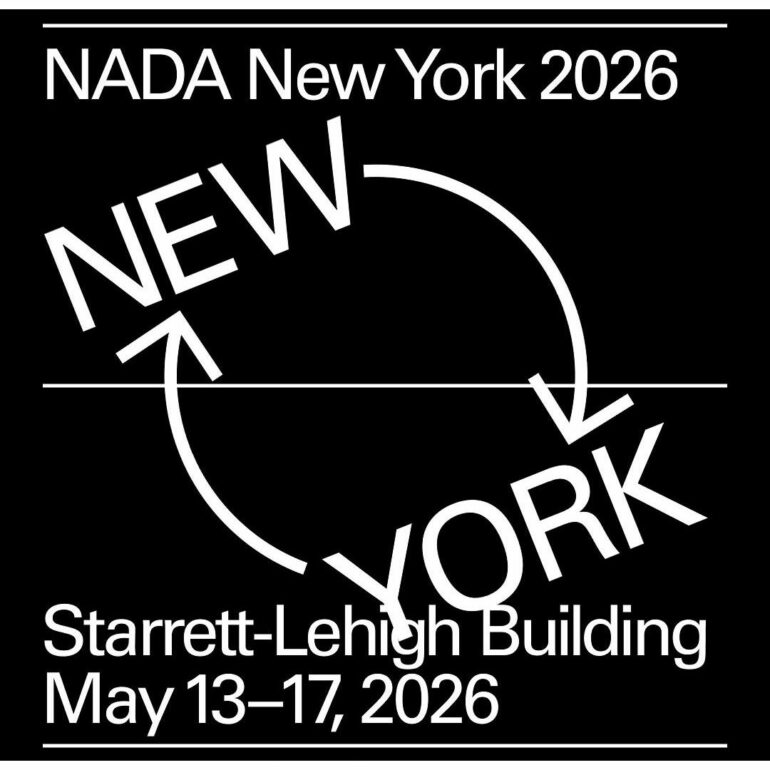
Launched on May 13, 2026, in the iconic Starrett-Lehigh Building, the fair is part of New York’s particularly packed arts calendar. For this twelfth edition, the New Art Dealers Alliance has brought together more than 110 galleries, art spaces, and non-profit institutions from 46 cities across 15 countries. A testament to its renewed appeal, more than half of the exhibitors are making their debut at the fair.
Facing institutional giants like Frieze New York, or specialized fairs such as Future Fair and 1-54—the latter brilliantly spotlighting Afro-Brazilian art with its section 1-54 Presents: Brazil Beyond Brazil—the spatial and intellectual competition was palpable. This abundance of events naturally diluted the general attention during the first few hours of opening.
Far from reflecting a lack of interest, this dynamic illustrates a genuine shift in focus. Visitors took the time to wander, observe, and compare. In terms of acquisitions, decisions were often made with lightning speed, favoring solo or duo exhibitions accompanied by reasonable price offers.
The appeal of intimate, controlled formats
Market feedback confirms this trend: several galleries sealed their first sales as early as opening day. The psychological threshold of $10,000 proved particularly strategic for driving transactions. For example, Feia Studio sold out its entire space dedicated to Marianna Peragallo, while LATITUDE sold 90% of Shangfeng Zhang’s works in just a few hours.
This momentum was evident throughout the fair. Yiwei Gallery sold eight paintings by Kay Seohyung Lee, Spinello Projects sold half of its selection, and Kates Ferri found buyers for three pieces by Justin Lim. A clear trend is emerging: affordability now very often takes precedence over the monumentality of the work.
The price range for emerging artists generally fell between $950 and $5,000. Many galleries thus opted for minimalist presentations to minimize risk, prioritizing the clarity and coherence of the artistic approach over visual excess.
A laboratory for curatorial experimentation
What stands out above all in this edition is its ability to highlight practices that explore personal memory, diaspora narratives, and the poetry of everyday life. Milk Moon Gallery spotlighted the work of Kelly Tapia-Chuning, transforming the traditional serape into a fascinating space of decolonization. Meanwhile, FORGOTTEN LANDS presented a dialogue between Andrae Green and Cyle Warner on contemporary forms of Caribbean identity resistance, prompting immediate acquisitions and keen institutional interest.
Conceptual ambiguity often took precedence over the spectacular. Third Born captivated viewers with Loucia Carlier’s assemblages, blending raw materials, Hermès leather scraps, and imagery of social desire. In a similar vein, Capsule Shanghai unveiled Douglas Rieger’s Male Fantasies, an installation inspired by the writings of Klaus Theweleit that skillfully explores the power dynamics between corporeality, technology, and power.
NADA thus reaffirms its unique positioning: less a temple of established icons than a forward-looking playground for works in the making. A subtle approach that proves deeply intellectual and formative.
Local roots and global resonance
The fair’s great strength lies in its ability to weave together diverse geopolitical narratives without ever diluting their complexity. From the Chinese artist Shangfeng Zhang to the Malaysian Justin Lim, from the Chuvash Polina Osipova to the American of Puerto Rican origin Esai Alfredo, the works captivated viewers through condensed formats where narrative drives the aesthetic. These approaches particularly resonated with local collectors—a reaction that makes perfect sense within the New York art ecosystem.
In the whirlwind of an overloaded art week, establishing a local foothold is almost a strategic move. The galleries have fully embraced this: it is no longer just about offering works for sale, but about opening a genuine gateway to artistic worlds that are still off the beaten path.
Scheduled to run through May 17, 2026, the fair continues its founding mission: to amplify the voice of the emerging avant-garde, brilliantly rising to the challenge of standing out in an ever-more-vibrant cultural landscape.