
Make Texture a preferred source on Google to support us
Add Texture to GoogleIn Singapore, the frenzy of urban and cultural transformation is shaping a metropolis in constant flux. Behind its dizzying verticality and an unquenchable thirst for renewal, the city-state sometimes conceals, in the shadow of its futuristic architecture, the voices of its forgotten generations.
The Aesthetics of Perpetual Metamorphosis
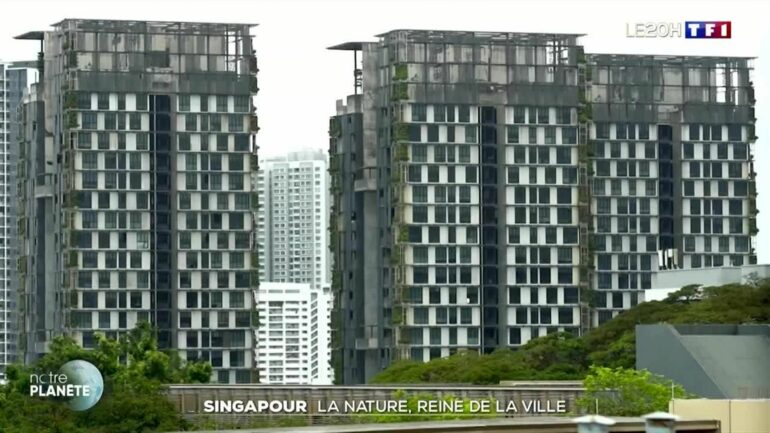
In Singapore, renewal goes beyond the simple question of land use planning; it has become a true national narrative. For decades, this city-state has defined itself through ceaseless transformations: land reclamation, landfilling, the construction of glass towers, sprawling highways, and colossal ports, all of which now sketch out the promise of an ultimate smart city. Change is seen here as a vital necessity, both moral and urban.
This ideology of transformation permeates the everyday landscape. Historic buildings are giving way to contemporary architecture, neighborhoods are being redesigned at a breakneck pace, and infrastructure is constantly adapting to streamline the urban space. Amid these transformations, Singapore resembles an unfinished work, a metropolis that, paradoxically, seems to exist in a state of perpetual construction.
When Infrastructure Becomes a Showcase
The Singapore Art Museum (SAM) is fully part of this dynamic. After closing its historic site on Bras Basah Road, the institution moved in 2022 to Tanjong Pagar Distripark, a former port warehouse reimagined as a sanctuary for contemporary art. This choice of location is anything but trivial. It forges a visceral link between artistic creation and logistics, that infrastructural matrix that has long shaped Singapore’s prosperity.
The building has retained its industrial DNA: exposed monumental beams, grand volumes, and a structure designed for mass storage. This raw, almost monastic aesthetic does not erase its past; it elevates it. The museum thus becomes a design object in its own right, a space suspended between port heritage and cultural avant-garde.
The exhibition SAM Contemporaries: How To Dream Worlds extends this reflection by examining Singapore’s relationship with its profoundly altered landscape. Syahrul Anuar’s installation The Mountain Lovers Club aptly illustrates the repercussions of mining and urban sprawl on a natural environment pushed to its limits.
Elevation as the sole horizon
In this reinvention of the territory, height becomes a true architectural vocabulary. While other metropolises spread out, Singapore soars toward the sky. Residential towers, sleek skyscrapers, and suspended structures compose an almost abstract landscape, where nature has often been displaced, domesticated, or even replaced.
Syahrul Anuar’s work translates this reality into a visual choreography of cranes, facades in the making, and leveled ground. Far from any romantic melancholy, the work reminds us that the absence of natural topography here gives rise to an obsessive fascination with verticality. This quest for heights resonates with the city’s intrinsic history, shaped by trade, extraction, and accumulation.
In parallel, the exhibition Continuity, Fluidity, and Unity (at Artspace@Helutrans), showcasing works by Wong Shih Yaw from the collection of architect Koh Seow Chuan, approaches this verticality through a more exalted lens. In Vibrant Youth, young figures seem to levitate above the urban fabric. In Marina Bay Triptych, childlike figures appear to fall from the sky onto a bay entirely built on land reclaimed from the sea.
The mirage of sleek perfection
These works depict a triumphant, dynamic Singapore resolutely looking toward the future. They sketch a portrait of a fluid future, where the metropolis serves as a showcase for shared prosperity. However, this veneer leaves little room for the wear and tear of time or for those who are aging within the city.
Faced with accelerated demographic aging, Singapore sees the figure of the young prodigy climbing the ladder of success as more than just an aesthetic motif. It resembles a form of temporal selection, silently designating those who embody the city’s dynamism.
The race for renewal thus proceeds with a certain ambiguity: while it guarantees a spectacular horizon, it struggles to offer equal visibility to all the actors in this ever-evolving city.
The Poetry of Lives in Suspension
In the museum’s Learning Gallery, Nguan’s photographs capture attention with their delicate dissonance. They reveal elderly people, frozen in suspended gestures: a man dozing on a slide, another clutching the receiver of a payphone in a coffeeshop. Their pace seems slowed, in stark contrast to the frenetic pulse of the metropolis.
The contrast is striking: the slide embodies childhood; the payphone belongs to a bygone era. This visual dialogue suggests that obsolescence in Singapore affects not only material objects but extends to bodies, social statuses, and the place we grant to the human being.
A tone that finds its extension in Josephine Chia’s writing, exploring the fate of a generation of builders now relegated to the background. Her stories convey a sense of lost purpose, as if the relentless march of progress demanded the erasure of those who laid its foundations.
Dialogue Beyond Concrete
The Learning Gallery invites visitors to approach contemporary art with a child’s innocence. A meaningful approach that reinforces the idea that innovation must remain playful, open, and resolutely youthful.
David Chan’s installation Animal Roulette, with its animal chimeras displayed in glass cases, takes this concept to its extreme. Initially perceived with a lighthearted touch, the work becomes unsettling as one observes these crossbreeds of species. It crystallizes our fantasies of technological control and our apprehensions regarding the excesses of tomorrow.
But perhaps the most striking image is the interaction between a museum guard and the work itself: a peaceful exchange, followed by the use of a digital assistant to examine these hybrid figures. A scene that reminds us that true modernity does not lie solely in architectural audacity or hyper-technology. The purest continuity sometimes arises from simple conversation, far beyond stone, glass, or code.
Singapore is hurtling toward its future at a dizzying pace. Yet these works whisper that every step forward leaves in its wake silences and vulnerable presences—fragments of humanity that no urban feat can fully absorb.