
Make Texture a preferred source on Google to support us
Add Texture to GoogleIn an art world often driven by immediacy and frenzy, the 2026 edition of the Dallas Art Fair stands out as an elegant exception. Far from being a shortcoming, this deliberate slowness proves to be a conscious choice: a counter-cultural model that prioritizes stability, patience, and deep-rooted connections between galleries, collectors, and institutions.
A Celebration of Consistency
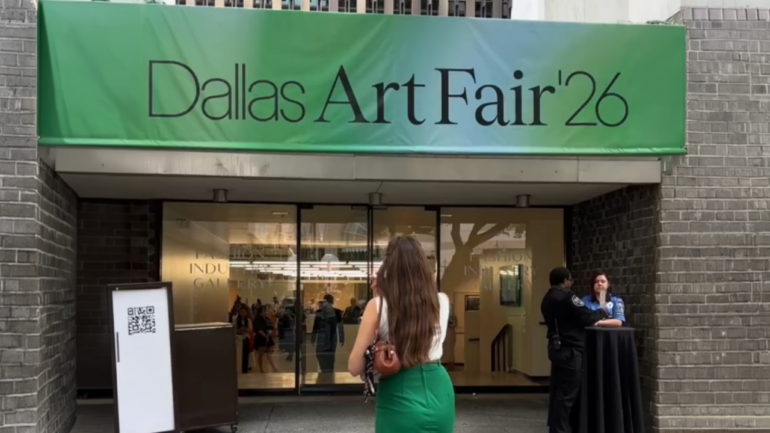
From April 16 to 19, 2026, the Fashion Industry Gallery, nestled in Dallas’s vibrant Arts District, will serve as the fair’s venue. This spacious venue, designed to showcase modern and contemporary art, offers a setting where practicality meets perfectly controlled restraint.
The Dallas Art Fair does not seek to dazzle with ostentatious excess, but captivates with its unwavering consistency. With nearly 90 exhibitors, the event maintains a measured turnover of its galleries. This stability forges a unique identity in a circuit where the obsession with novelty too often overshadows editorial coherence.
The Collectors’ Unhurried Pace
At the heart of this Texan model lies a relationship of great patience between dealers and buyers. Far from being in a hurry, local collectors are distinguished by a thoughtful, almost cautious approach. They stroll the aisles, compare, ask questions, and finally let their choices mature.
This deliberate pace disrupts the frantic rhythm of traditional sales. Where other fairs cultivate a sense of urgency and compulsive buying, Dallas celebrates the repetition of exchanges. Purchases often materialize in the final moments of the fair, the result of repeated visits and a genuine sense of trust. Each transaction then takes on a personal, infinitely more intimate dimension.
Texan roots, international reach
While the event is deeply rooted in Texas’s institutional and private fabric, it nonetheless possesses undeniable global reach. Galleries from more than a dozen countries will make the trip in 2026, with some even choosing to expand their exhibition spaces to mark their presence. The robust local foundation thus becomes a springboard to the international stage.
Fair Director Kelly Cornell embodies this delicate balance. She manages to maintain a highly selective curatorial vision while responding to the event’s growing appeal. The fair thus retains its selective aura—vital to its credibility—while remaining a welcoming and essential destination for major market players.

A lasting institutional dialogue
Another major strength of the Dallas Art Fair lies in its close ties with major institutions. The recent acquisitions by the Dallas Museum of Art—which has notably added works by Nicole Eisenman, Caroline Monnet, and Raymond Saunders to its collections—perfectly illustrate this synergy. These choices reinforce the fair’s curatorial legitimacy and demonstrate that its influence extends far beyond the commercial sphere.
This bridge between the market and the museum is part of a broader cultural narrative. In Dallas, a work’s life does not end at the moment of its sale; it continues on the walls of public and private collections, shaping over time a deeply enduring local taste.
Sustainability as a Signature
The emergence of a new generation of Texas gallery owners and collectors is now injecting fresh energy into the scene, without undermining the established structure. Their trajectories are shaping a more regional market, embodied by permanent spaces rooted in strong personal and geographical affinities, without ever succumbing to insularity.
The focus in Dallas has never been on frenzy, but rather on legacy. In an industry where speed often dictates the rules, cultivating the long term and loyalty is almost an act of defiance. While this philosophy eschews fleeting gratification, it offers the luxury and art market its most intangible and coveted asset: absolute trust.