
Make Texture a preferred source on Google to support us
Add Texture to GoogleNestled within a majestic historic mansion, the McNay Art Museum in San Antonio stands out for its masterful collection and architecture, where the setting enhances the art. An immersive experience at the intersection of heritage and contemporary creation.
A museum as notable for its setting as for its artworks
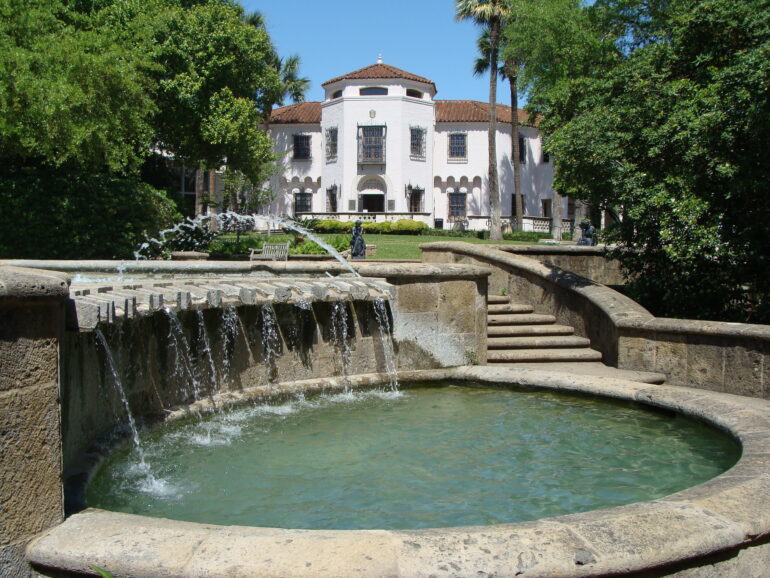
In San Antonio, the McNay Art Museum offers a leisurely stroll where passion and discovery intertwine. While its collection is impressive, its architecture captivates from the very first glance. Housed in a lavish 1929 Spanish Colonial Revival-inspired mansion, the institution, founded in 1954, prides itself on being Texas’s very first museum of modern art. The rich interplay between the building’s classicism and the brilliance of the artworks it houses is its main draw.
The museum brings together undisputed masters such as Pablo Picasso, Georgia O’Keeffe, Paul Gauguin, Henri Matisse, Mary Cassatt, and Diego Rivera. Drawing on this diversity, the institution situates its collection within a history of modern and 20th-century art that extends far beyond Texas’s borders. Here, the building never overshadows the artwork; it complements it with a discretion imbued with authority.
A rich collection with a distinct identity
The McNay houses over 20,000 works, displayed throughout its exhibition spaces and its sumptuous gardens spanning 25 acres. The heart of the collection beats to the rhythm of 19th- and 20th-century masters, hailing from both Europe and America. This creates a strong visual coherence, favoring classical elegance over the sometimes more ostentatious choices of certain modern institutions.
While the museum was hailed in 2022 as the best in San Antonio, this local recognition reveals only one facet of its aura. The true richness of the McNay lies in its ability to offer an authentic depth of interpretation, supported by a meticulously balanced interplay of architecture, curation, and landscaping.
A subtly orchestrated contemporary continuity
Far from being stuck in its modernist past, the museum looks toward the present. The exhibition untitled: 20 Years of Collecting Contemporary Art features over a hundred works, tracing two decades of acquisitions in the contemporary sphere. The selection brings together distinctive and varied artists such as Deborah Butterfield, John Chamberlain, Vanessa German, Sam Gilliam, Martine Gutierrez, Whitfield Lovell, Kiki Smith, and Carrie Mae Weems.
This approach illustrates an acquisition strategy that is both prudent and sincere. Rather than erasing its legacy, the institution extends and integrates it. In the American museum landscape, this pursuit of continuity—chosen over sensationalism—stands out as an approach of rare elegance and reassuring longevity.
Cultural roots at the heart of shared spaces
Recently, the museum opened the exhibition Ferias, Parques y Plazas, an ode to the joy of gathering and community life. This initiative weaves connections between the treasures of the permanent collection and loans from local artists, such as Adriana M. Garcia, whose paintings pay a vibrant tribute to the history of her community.
For Matthew McLendon, the McNay’s director, this curatorial approach invites visitors to rethink how shared spaces forge social connection and belonging. Beyond institutional rhetoric, this vision reflects the true spirit of the place: a setting that is not limited to the mere accumulation of masterpieces, but is committed to storytelling and bringing people together.
Art lovers regularly highlight the estate’s grandeur, the galleries’ meticulous curation, and the absolute serenity of the outdoor gardens. While its reputation resonates brilliantly, nothing can replace the in-person experience: this unique atmosphere demands a physical presence to grasp all its nuances.
Ultimately, the McNay’s power lies in a timeless philosophy: art reveals its full potential when housed within walls steeped in memory. At a time when many institutions are succumbing to the allure of spectacle or architectural excess, this Texas museum cultivates depth, silence, and continuity. An approach far removed from grand gestures, yet infinitely more vibrant and enduring.