

Make Texture a preferred source on Google to support us
Add Texture to GoogleIn 2025, Brunello Cucinelli posted steady growth thanks to a strategy focused on exclusivity, investment in Italy, and expansion into the Asian market, while consolidating its prudent governance.
Brunello Cucinelli has confirmed the strength of its model based on scarcity and quality—a strategy that appears to be working well. The brand has recorded continuous sales growth while expanding its production capacity in Italy. The annual results show an unusual combination: sustained business expansion accompanied by heavy investment, all aimed at preserving the brand’s exclusivity over the long term—that’s quite remarkable, isn’t it?
Solid results, driven primarily by retail and Asia
In 2025, sales rose by approximately 11.5%, reaching nearly 1.41 billion euros
, according to a report published by Insideretail
and confirmed by Vogue. The retail channel now accounts for more than two-thirds of revenue, with growth of about 12–14%, according to various sources. In fact, it accounted for 67.3% of the total at year-end, again according to Modaes. The Asia region, for its part, played a key role, with growth of more than 15% at constant exchange rates and a share of nearly 28% of revenue. According to Vogue and Fibre2Fashion, China maintained double-digit growth throughout the year, which is a clear sign that local consumers are increasingly seeking quality, craftsmanship, and sustainability rather than just logos.
Selective positioning and controlled distribution
Thanks to a policy of exclusive retail partnerships, the brand has avoided the overexposure
faced by some competitors. As of the end of December, the group operated 136 company-owned stores, with locations strategically chosen in cities such as London, Paris, and Los Angeles, according to Modaes. Sales in department stores remain a part of the strategy but are carefully managed, which helps boost wholesale sales while avoiding any dilution of the brand image—a rather clever approach.
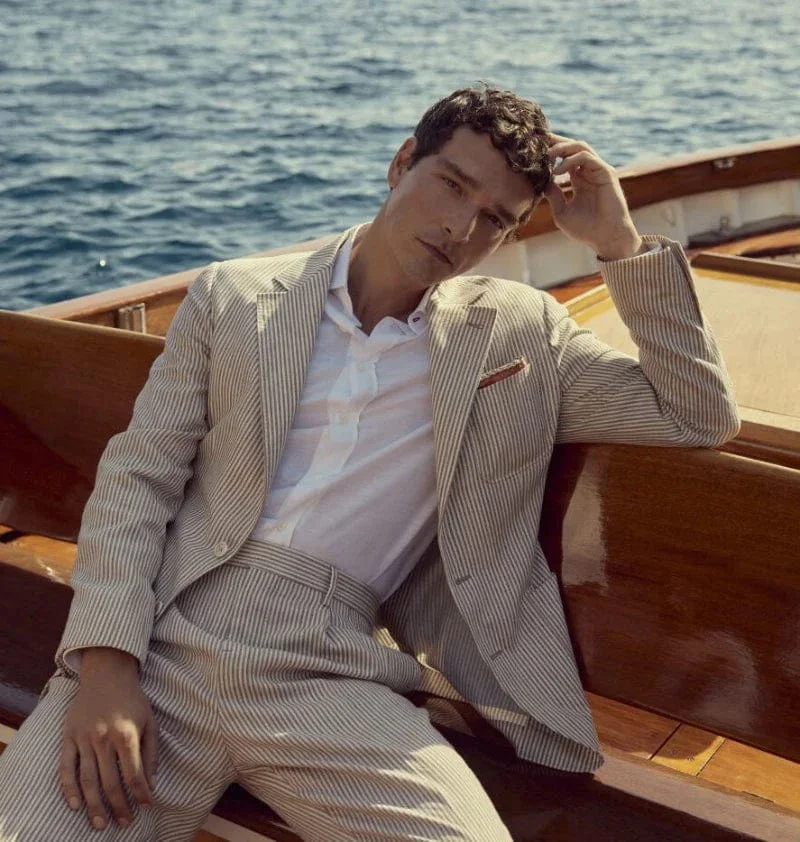
“Its luxury wholesale strategy is sound, excluding Saks Fifth Avenue,” said Milton Pedraza, founder and CEO of the Luxury Institute. According to Pedraza, “Its partnership with Harrods has been remarkable. Its loyalty to small boutiques that target affluent customers is not only wise but also profitable.” These remarks clearly illustrate the group’s strategic preference for retailers with strong influence over consumer choices—it’s a rather smart strategic approach, isn’t it?
Investing in the Cycle to Guarantee “Made in Italy”
What stands out most in 2025 is the massive investment effort—a real challenge: 145 million euros over two years to double the size of the Solomeo headquarters and increase artisanal production capacity in Italy, with new facilities in Penne and Gubbio dedicated primarily to outerwear and ready-to-wear. Insideretail reports that this work was completed six months ahead of schedule, thereby anticipating demand for the next decade—which is a pretty smart move, if you ask me.
This investment spree has, admittedly, temporarily weighed on the company’s financial structure: net debt hovered around 200 million euros at the end of the fiscal year, after the payment of 69 million in dividends, as mentioned in the original article. It’s important to note that this demonstrates a clear commitment to preparing for the future, even if, yes, it does involve some short-term risk.

Management forecasts growth of about 10% for this year and has set a target of reaching nearly 1.8 billion euros in revenue by 2028. All of this while remaining true to the brand’s exclusivity and consistency, as noted by Insideretail. In fact, the initial results for 2025 are encouraging: revenue grew by more than 10% in the first quarter, according to the board of directors’ press release. The strategy? Investing in the product offering rather than resorting to excessive promotions. Milton Pedraza warns: “Discounts in the high-end luxury sector are insidious; then, all of a sudden, they become a problem.” In short, care must be taken not to devalue the perception of luxury by systematically slashing prices—a point that, after all, is crucial to the model’s long-term viability.
Regional Nuances and Implications for the Sector
The U.S. markets performed very well, with growth of about 12%, especially in major U.S. cities. In Europe, growth has been more moderate but has been fueled by tourism and a loyal local customer base, particularly in Italy. These trends are corroborated by several industry publications as well as the group’s financial statements. The combination of a tightly controlled single-brand network, productive investments in Italy, and strong demand in Asia is the formula that, for many, puts Brunello Cucinelli in a defensive position—while remaining selective. That said, of course, this temporary increase in debt requires rigorous management; caution is needed until the situation stabilizes with investments returning to a more “normal” level.
The company has turned strategic restraint into a competitive advantage
. By focusing on Italian craftsmanship, a discreet yet effective distribution strategy, and targeted investments, Brunello Cucinelli has strengthened its value proposition without compromising its identity. Still, as is always the case in this sector, the key to future success will likely be disciplined management: intelligently managing inventory, controlling store openings, and maintaining pricing that continues to protect that aura of exclusive luxury, while remaining quite accessible. In short, the balance remains delicate, but the brand does not seem ready to abandon its philosophy.