
Make Texture a preferred source on Google to support us
Add Texture to GooglePolène has chosen Milan for its first Italian store. The French brand has just opened a 343-square-meter boutique in the heart of the Quadrilatero, at 37 Via Manzoni, in the space previously occupied by Elisabetta Franchi. Founded in 2016, the women’s leather goods brand stands out for its “timeless” designs, as CEO and co-founder Antoine Mothay points out. The collections are crafted by 2,200 artisans in Ubrique, Andalusia, favoring natural hues and organic shapes shaped by innovative techniques: leather molded over wood, drapes secured with hand-stitched stitches, and origami-like weaves and folds created from complex patterns.
Total control over production and quality
“We’re on-site at the factories every day; we can monitor everything, ensure traceability, and constantly teach, learn, and exchange ideas. It’s a very short production cycle, which helps us immensely in maintaining and improving the quality of our craftsmanship,” explains Mothay. 70% of the leather used comes from Italy, and since 2023, Polène has expanded into jewelry, unveiling collections plated with 24-karat fine gold and entirely crafted on the Italian peninsula. “From the very beginning, the goal was to provide customers with the best possible product, based on two fundamental pillars: design and quality—both in materials and craftsmanship. In the beginning, we spent over a year visiting factories in different countries to understand and perfect every detail before the launch. It’s a long-term project.”
Exclusive Distribution and Measured International Expansion
Polène’s products are distributed exclusively through monobrand stores and the official online store. Bags start at 350 euros, while special editions can reach 600 euros. The brand currently has 11 stores worldwide; in addition to Milan, there are boutiques in Paris (two standalone stores and a counter within the Le Bon Marché department store), New York, Tokyo, Seoul, London, Hamburg, Copenhagen, and Beijing, with the latter having opened last November. Retail expansion will continue in 2026: “In the second half of the year, we’ll open stores in Chicago and California, as well as in Dubai, a second boutique in Tokyo, and one in Osaka. We’re moving forward steadily: we don’t like to rush. 100% of our global distribution is direct; we sell online but we firmly believe in brick-and-mortar retail. Online, you can say a lot of things, but it doesn’t evoke the same emotion. In-store, the team undergoes months of training before opening to learn every detail: materials, colors, stitching, and finishes. That’s what customers are looking for today.”
Financial results are balanced across all geographic regions, with online sales slightly outpacing in-store sales. The CEO does not disclose financial results, “but I can say that we’re growing every year in a very dynamic yet healthy way. We’re not chasing sales: for us, the goal is the customer experience. If the work is done well, sales will follow.”
Creativity, Circularity, and Architecture
Circularity is one of the brand’s guiding principles, as evidenced by the “Plèi” collection, which features macramé bags made with upcycled leather beads, leather-brick walls, floral home decor items, and collaborative creations with guest artisans. Polène recently collaborated with Irish designer Róisín Pierce, presenting two bags at Paris Fashion Week last March. The brand remains open to new partnerships with designers and artists.

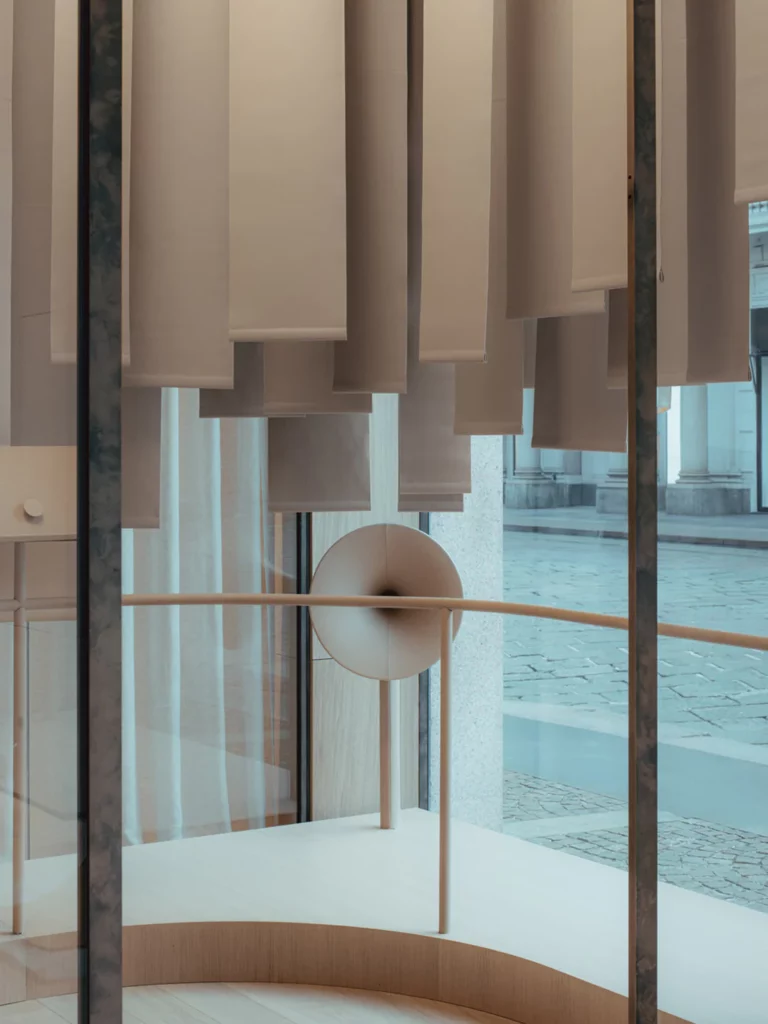
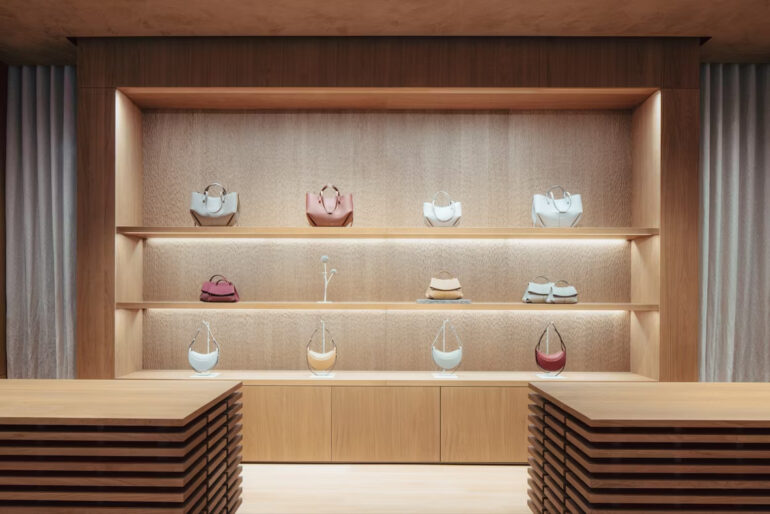
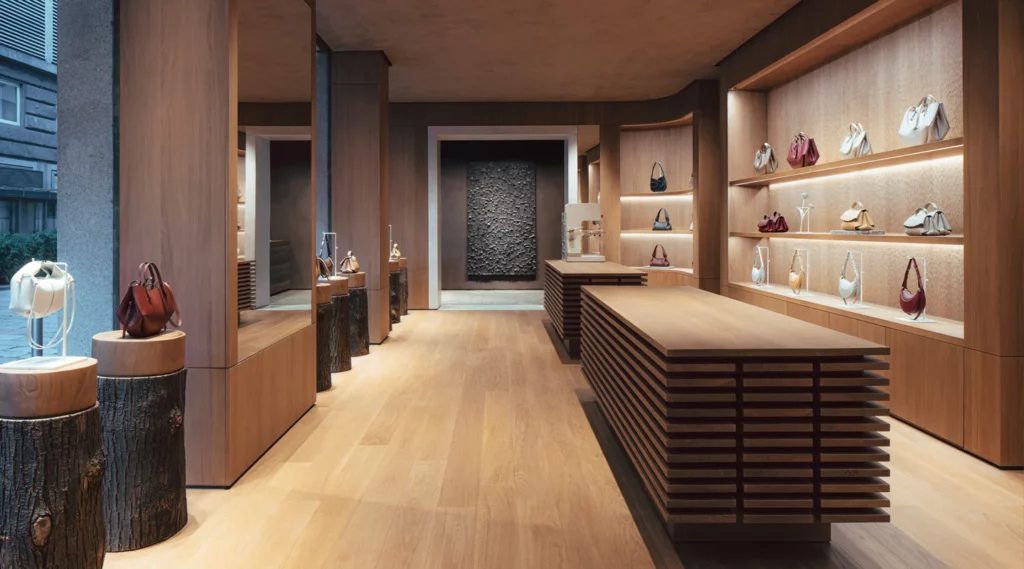
The Milan flagship store was designed by Norm Architects. The project draws inspiration from Milanese architectural styles: understated, discreet facades that conceal luminous interiors rich in detail and contrast. Each material evolves in color and texture, ranging from raw to refined. The immersive “Craft at Work” experience welcomes customers through the “Leather Orchestra”: a small dedicated space where visitors are surrounded by leather panels, where material and sound come together in an immersive performance. The entrance is dominated by stone, inspired by the floors of Lombardy’s capital. Next comes the space dedicated to fabrics, where the walls, rounded sofas, and rugs create an enveloping atmosphere. This leads into the world of leather, whose craftsmanship draws inspiration from the workshops of Ubrique. Wood is also present as a warm, tactile element, as is the option to personalize creations with one’s initials. Ceramics adorn the final space, which features a work by Italian artist Clara Graziolino, underscoring the common thread connecting the brand with local talent.
Milan: A Strategic and Cultural Choice
“Milan was a natural choice for us. It’s a major fashion capital, with a strong focus on craftsmanship and expertise. We know that Italian customers are very knowledgeable, discerning, and attentive; they understand the complexity of design and high quality—it’s part of Italian culture. That’s why we believe this is a very interesting partnership, and it’s important for us to be here. The store on Via Manzoni is designed as a sensory journey, room by room, each dedicated to a specific material: stone, wood, ceramics, and leather. “The boutique is not just a retail space, but a place of emotion and discovery,” concludes the CEO.