
Make Texture a preferred source on Google to support us
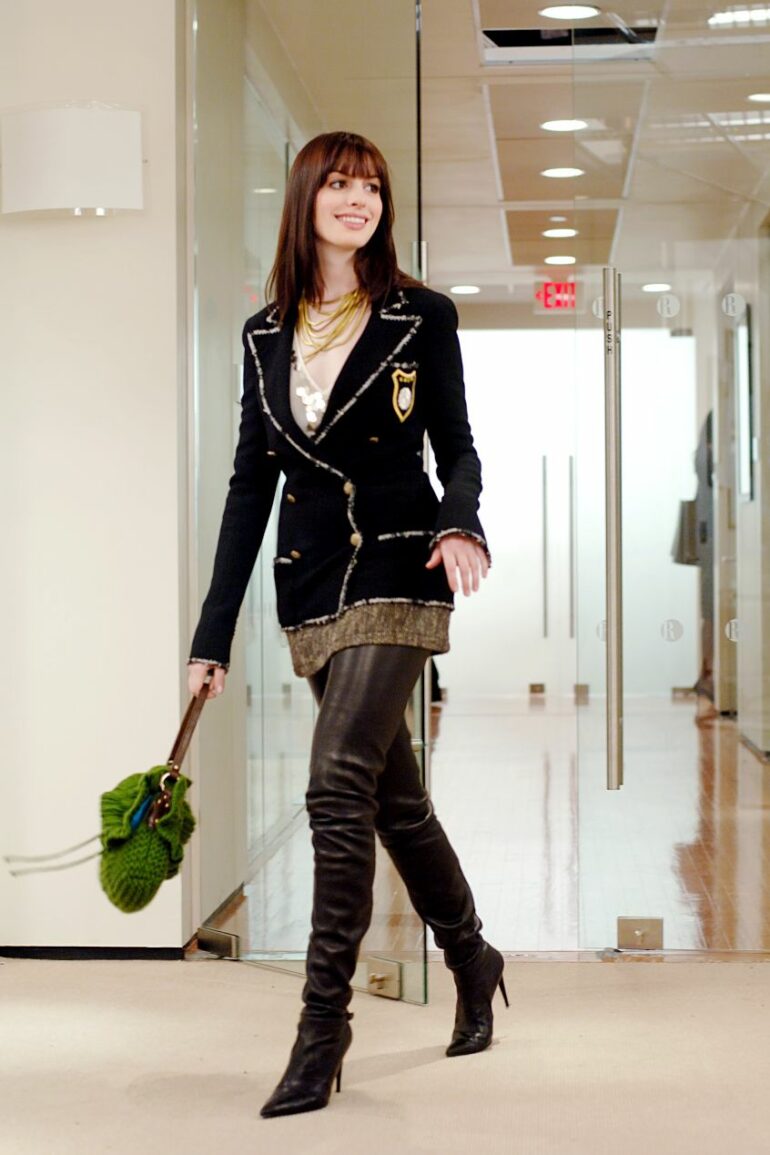
Add Texture to GoogleIt is likely that even Pope Leo XIV is aware that the film *The Devil Wears Prada 2* is being released in Italian theaters today, the sequel to the feature film that, for the past twenty years, has taught a large portion of the world’s population that cerulean is a shade ranging from blue to sky blue. The teaser, online since November, has surpassed 11 million views on YouTube, and the first trailer, released in February, has reached 15 million views. TV series like “Sex and the City” and, more recently, “Emily in Paris,” have captivated the attention of millions of fashion-loving female viewers, but “The Devil Wears Prada,” based on Lauren Weisberger’s partially autobiographical novel, has reached a much broader global audience, including men, without any specific demographic targeting. The character of Miranda Priestly, masterfully portrayed by Meryl Streep, has her own Wikipedia page, and some of her lines have now entered everyday language—even for those who didn’t know who photographer Mario Testino was or couldn’t spell “Gabbana” correctly.
The End of an Era for the Fashion Press
Contrary to expectations, “The Devil Wears Prada 2” is not a new chapter in the glittering world of fashion publishing—quite the opposite. The industry screenings held a few days ago surprised many with the realism with which the film depicts the decline—and in many ways the collapse—of the old system of specialized magazines. Runway, a magazine inspired by US Vogue (just as Priestly is the spitting image of Anna Wintour), is hit by a deep crisis due to its inability to adapt to new dynamics in content consumption. If you’re allergic to spoilers, you’d better stop here.
Social media, budget cuts, and a generational clash
The film opens with Andy Sachs (played by Anne Hathaway) winning a prestigious journalism award for her investigative work, on the very same day she is laid off along with all her colleagues. A tragically familiar situation for dozens of female journalists over the past twenty years (just a few days ago, Condé Nast announced the closure of Wired Italia following staff cuts at Teen Vogue and Vogue Business, to name just a few). The journalist is forced to return to Runway with the mission of turning the magazine around, whose image has been considerably tarnished following a scandal caused by Priestly. The first twenty minutes of the film depict precisely what a fashion editor faces on a daily basis today: how to adapt an investigative article for social media? How to capture the interest of readers who no longer flip through pages but scroll frantically? How do you ensure engagement through likes and comments?
At the same time, Miranda is grappling with a September issue that’s “as thin as dental floss” due to a shortage of advertisers. Following a generational shift at the helm of the publishing house, the magazine faces drastic budget cuts that force the editor-in-chief to fly economy class to attend fashion shows in Europe and slash budgets for photo shoots. These are consequences that journalists know all too well and which drew nervous laughter during the Milan screening. Meryl Streep perfectly captures the exasperation with which Priestly must grapple with the concepts of inclusivity and political correctness; in particular, she was forbidden from delegating the chore of carrying her bag and coat to her second assistant. The contrast between the modus operandi of the older generation and that of Gen Z is stark, just as it is in any newsroom today. The screenplay also successfully addresses the theme of sustainability through the rise of secondhand luxury shopping (unthinkable twenty years ago). The negotiations regarding editorial coverage with “top client” advertising brands are also strikingly realistic.
The Evolution of the Fashion System
The sequel contains fewer iconic lines (Florals? For spring? Groundbreaking) but offers far more food for thought on fashion publishing and, more broadly, the luxury industry. Emily Charlton (played by Emily Blunt) left Runway when she realized she couldn’t build a career there, opting instead for a senior position at Dior—just as, for several years now, brilliant fashion editors have chosen to work directly for major luxury houses. For months, rumors have been swirling about Jeff Bezos’ (and his wife Lauren Sánchez Bezos’) alleged interest in the Condé Nast group; in the film, Runway is in danger of falling into the hands of an incompetent new billionaire, encouraged by an ambitious girlfriend.
Star-studded cameos and a global promotional tour
Of course, “The Devil Wears Prada 2” remains above all an entertaining film brimming with self-deprecating humor, plot twists, romantic comedy tropes, and playful nods. While, twenty years ago, Valentino Garavani was the only designer to recognize the film’s potential—and to not fear Anna Wintour’s reactions—by appearing in person alongside Giancarlo Giammetti, this sequel features a string of brief cameos: Marc Jacobs, Donatella Versace (mentioned several times in the first film), Domenico Dolce, Stefano Gabbana, Brunello Cucinelli, and Francesco Scognamiglio, as well as New York Times fashion critic Vanessa Friedman and renowned stylist Law Roach.
Meryl Streep also graces the cover of the latest issue of US Vogue alongside Wintour; the line between reality and fiction has never been so blurred. In addition to dozens of video interviews and cover stories (Elle, Harper’s Bazaar, Town & Country), the cast traveled the world for its promotional tour, from Mexico City to Shanghai via London, Tokyo, and New York. It’s a shame they didn’t stop for a grand premiere in the Lombard capital.
"Runway" fever takes over Milan
In “The Devil Wears Prada 2,” Milan Fashion Week plays the role that the Paris shows did in the original film. Miranda and Nigel (Stanley Tucci) were actually seated in the front row at the Dolce&Gabbana show last September, even though no actors were present at the evening event organized by Rinascente Duomo in collaboration with the film’s various sponsors. Through May 4, on the -1 level of this department store, an immersive space transports visitors right into the heart of Runway’s editorial office, through interactive environments designed to be experienced, photographed, and shared on social media. Compared to twenty years ago, merchandising has also evolved and reflects the rise of fast fashion. With the exception of the Made in Italy cotton T-shirts produced by Rinascente, most of the film’s merchandise is sold by retailers such as Yamamay and Reserved, or budget brands like Ovs, Alcott, Primark, and Pull&Bear.
Until Sunday, you can even pick up a free print copy of Runway at a pop-up kiosk in Piazza Giovine Italia. Hundreds of high school students and businesspeople, women over 50, and college students are lining up. “I came during my lunch break because, deep down, it’s not just a movie. Miranda is Miranda!” says Eleonora, backpack slung over her shoulders. “I’m tagging along, but I know the first movie by heart too,” admits her boyfriend, Andrea. “We bought our movie tickets a month ago, and on Vinted, there are already copies of Runway for sale at $300,” says a group of teenage girls, eager to get their hands on a magazine that doesn’t exist, but whose editor-in-chief, assistants, and art director, paradoxically, we’ve known the editor-in-chief, her assistants, and the art director for two decades. A magazine whose existential crisis we’re now familiar with, but which will likely, despite everything, continue to inspire the dreams of thousands of female viewers.
A girl waiting in line under the Milanese sun takes off her jacket and proudly displays her T-shirt featuring Miranda Priestly’s famous line, “Everybody wants to be us,” while singing along with her friends to the song recorded by Lady Gaga especially for the new film. That's all.