
Make Texture a preferred source on Google to support us
Add Texture to GoogleAfter 188 years of independence, Charvet joins the ranks of Chanel. This major acquisition allows the French group to preserve exceptional craftsmanship while, with the utmost discretion, expanding into the men’s luxury market. A high-profile move at the intersection of heritage and modernity.
Beyond the fabric: a strategy of exclusivity
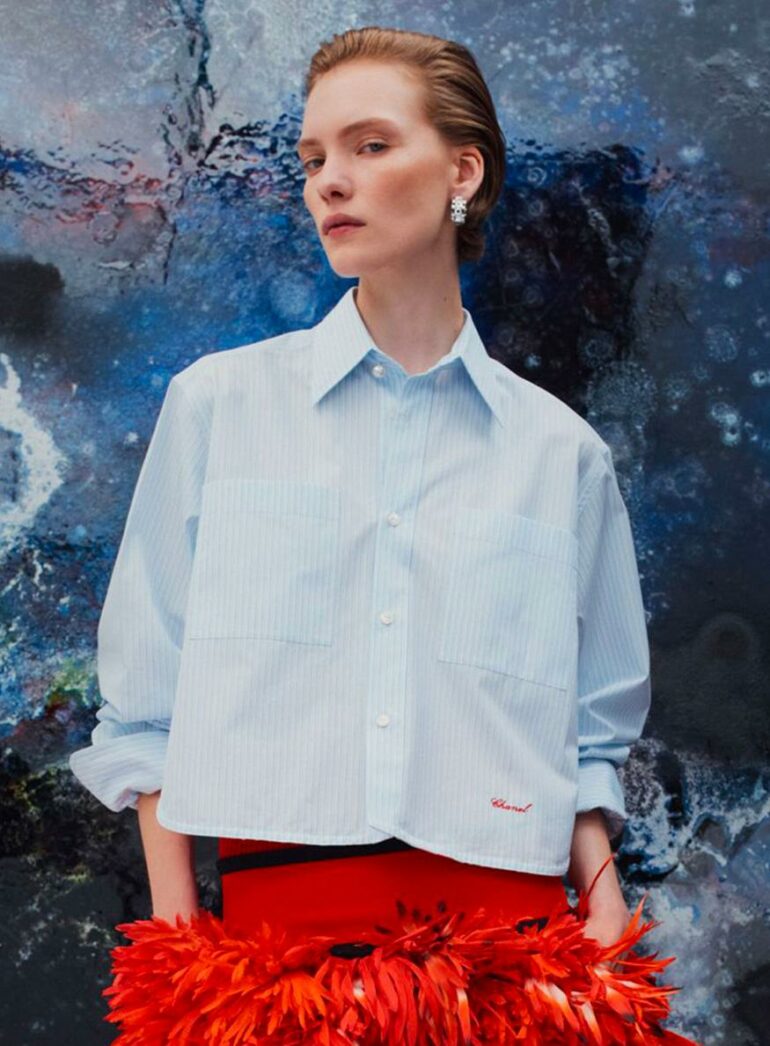
Chanel has finally acquired Charvet, a Parisian institution founded in the 19th century that has remained, until now, fiercely independent. This integration marks the end of nearly two centuries of autonomy for the legendary shirtmaker on Place Vendôme, while ensuring the continued legacy of its uncompromising precision. According to several specialized media outlets, the deal was reportedly sealed in the wake of a high-profile collaboration between Charvet and Matthieu Blazy, Chanel’s creative director, for the Spring/Summer 2026 collection.
The story may have less to do with preserving heritage than with a genuine strategy of control. In the world of contemporary luxury, rarity is no longer limited to the final product; it lies in control over the workshops, the techniques passed down over time, and the richness of the archives. Chanel thus secures exclusive access to masterful craftsmanship that no competitor can easily replicate or imitate.
The Monopoly on the Perfect Craft
This acquisition is part of a well-known preservation strategy for the house on Rue Cambon: rather than focusing on sheer quantity, the goal is to secure key artisanal skills early on. Initial reports indicate that the house wishes to preserve Charvet’s creative independence, thereby avoiding diluting the atelier within its own industrial framework.
This strategic caution is by no means coincidental. In an industry where highly skilled labor is becoming increasingly scarce, acquiring such a tailoring workshop proves just as powerful as a major branding campaign. Chanel has chosen here to protect not only absolute mastery of shirtmaking but also a culture of meticulous attention to detail—from impeccable cuts to architecturally designed collars—thus perpetuating what amounts to a veritable living museum of the craft.
A Stealthy Foray into Men’s Fashion
What lies beneath the surface of this move goes beyond simply preserving a national treasure. For many experts, this is a subtle maneuver allowing Chanel to enter the men’s luxury market without having to disrupt its identity by launching a dedicated line. While the brand remains the ultimate symbol of feminine allure, it now boasts a prestigious foothold in men’s tailoring.
The timing of the deal further supports this interpretation. The recent collaboration between Blazy and Charvet served as a full-scale test, quickly winning over a clientele weary of logomania. Modern luxury is increasingly celebrating the triumph of discretion over ostentatious display—a paradigm shift that Chanel seems to have fully embraced.

Succession in the Age of Big Capital
Charvet occupies a unique place in the pantheon of French fashion. Renowned for its bespoke tailoring, suits, and accessories, the house has spanned generations without ever succumbing to the allure of fleeting trends or folklore. According to the Anglo-Saxon press, the acquisition would also include the building housing its iconic boutique on Place Vendôme, a bastion as symbolic as it is strategic.
The Colban family, at the helm since 1965, had no direct heir. It is precisely at this moment that the luxury industry unleashes its most contemporary power: when the family line dies out, capital takes over. Chanel seized this opportunity, combining formidable pragmatism with an unconditional respect for craftsmanship.
Ultimately, this takeover speaks volumes about the brand’s current philosophy. Chanel is no longer content to simply sell dreams; it is securing the material conditions necessary for their creation. In a market saturated with storytelling, the house has chosen to invest in the very infrastructure of its narrative.
The message is crystal clear: control the workshops, safeguard every craft, consolidate its position around rare arts, and then let the excellence of the garments speak for themselves. This approach may be less spectacular than a high-profile fashion show, but it is infinitely more sustainable. And in the upper echelons of the luxury world, sustainability remains the most precious privilege of all.