
Make Texture a preferred source on Google to support us
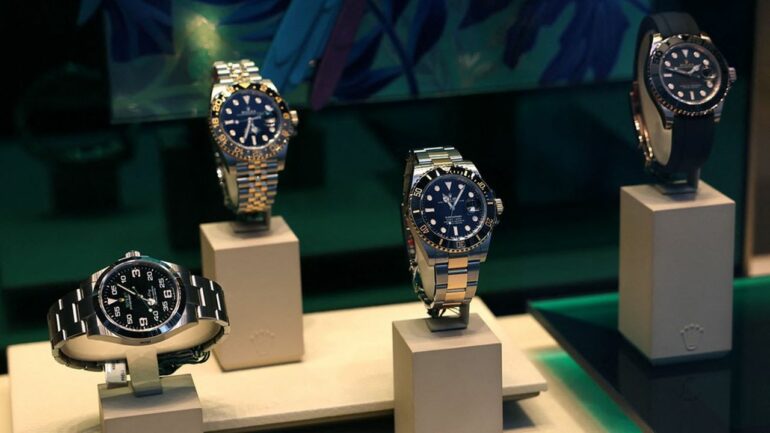
Add Texture to GoogleWhile Rolex’s production has declined for the second consecutive year, the Geneva-based brand has posted record revenue, consolidating its dominance in an increasingly polarized market. This apparent paradox—producing less to earn more—illustrates the profound transformation of the Swiss watch industry, which is now focused on absolute exclusivity and premium pricing.
The Paradox of Growth Through Scarcity
According to the recent annual report by Morgan Stanley and LuxeConsult, Rolex achieved record sales of nearly 11 billion Swiss francs (approximately 14 billion euros) in 2025, marking a 4% increase over the previous year. What is notable is the method: the brand reached this peak while reducing its production by 2%. This is the second consecutive year that production has declined, a trend not seen in over twenty years. This dynamic underscores a major strategic shift: a decline in volume offset by an increase in revenue, demonstrating the brand’s unmatched “pricing power” in the luxury industry.
One of the most striking figures in the report reveals that Rolex accounted for approximately 33% of the Swiss watch industry’s total sales last year, with nearly one million watches sold. This dominance is extraordinary: a single brand alone commands one-third of the global market. Concentration is, in fact, the new watchword for the sector, as the combined sales of Rolex, Cartier, Omega, and Patek Philippe reached 52.4% of total Swiss watch exports. The market is thus becoming increasingly concentrated around a handful of elite brands.
The Performance of the Challengers
While Rolex leads the pack, the competitive landscape of 2025 has seen other brands achieve substantial results:
- Cartier generated approximately $4.5 billion, driven by the timeless popularity of its Tank collection.
- Richard Mille posted revenue of approximately $4.1 billion despite a modest volume of 5,950 watches. This ratio implies an average price exceeding $689,000 per piece, underscoring its ultra-luxury positioning.
- Audemars Piguet reached approximately $3.3 billion with only 53,000 timepieces sold.
- Patek Philippe recorded approximately $3.2 billion for 72,000 units.
- Omega, according to Morgan Stanley’s estimates, is said to have generated approximately $2.8 billion, although the Swatch Group disputes these figures, suggesting a discrepancy between analysts’ estimates and internal data.

The industry trend is clear: total Swiss watch production in 2025 fell to approximately 14.6 million units, or nearly half the 2011 volume. At the same time, the segment of watches priced above 50,000 Swiss francs (approximately $64,000) accounted for 84% of the industry’s growth, even though it represents only 1.4% of total units produced. The Swiss watch industry is no longer seeking to flood the market, but rather to sustain its profitability and prestige through ultra-luxury products.
The future lies in hyper-luxury
Geographically, exports to China fell by 23% in 2024, contributing to the overall slowdown. In contrast, the U.S. market showed resilience with an increase in exports of approximately 4%. Major players such as Rolex have responded by strengthening their distribution networks through strategic acquisitions—such as the purchase of Bucherer—to better control their sales channels and meet growing demand in key markets like the United States.
As the industry already looks ahead to the next editions of Watches and Wonders, the major brands are expected to reinforce their current strategies: producing fewer watches, raising prices, and maintaining waiting lists that fuel desire. The industry’s trajectory points to a focus on quality, exclusivity, and high margins rather than mass production. Rolex is defining and leading this trend, leaving other brands to adapt their strategies to remain competitive in a market segment that is shrinking in volume but growing in value.