
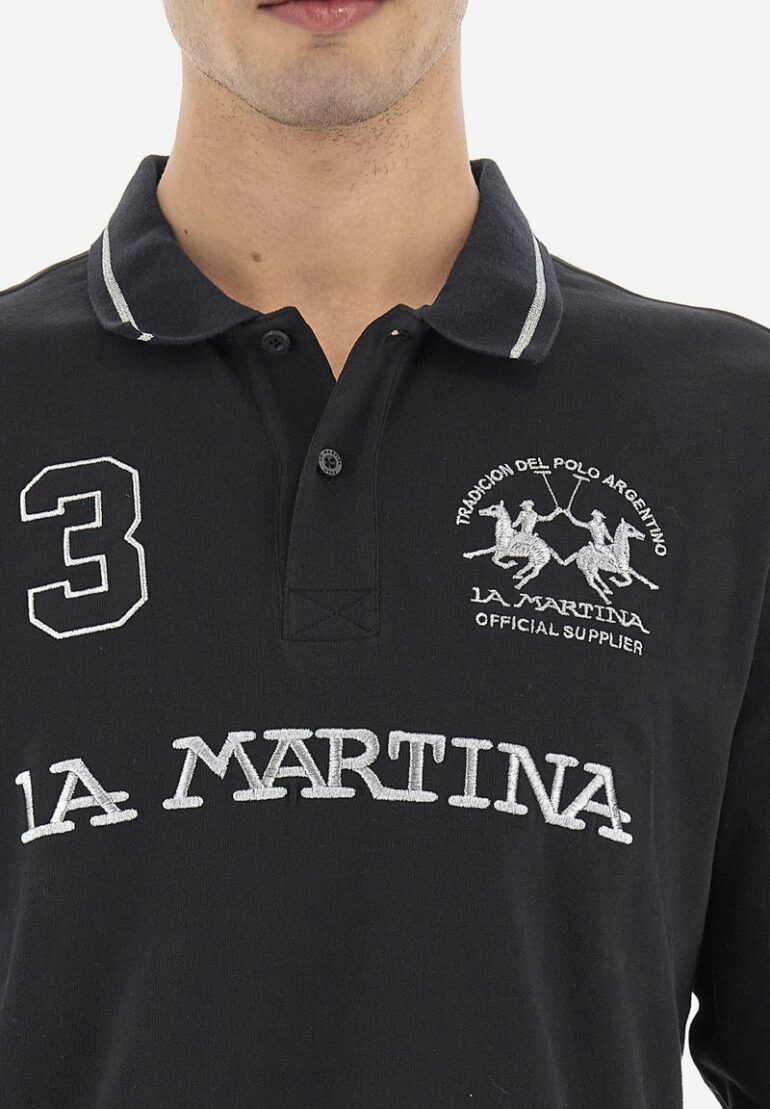
The Elegance of the Polo Shirt in the Age of Agility: La Martina Kicks Off Its Revolution at Pitti Uomo
For forty years, La Martina has forged an unbreakable bond between the vibrancy of Buenos Aires and polo fields around the world. At the 110th edition of Pitti Uomo, the Argentine brand took a decisive step in its history by formalizing a strategic partnership with BWM, a subsidiary of the giant Li & Fung. This alliance marks a structural turning point for the brand, which seeks to combine its artisanal heritage with global industrial clout.
A Return to Its Roots Through Technological Innovation
For Adrian Simonetti, president of La Martina, this new chapter is not a break with the past, but a reaffirmation of the brand’s DNA. By delegating product development, sourcing, and supply chain management to BWM, the brand intends to refocus on its creative core business. “It’s about understanding our heritage while adopting new methods of creation and distribution,” the executive emphasizes. The goal is clear: to become more responsive to meet the demands of the direct-to-consumer market, without sacrificing the essence of the polo shirt that has defined the brand for four decades.
In practical terms, this collaboration is redefining the brand’s operational standards. Production lead times, previously set at 75 days, will be reduced to just 30 days. Even more impressive, the prototyping process can now be completed in one week, while full-scale production will be reached in twenty-one days. This newfound agility enables smoother restocking and better inventory management—crucial advantages in an ever-accelerating fashion landscape.

A Global Vision to Preserve Identity
While logistics are becoming globalized, creative direction remains La Martina’s sanctuary. This division of roles ensures global stylistic consistency. Milad Fini, CEO of BWM, emphasizes the commitment to preserving the brand’s roots while infusing it with the technical expertise of Li & Fung, an institution with 120 years of history. The key benefit lies in centralization: a single point of contact will ensure that fabrics, cuts, and quality remain strictly consistent, from Buenos Aires to Tokyo.
In an economic climate marked by volatile raw material prices, this centralized structure also serves as a strategic buffer. Destan Bezmen, president of Li & Fung, notes that the group’s global network helps stabilize production costs. For La Martina, this alliance with BWM therefore represents not only a gain in efficiency but a true springboard for controlled international expansion, where speed of execution serves to uphold prestige and tradition.