
Make Texture a preferred source on Google to support us
Add Texture to GoogleFrom Historic City Hall to Luxury Hotel: The Rebirth of OMO7 Yokohama
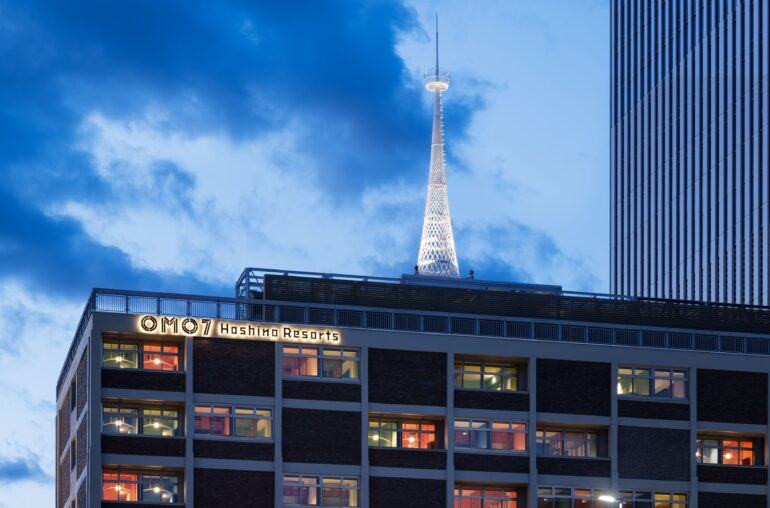
Originally designed in 1959 by the renowned Japanese architect Togo Murano, Yokohama’s beloved former city hall has just undergone a spectacular transformation. Under the leadership of the Hoshino Resorts group, this iconic administrative building has been completely reinvented to now house the OMO7 Yokohama, an exceptional hotel with 276 rooms.
An architectural tribute that defies modern standards
The extensive renovation project was entrusted to Takenaka Corporation, while Naruse-Inokuma Architects oversaw the design and interior layout. The team’s primary goal: to enhance Murano’s legacy by preserving as many period elements as possible. Yoshiharu Hoshino, head of the hotel group, highlights the venue’s unique character: “Today, no real estate developer would design a building with such spacious volumes. A huge, empty atrium seems nonsensical from a profitability standpoint, but that is precisely what makes this space so rich. Incorporating a monumental staircase that takes up so much space would be unthinkable today, yet the atmosphere it creates is incredible. It was Togo Murano’s boundless imagination that made this project possible.”
Design: A Blend of Vintage Nostalgia and Contemporary Touches
Rather than making a clean break with the past, the designers have breathed new life into numerous historical details. The door handles, antique clocks, light fixtures, and original tiles have all been given a second life, blending seamlessly with new materials. “We made every effort to restore and keep objects in their original locations whenever feasible,” explains architect Jun Inokuma. The atrium railings were thus reintegrated into the decor, while the green armchairs on the upper floor underwent careful restoration. The public artworks from the former municipal building were preserved and, in some cases, relocated to be better showcased. For example, the famous ceramic mural by sculptor Shindo Tsuji, titled “Sea, Waves, Ship,” now proudly adorns one of the walls of the hotel’s bakery.
Colorful nods and a strong local identity
The aesthetic of the new interiors revolves around the bold color palette once favored by Murano. It features the symbolic green of the former council chamber, the bright red of the mayor’s office, and deep blue wall tiles. In a surprising and decidedly modern move, the hotel has dedicated one of its floors exclusively to pets, offering dog-friendly sleeping areas and a grooming salon. On the dining front, the establishment celebrates Yokohama’s multicultural culinary history. The menu features Chinese specialties—a nod to the famous neighboring Chinatown—as well as Yoshoku-style dishes, a flavorful Japanese cuisine heavily inspired by Western gastronomy.
An urban anchor in the heart of a rapidly changing neighborhood
Part of the brand’s “OMO” urban collection, the number “7” in its name guarantees guests a comprehensive, high-end experience. The neighborhood surrounding the building has also undergone a major revitalization. Now renamed Basegate, this area is brimming with shops, dining spots, and brand-new office spaces. Additionally, Chinatown, the waterfront promenade, and the lush Yokohama Park are just a few minutes’ walk away.
Building on this successful opening, Hoshino Resorts is already tackling another major heritage challenge: the conversion of the former Nara Prison into a luxury hotel. “I’m fighting against design that’s dictated solely by the profitability of the space,” says the CEO. “Restoring new utility and value to historic buildings remains our most effective weapon against this trend.”
hoshinoresorts.com
Yokohama: A Pioneering City
As Japan’s second-largest metropolitan area, Yokohama’s identity is deeply rooted in the country’s opening to the world in the mid-19th century. The metropolis has also been the scene of numerous national “firsts.” It was here that the country’s first ice cream and its very first commercial brewery (Kirin) appeared. Today, the OMO7 fits perfectly into this urban buzz: part of the property directly overlooks the city’s massive 34,000-seat baseball stadium. Guests can particularly enjoy a spectacular view of the games, a drink in hand, from the bar on the rooftop terrace.