
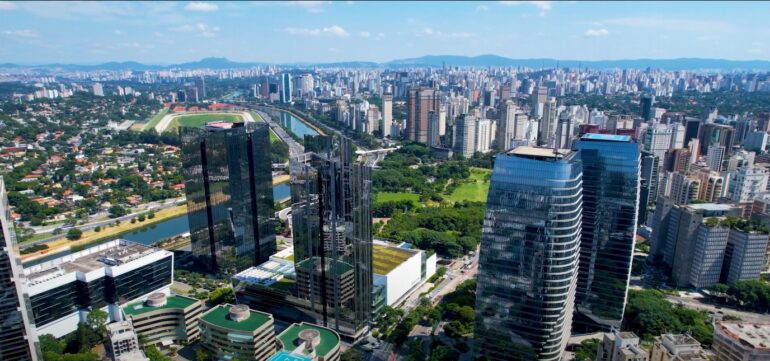
São Paulo: Tropical Extravagance Beyond the Clichés
Forget European standards and the provincial charm of the Old Continent’s capitals. São Paulo is in a league of its own. In this concrete jungle of 12 million people, ambition is measured by the height of skyscrapers, and the city’s energy never stops—not even in the face of the legendary traffic jams that paralyze the metropolis. Here, when a local tells you a trip will take fifteen minutes, expect it to take forty. Between the swarms of scooter couriers and the ceaseless flow of traffic on Paulista Avenue, the city sets its own pace: intense, chaotic, but resolutely forward-looking.
An Urban Model Looked Toward Asia
To understand São Paulo, you have to look east. While real estate developers in the Faria Lima neighborhood—the local “Wall Street”—seek inspiration, they no longer look to London or Milan, but to Tokyo or Bangkok. The city has devised its own model of urban survival to overcome the challenges of the tropical climate and security concerns. Shopping centers, such as those operated by the Iguatemi Group, have become true pillars of civic life. Far from being mere temples of consumerism, these secure, air-conditioned spaces house theaters, movie theaters, art galleries, and fine-dining restaurants, offering a vital alternative to traditional public spaces.
Design as Cultural DNA
In Brazil, aesthetics are not a luxury; they are an essential component of national identity. This philosophy is particularly evident at Casa Zalszupin, the former home of renowned designer Jorge Zalszupin, now preserved thanks to the work of Lissa Carmona and the firm Etel. This place embodies the city’s ability to honor its talents while reinventing its spaces. This commitment to beauty extends even to the modern hotel industry. At the Pulso Hotel, owner Otávio Suriani champions a vision in which dark wood furniture and lush tropical vegetation are not merely decorative elements, but a reflection of a metropolis proud of its urban character.

The Paulistano way of life: between pizza and caipirinha
Despite its reputation as a city of hard work, São Paulo knows how to cultivate its rituals. Sunday evening is sacred: it’s pizza night. Institutions like Pizzaria Camelo are always bustling, welcoming night owls and families even late into the night with unwavering hospitality. To get a feel for this social and cultural diversity, head to Spot, a bistro-diner tucked away just a stone’s throw from Paulista Avenue. It’s there, between cocktails, that you can observe the city’s true mix of people: creative young folks, executives winding down after work, and urban tribes all mingle in a contagious buzz.
Dealing with the Unpredictable
Traveling to São Paulo requires a certain flexibility of mind. The city operates according to unchanging schedules that dictate the flow of business and pleasure. Trying to sign a major contract during Carnival in February or during the World Cup is virtually impossible: the entire country comes to a standstill then, and São Paulo is no exception. Under a winter sky that proudly displays 23°C and azure blue, the megacity continues to set its own rules, establishing itself as a must-visit destination for those seeking to understand the pulse of 21st-century South America.