
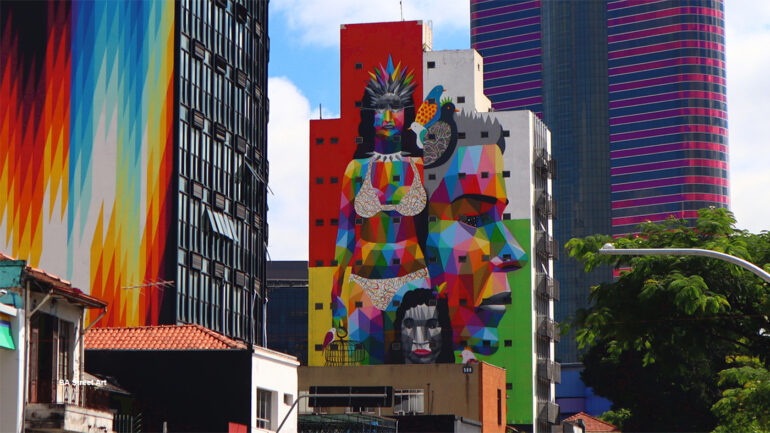
São Paulo: A Journey to the Heart of the Brazilian Titan
Forget the romantic clichés of Rio. São Paulo isn’t here to charm you with its gentleness, but to sweep you away with its excess. In this concrete jungle home to 12 million people, ambition is evident on every street corner, and urban planning follows its own rules—a far cry from European standards.
The Art of Mastering Time and Space
The first lesson in surviving São Paulo comes down to one number: fifteen. When a local tells you a destination is “about 15 minutes” away, count on thirty under normal conditions—and sixty if you hit rush hour or run into swarms of delivery scooters weaving between cars. In São Paulo, you don’t fight traffic; you accept it as an unchangeable part of the landscape, just like the skyscrapers stretching as far as the eye can see.
This density doesn’t get in the way of a friendly atmosphere. To get a feel for the city, head to Le Spot, a mix of diner and trendy bistro located right next to Avenida Paulista. Amid the end-of-day cocktails and the bursts of laughter from tables of friends, you’ll observe a vibrant, cosmopolitan, and decidedly ambitious urban crowd.
An Urban Model Looking Toward Asia
While many developers look to London or Milan for inspiration, São Paulo’s builders are now looking east. Near Avenida Brigadeiro Faria Lima—the city’s very own “Wall Street”—new real estate projects draw inspiration from Tokyo or Bangkok. In a metropolis where heat, humidity, and security concerns rule the day, the traditional model of the shopping street is giving way to hybrid infrastructure.
Shopping centers, such as those managed by the Iguatemi Group, have become a pillar of civic life here. More than just places to shop, these secure and well-maintained spaces house theaters, movie theaters, and art galleries. It is a city within a city—a pragmatic and elegant response to the challenges of a tropical megacity that is experienced as much indoors as outdoors.

Design as DNA
In Brazil, architecture and design are not luxury accessories, but the very essence of culture. This passion comes to life at Casa Zalszupin. Formerly the home of the famous designer Jorge Zalszupin, this house-museum is preserved today thanks to the dedication of Lissa Carmona, whose family business, Etel, continues to keep the country’s furniture heritage alive. It is a sanctuary that protects the city’s aesthetic identity in the face of raw modernity.
This commitment to beauty extends even to cutting-edge hospitality. At the Pulso Hotel, owner Otávio Suriani champions an approach where every piece of dark wood furniture and every tropical plant serves a purpose. Here, they aren’t simply building a hotel; they’re creating a place that reflects the confidence of a city proud of its urban character and its dazzling blue winter skies, where the thermometer proudly reads 23°C.
Rituals and Unplugging
To fit in, you have to embrace local traditions, starting with Sunday-night pizza. A stop at Pizzaria Camelo is a must, even if transportation hiccups cause you to arrive late. The welcome there remains warm, typical of that São Paulo resilience. A glass of caipirinha, a slice of thin-crust pizza, and you’re ready to take on the city’s sheer scale.
Keep an eye on the calendar, though: don’t expect to close any serious deals in February during Carnival, or during the World Cup. When soccer takes over the country, São Paulo comes to a standstill, proving that even the world’s most hyperactive metropolis knows how to pause and cheer in unison for the game.