
Make Texture a preferred source on Google to support us
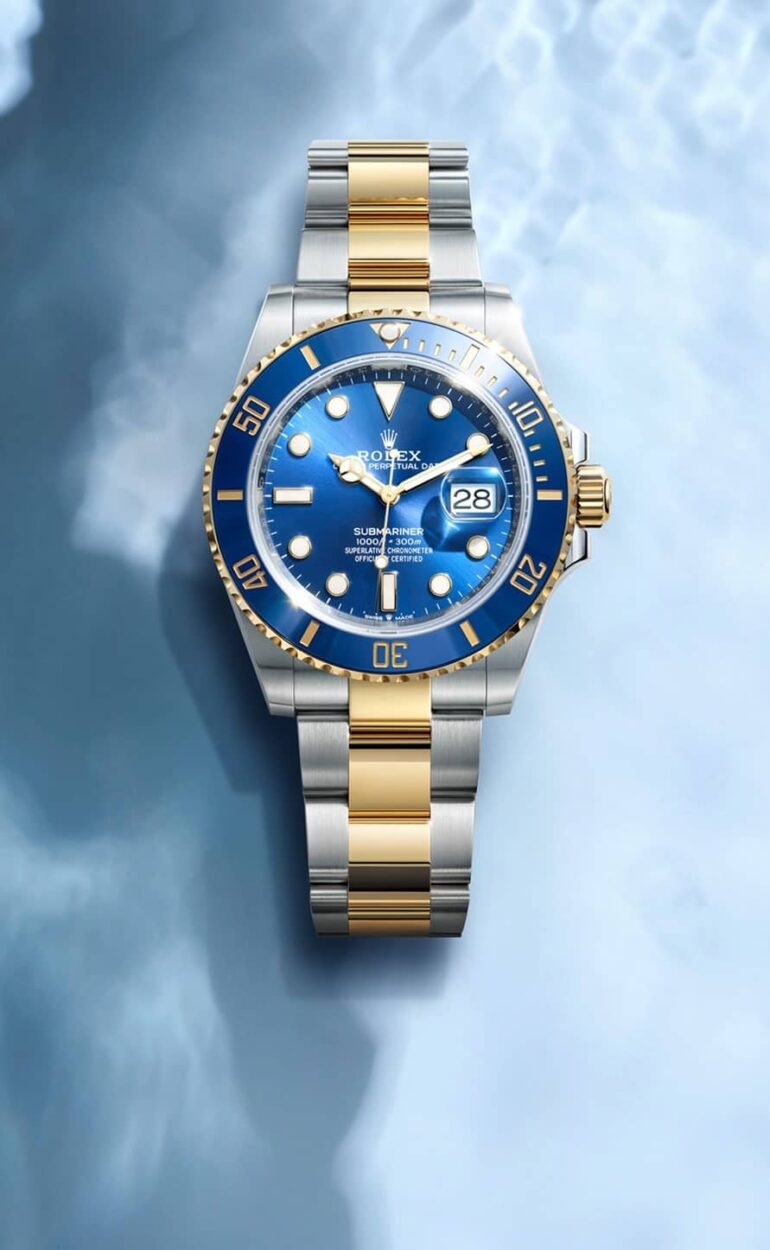
Add Texture to GoogleDespite a slight decline in revenue in 2025, Rolex Hellas reaffirms its strong position in the Greek market. By strategically creating scarcity around its timepieces and elevating the sophistication of its retail spaces, the Geneva-based manufacturer fuels desire while navigating the booming secondhand market.
The Greek Landscape: A Market Under Pressure
Rolex Hellas ended 2025 with a slight decline, even as fascination with the Swiss brand remains undiminished in Greece. According to the subsidiary’s latest financial statements, revenue stood at 97.67 million euros, down from 100.4 million the previous year. Management, however, anticipates a rebound of more than 6% for 2026, aiming for the symbolic milestone of 103 million. (greekcitytimes.com)
The paradox of the brand with the crown has now become its hallmark: fewer units available, but higher-priced items on display. Although the brand never discloses its sales volumes by market, the dramatic decline in inventory in Greece confirms this strategy of restriction. Inventory fell to 3.85 million euros at the end of 2025, down from 6 million at the end of 2024. (greekcitytimes.com)
The Price of Exclusivity
This decline in volumes has, unsurprisingly, weighed on immediate profitability. While Rolex Hellas purchased €74.9 million worth of watches from Rolex SA and Montres Tudor SA (compared to €72.9 million in 2024), the gross margin eroded to 16.5%, down from 19.7% a year earlier. Net income followed the same trend, coming in at 4.7 million euros after reaching 7.7 million in 2024. (greekcitytimes.com)
Nevertheless, the subsidiary’s balance sheet remains very solid. The company’s cash position strengthened to 4 million euros, all without resorting to bank loans. Building on this strong foundation, the board of directors has proposed distributing a dividend of 6 million euros for the 2025 fiscal year. (greekcitytimes.com)
Ultra-Desirability: A Global Strategy
The Greek market perfectly illustrates the manufacturer’s global strategy. In February 2026, the Hodinkee platform, citing the annual analysis by the Swiss bank Vontobel, noted that Rolex had chosen to reduce its production for the second consecutive year in 2025. The same study reveals that the brand’s market share by value surged to 61%, particularly in the segment of timepieces priced above 3,000 Swiss francs, up from 57% in 2023. (hodinkee.com)
This engineered scarcity resonates far beyond the Aegean Sea. WatchPro recently revealed that the secondary market for fine watchmaking had reached the staggering figure of $16.7 billion in 2025, dominated by Rolex with $5.7 billion. This momentum confirms that a growing segment of collectors is turning to parallel markets—a trend that, far from weakening the brand, cements its status as an investment icon. (watchpro.com)
Redefining the Showcase: The Evolution of the Athens Network
The year 2025 also reshaped the brand’s footprint in Greece. The historic boutique on Kolokotroni Square—a true institution and the country’s first Rolex store—permanently closed its doors in April after sixty years of history. Management clarified that this closure was not driven by commercial considerations, but by a change in the building’s ownership. (greekcitytimes.com)
Meanwhile, in the ultra-chic Kolonaki neighborhood, the flagship store on Valaoritou Street took a break lasting several months to expand and reinvent itself. This game of musical chairs reflects a clear strategy: to consolidate its network in favor of more majestic spaces, in line with contemporary luxury, where the customer experience must be paramount. (greekcitytimes.com)
Tudor and the Law of Perception
The watch industry also holds promising developments within the group. Tudor, the sister brand, posted spectacular growth of nearly 30% in Greece in 2025, driven by the introduction of highly sought-after new models and the strengthening of its distribution network. (greekcitytimes.com)
This interplay underscores a golden rule of the hyper-luxury industry: desirability stems from the tension between a brand’s prestige and its (in)accessibility. Faced with drastically limited availability, rising prices, and a booming secondary market, Rolex Hellas will depend in 2026 on the allocations granted by its Geneva headquarters to hope to approach—or even surpass once again—the €100 million mark of excellence. (greekcitytimes.com)