
Make Texture a preferred source on Google to support us
Add Texture to GoogleAnti-drone expertise: Ukraine's new export weapon
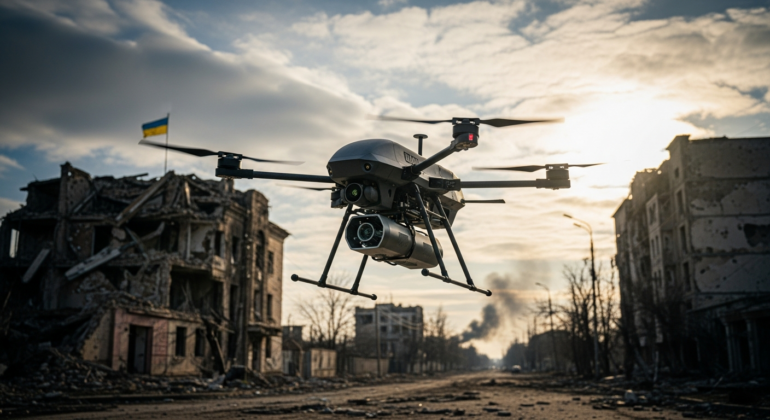
After three years immersed in the most drone-dominated conflict in human history, Ukraine has forged a unique asset. It is a resource that no defense giant can manufacture in its factories and that no sovereign wealth fund can simply buy: the world’s most advanced and battle-tested operational expertise in modern aerial warfare. Today, Kyiv is gradually realizing that this know-how constitutes an unparalleled diplomatic and commercial lever in its arsenal.
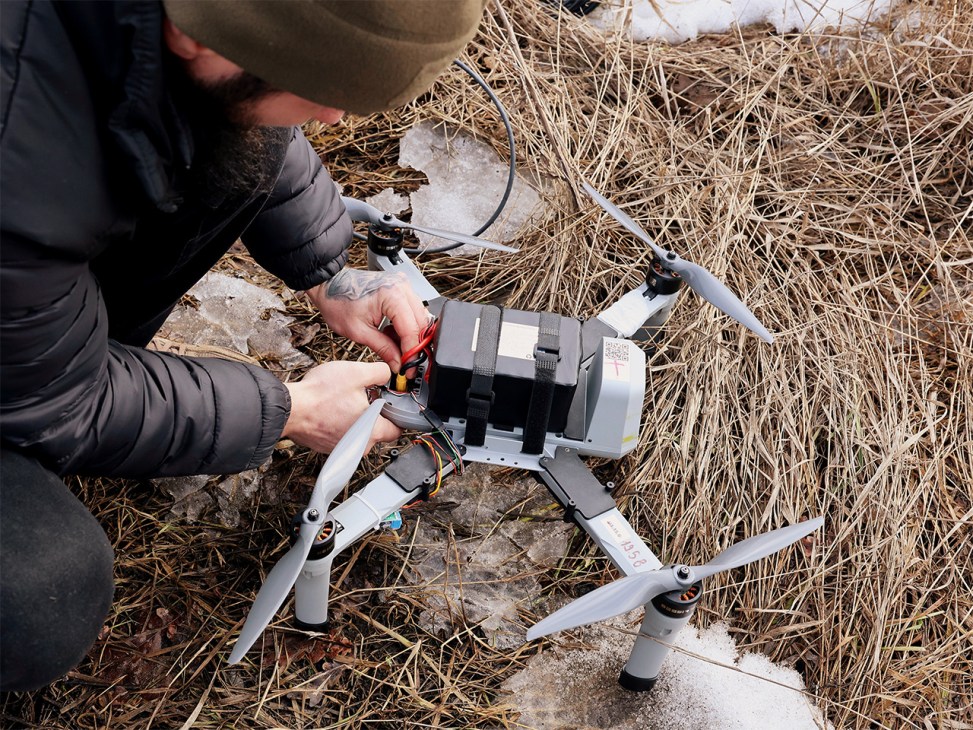
This learning process has been a painful one. Rather than following traditional military training programs, an entire generation of young Ukrainians learned to fly FPV drones on the job, relying on YouTube tutorials, directly confronting Russian jamming, and exchanging insights on tactical loops. These skills were put to the test against a responsive enemy and were refined almost every week. By intercepting between 2,000 and 4,000 drones per month for much of 2024, Ukraine was able to test every method of neutralization—from kinetic strikes to electronic warfare, including lasers, nets, and AI-guided targeting—under real-world conditions that no simulation exercise could replicate. This institutional expertise is not merely a side effect of the war; it is one of its most crucial strategic outcomes.
The Strategic Shift Among Gulf Powers
The Gulf states fully appreciate the scale of these new challenges. Today, vital infrastructure such as the Saudi refinery in Ras Tanura finds itself at the mercy of small flying machines that cost less than a sedan. This reality illustrates, to the point of absurdity, the financial asymmetry that now exists between offense and defense. To address this, Riyadh and Abu Dhabi have spent billions acquiring American and Israeli systems. Although highly sophisticated, these defense systems were designed for a different era: an era of ballistic missiles with predictable trajectories and obvious radar signatures, not to repel swarms of low-cost drones capable of spoofing GPS signals and whose technological evolution far outpaces the bureaucracy of military procurement.
This is precisely where the asymmetry tips in Kyiv’s favor. Admittedly, the Gulf’s sovereign wealth funds collectively amount to more than $6 trillion (approximately 5.2 trillion euros), making Ukraine’s 2024 defense budget seem like a drop in the bucket. Yet Ukraine possesses a wealth that cannot be measured in petrodollars: hard-won experience. While traditional military aid is driven by solidarity or political will, the transfer of technology and expertise follows an entirely different dynamic, dictated by scarcity, added value, and shared interests.
Monetizing battlefield experience
Ukrainian authorities now acknowledge it: their country is not just a humanitarian cause; it is also a veritable laboratory for the wars of tomorrow. With the creation of Brave1, a state-run incubator dedicated to defense technologies, Ukraine has achieved the feat of reducing the time between feedback from the front lines and the development of new equipment, cutting the wait from several years to just a few weeks. Such agility holds immense commercial and strategic value.

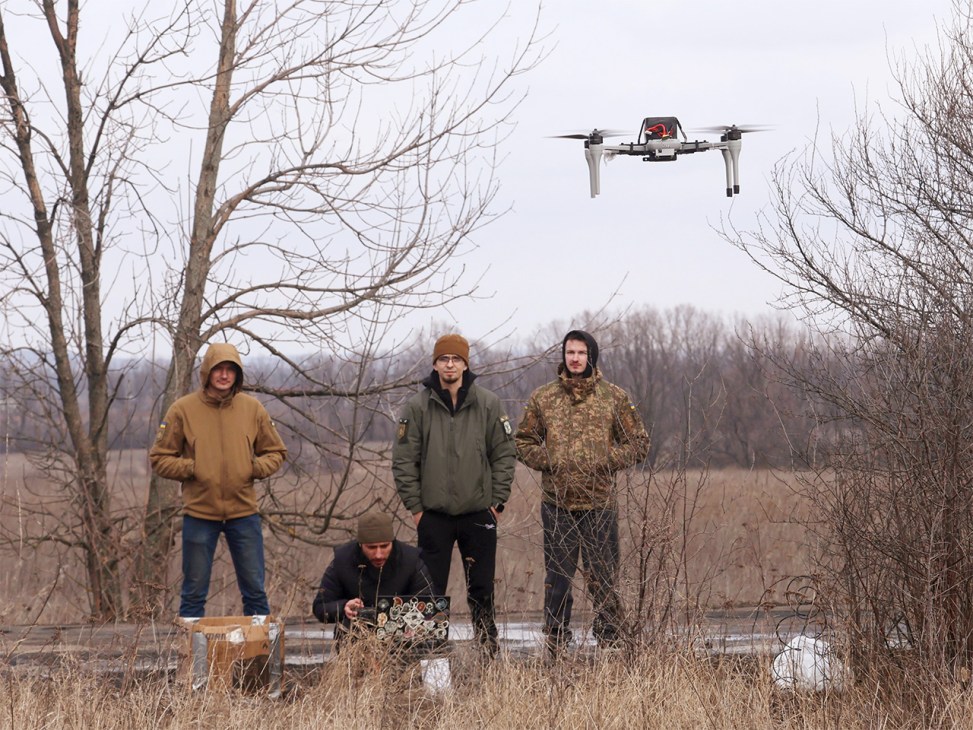
Armed with this cognitive monopoly, Ukraine could very well engage in the co-development of jamming or interception systems with leading entities such as the Edge Group in Abu Dhabi or SAMI (Saudi Arabian Military Industries) in Riyadh. It could even serve as a consultant to the armed forces of Southeast Asia, which are watching the rising tensions in the South China Sea with concern. In this new paradigm, Kyiv would no longer be a supplicant seeking solidarity, but a partner offering a product that no other country is able to provide.
Failure as a True Market Asset
While Volodymyr Zelensky has already initiated discussions about a “drone coalition” and signed technology agreements in Europe, the official narrative does not yet sufficiently highlight the true nature of this gem. Ukraine’s true asset is not its physical equipment; machines are always eventually copied, modified, and rendered obsolete. The real gem lies in the institutional memory of failure. What is most valuable is knowing why a particular interception failed, how a particular jamming attempt was circumvented, and why a particular tactical certainty was shattered in the face of a new wave of Russian attacks.
Developing capabilities through blood and war is unspeakably brutal. Ukraine did not choose to become this vast testing ground, but it has validated a level of expertise that no other nation, no defense contractor, and no computer simulation has ever come close to matching. On the global arms market, buyers are only just beginning to understand the true cost of this knowledge.