
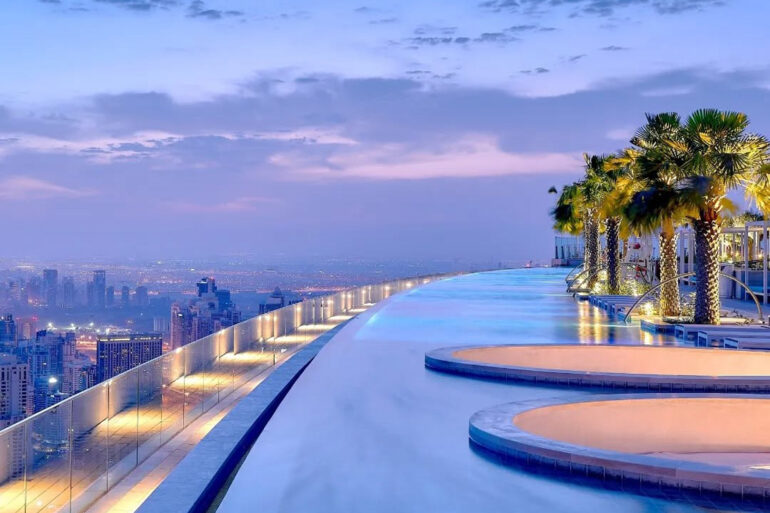
The Persian Gulf: Toward a New Golden Age of Regional Tourism
For decades, June has signaled the end of social life in the Gulf. As soon as temperatures soared, residents of the United Arab Emirates, Saudi Arabia, and Qatar would traditionally flee to the cooler climes of Tuscany, the French Riviera, or the United Kingdom. But this summer, that ritual is losing steam. Between the geopolitical instability plaguing the Middle East and soaring airfare prices driven by fuel costs, long-haul travel has lost its luster. The trend is no longer toward traveling abroad, but toward rediscovering one’s own neighborhood.
Luxury Within Reach
This shift toward local travel is by no means synonymous with austerity. On the contrary, the region’s hotel sector has seized the opportunity to attract a local clientele that once looked only toward Europe. Five-star resorts, usually fully booked during the winter season, are rolling out aggressive promotions. As a result, city dwellers from Dubai or Doha are treating themselves to long weekends in Ras al-Khaimah or retreating to the mountains of Oman to escape the coastal heatwave. Muscat, with its more peaceful atmosphere, is becoming a credible alternative to the Mediterranean’s beach clubs.
The notion that the region turns into a ghost town between July and August is fading. High-end establishments have learned to adapt their services to make the heat bearable, transforming what was once a constraint into a choice of comfort and safety. This shift in behavior, initially driven by caution, could well become a lasting habit for travelers who are discovering a diversity of landscapes and experiences they didn’t realize were right on their doorstep.

Infrastructure: The Key to Tomorrow’s Vacations
While the current trend is driven by an adaptation to global circumstances, the future of domestic tourism in the Gulf will depend on mobility. One of the most anticipated projects remains the development of the regional rail network, notably the Etihad Rail project and the line connecting the countries of the Gulf Cooperation Council (GCC).
The prospect of being able to travel from Abu Dhabi to Riyadh or Muscat by train in just a few hours would radically change perceptions of local vacations. For now, residents are trading the English countryside for the infinity pools of Palm Jumeirah, proving that geographic proximity has become the new key selling point in the Middle East’s luxury travel market.