
The Rise of Design-Focused Retreats in the Heart of China
The independent design-focused hotel industry is experiencing a true renaissance in China. Driven by a strong local desire for escape and the relaxation of visa policies for foreign tourists, new gems are emerging. While we often imagine these secluded retreats as being on the shores of a distant lake or perched on inaccessible peaks, some of these gems are actually hidden just a stone’s throw from major cities, without requiring endless journeys by high-speed train or plane.
A bucolic escape just outside Shanghai
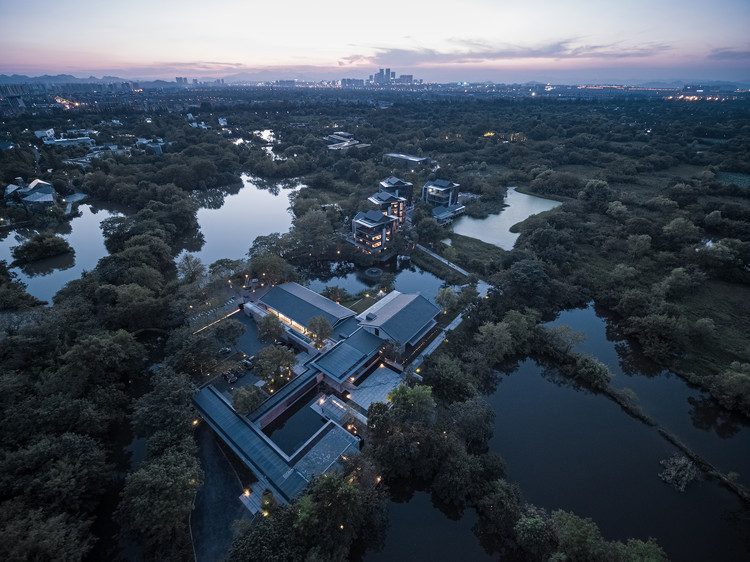
This is precisely the case with the brand-new Muh Shoou Zhujing. Recently opened in the picturesque, water-filled village of Zhujing, southwest of Shanghai (Jinshan District), this intimate 65-room property is just an hour’s drive from the hustle and bustle of downtown. The contrast is striking: here, skyscrapers give way to a soothing landscape of rice paddies, winding canals, and forest trails. Far from the hustle and bustle of the nearby major business district, the most imposing building in the area is a modest single-story tea house adjacent to a vast flower-filled park. To ensure absolute tranquility, each room even features its own private garden.
The fusion of luxury expertise and local authenticity
At the helm of this ambitious project is Alex Li, a veteran of the high-end hospitality industry with over twenty years of experience at prestigious brands such as Aman, Four Seasons, and Hyatt. He chose to join a local brand for the first time in his career primarily because he was convinced by the project’s spirit and the vision of its creators. The Muh Shoou Zhujing is the brand’s second property, following a highly acclaimed debut in the wetlands of Hangzhou. The architecture for both properties was entrusted to Group of Architects (GOA), led by Zhang Xiaoxiao, who also happens to be the brand’s co-founder.
Architecture conceived as a dialogue with nature
For the chief architect, designing a hotel is by no means about replicating a formula or business model, but rather about offering a “way of observing the landscape.” The design must celebrate the site’s uniqueness. While the award-winning Hangzhou location played on a cold, wild, and deeply silent atmosphere, this new Shanghai retreat evokes more the poetry of misty forests and marshes.

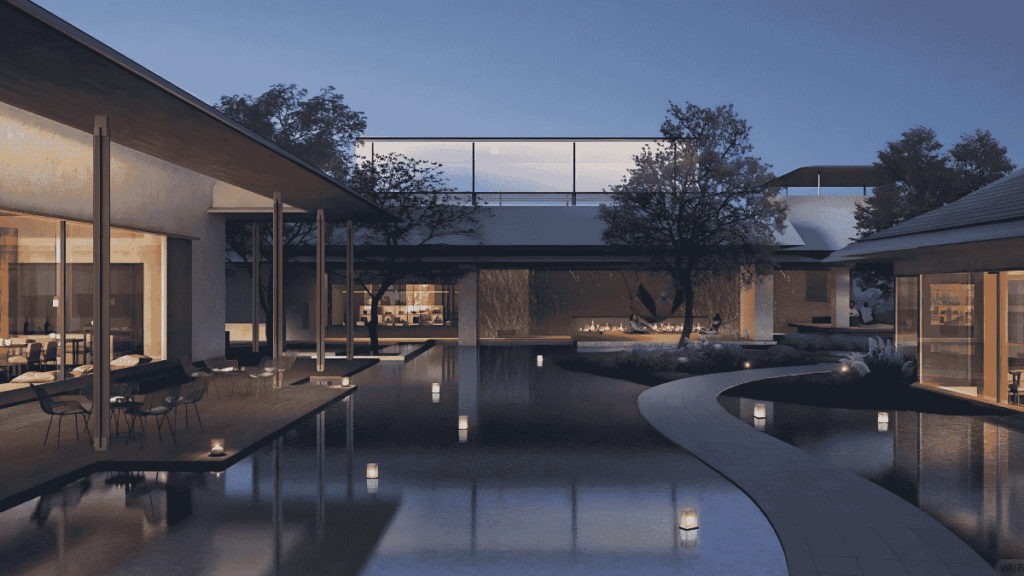 Although Zhujing’s aesthetic is the polar opposite of the historic glamour of the Bund district, it is precisely this duality that gives it its charm. Conceived as the hinterland of a global megacity, the hotel offers a perfect antidote to urban melancholy. Eschewing the visual stereotypes of Chinese culture, the structure instead draws its inspiration from the subtle art of classical gardens. From the lobby to the inner courtyards, the spaces are designed so that nature reveals and conceals itself as visitors wander, offering a landscape that changes with every step.
Intimate warmth and a redefined sense of hospitality
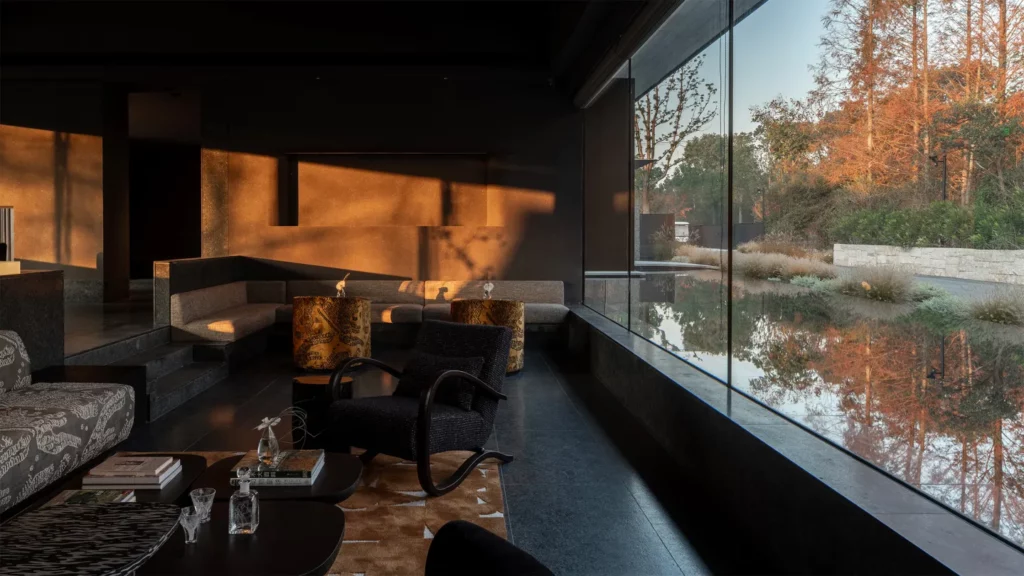
While the separate bathrooms and private patios invite solitary rejuvenation, the establishment was not designed solely for hermits seeking isolation. There is a strong emphasis on sharing. Cozy living spaces, ranging from the pool bar to the tea lounge, are complemented by eight dining rooms that can be reserved for private gatherings with family or friends. By prioritizing intentionally intimate communal spaces—a stark departure from the vast, impersonal lobbies of large international resorts—the designers aim to foster human connection.
This intimate philosophy extends even to the art of service. For the founders, Chinese-style hospitality must translate into a respectful, horizontal exchange between host and guest. The invisible yet strict hierarchies of traditional luxury hotels are erased here: service corridors run alongside guest walkways. On the culinary front, the restaurant has been discreetly set below the level of the landscaped garden, giving diners the soothing sensation of dining right on the ground. On the plate, the menu evolves with the seasons, relying exclusively on fresh ingredients harvested from nearby farms.
By attracting top-tier talent and devising concepts so deeply rooted in their surroundings, independent luxury hotels are more appealing than ever. They perfectly meet the new expectations of a wealthy local clientele and international travelers eager for stays marked by a slow pace and serenity.