
Make Texture a preferred source on Google to support us
Add Texture to GoogleReal Club de Campo Villa: The Green Oasis Everyone in Madrid Dreams of Visiting
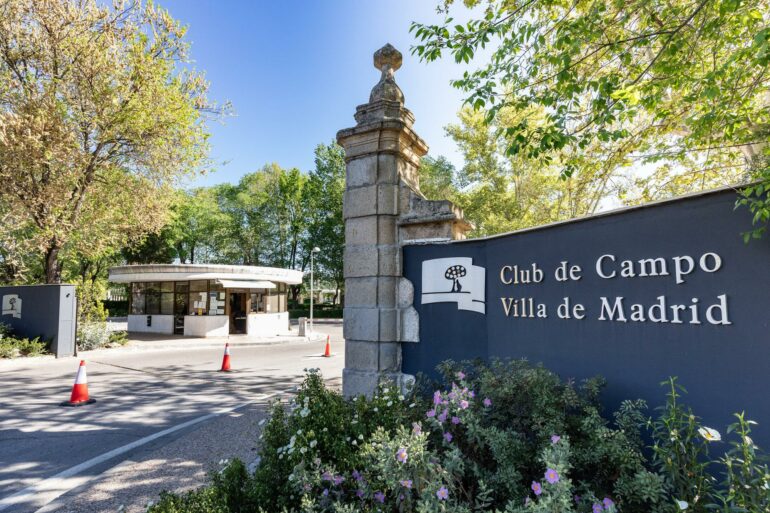
It takes just five minutes to leave the hustle and bustle of downtown Madrid behind and immerse yourself in a timeless retreat. Nestled between the highway and the banks of the Manzanares River, the Real Club de Campo Villa stretches across 250 hectares of rolling hills and pine forests. Every morning at 8:30 a.m., Juan Carlos Vera Pró, the general manager, drives through the grounds to ensure that this jewel of the Spanish capital is ready to welcome its visitors. Here, the architecture and immaculate greens exude tradition, but the club’s success is decidedly modern: with 35,000 members, the club is at full capacity and maintains a seemingly endless waiting list.
A former member of parliament who served for 26 years, Vera Pró traded the parliamentary chamber for the sports fields in 2019. His daily life is now shaped by managing a sports empire: 240 horses at the equestrian center, 34 tennis courts, hockey, croquet, padel, and, of course, golf. The club is a bustling hub where people of all ages come together. Just last week, the director presented more than 600 medals to young, aspiring hockey players. It’s estimated that nearly 6,000 members pass through the gates every weekend to escape the pressures of city life.
A Rare Privilege and a Turbulent History
Becoming a member of this prestigious club is now an uphill battle. Admissions have been frozen for several years, and spots open up only very rarely, usually following a voluntary withdrawal or a death. The annual membership fee, set at 950 euros, remains a holy grail for many. Recently, a notable exception was made for Rafael Nadal, who was named an honorary member after organizing a charity tournament there. The club’s prestige rose another notch last year when the King of Spain awarded it a royal distinction for sporting excellence, leading to a change in its official emblem.
However, the club’s history has not always been smooth sailing. Founded in 1930 by young aristocrats—including a duke and a count—who were dissatisfied with the fees at another club, the club weathered Spain’s political turmoil. Transferred to the local government during the Second Republic, then returned to private ownership after the Civil War, it finally found its current stability in 1984. Today, the Madrid City Council holds 51% of the shares, with the remainder divided between the National Heritage Fund and the Royal Spanish Equestrian Society.

The Art of Living at the “Chalet de Arriba”
The social heart of the estate beats at the Chalet de Arriba. This pavilion, designed in 1931 by architect Luis Gutiérrez Soto, exudes the atmosphere of an embassy frozen in time. Amid the scent of jasmine wafting across the terraces, members enjoy a breathtaking view of Madrid’s skyline in the distance. This is where people come to enjoy games and conversation.
In the afternoon, the lounges fill with bridge and canasta players. In the adjoining café, some sink into the retro leather armchairs by Casa & Jardin to read the national newspapers while sipping a cortado. The calm is broken only by the sharp clack of a club sending a golf ball soaring into the sky. To modernize this institution, plans are underway for a virtual training center to help the club’s 14,000 golfers perfect their swings, while a rigorous random draw system has been implemented to ensure fairness in tee times on the course, proving that even in this elite setting, the rules are the same for everyone.