
Make Texture a preferred source on Google to support us
Add Texture to GoogleAt the dawn of the 20th century, in the hushed salons of the Swiss bourgeoisie, a twenty-year-old woman struggled to go unnoticed. She did more than simply move in artistic circles; she redefined female independence through her radical aesthetic choices and a lifestyle that defied the conventions of her time. Gertrud Dübi-Müller, heiress to an industrial fortune in Solothurn, built one of the most daring collections of modern art of her time, at a period when the avant-garde was still viewed as a provocation. From September 19, 2026, to February 7, 2027, the Kunstmuseum Basel is dedicating a major exhibition to this remarkable figure, titled *Van Gogh, Hodler, and a Cabriolet: The Collector and Pioneer Gertrud Dübi-Müller*.
The Boldness of a Portrait at the Dawn of Adulthood
The story of her collection begins with a striking act of financial and artistic determination. In March 1908, when she was only nineteen years old, Gertrud visited a Van Gogh exhibition in Munich with her brother Josef. There she noticed the Portrait of Charles-Elzéard Trabuc, painted by the Dutch artist in 1889 during his stay at the asylum in Saint-Rémy-de-Provence. At that time, Vincent van Gogh was far from being the global icon he would later become; he was still widely regarded as “mad” by critics and the public alike.
The timing of the transaction reveals the buyer’s character. The painting was shipped from the Miethke Gallery in Vienna on April 27, 1908. Gertrud, however, waited until April 30 to complete the payment of 40,000 Swiss francs (approximately $7,700 at the time). This one-day delay was not a sign of hesitation: on April 29, she celebrated her twentieth birthday, marking her legal coming of age and thereby gaining access to her inheritance. Having lost her mother one month after her birth and her father at the age of six, she now enjoyed complete financial independence, which she would devote to her passions.
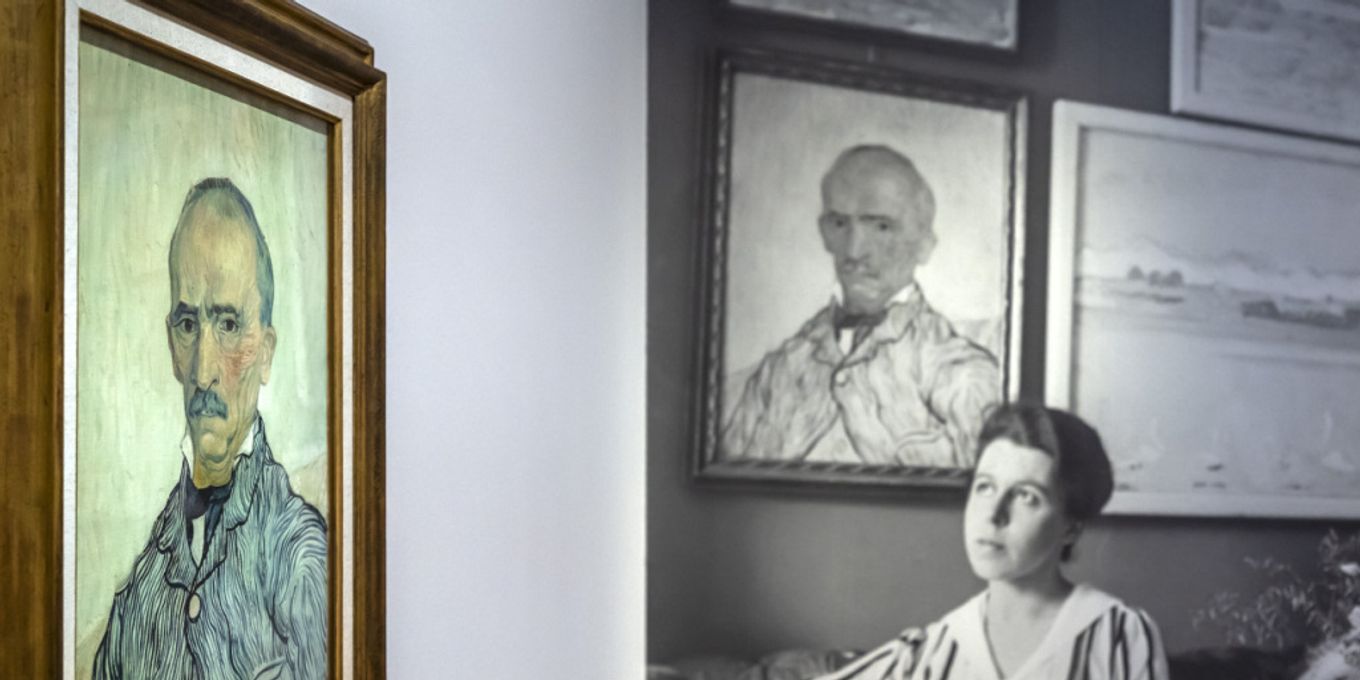
This portrait of an asylum guard, with its striking features and turbulent color palette, became the cornerstone of a collection that inspired her contemporaries. Her mentors, the painters Cuno Amiet and Giovanni Giacometti, even coined the neologism “van gogheln” to describe their enthusiasm for studying and painting in the wake of the Dutch master, spurred on by the presence of this masterpiece in their friend’s home.
Speed and Altitudes: A Pioneer’s Life
The title of the exhibition at the Kunstmuseum Basel highlights the importance of another cherished object: the convertible. In 1911, at the age of twenty-three, Gertrud Dübi-Müller purchased a Swiss-made Piccard-Pictet car, affectionately nicknamed “Pic-Pic.” Most likely the first woman in the canton of Solothurn to own and drive such a vehicle, she used it as a tool for exploration. Far from leisurely drives, she drove her convertible all the way to Provence, following in the footsteps of Van Gogh and his model Trabuc, documenting her research with the rigor of a scholar.

Her spirit of adventure did not stop at paved roads. A skilled photographer, she captures the verticality of the Alps and the daily lives of her artist friends. Her thirst for new horizons takes her to Algeria and Tunisia as early as age nineteen, and she doesn’t hesitate to embark on airship flights. At the age of forty-nine, she cemented her reputation as a seasoned mountaineer by climbing the Matterhorn, a feat that completes the portrait of a woman who defied the limits imposed on her gender.
The Light and Shadow of Ferdinand Hodler
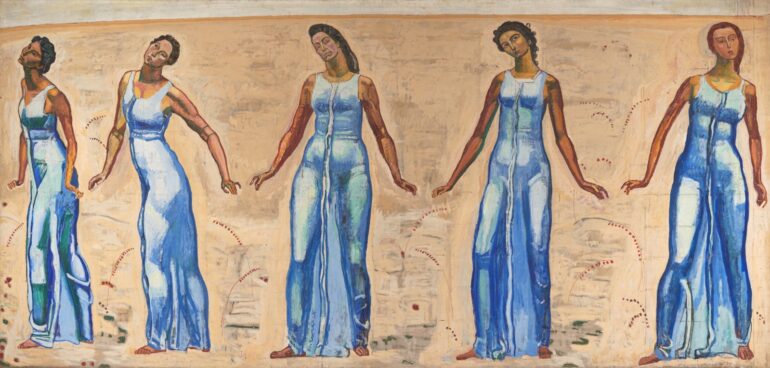
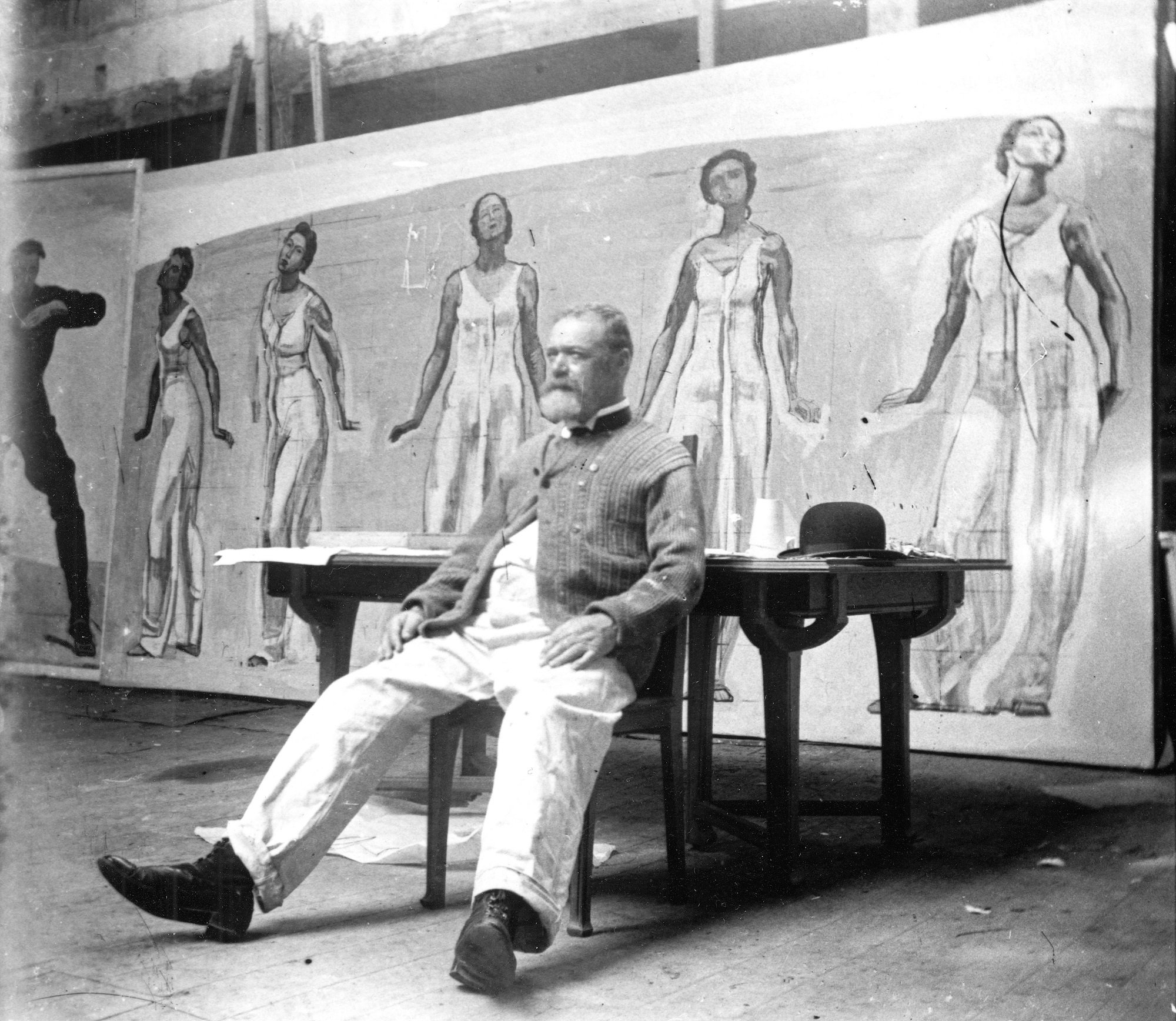
Beyond Van Gogh, the Basel exhibition, curated by Géraldine Meyer, highlights the special relationship between the collector and Ferdinand Hodler. The Swiss painter, whom she met when she was just fourteen, made her one of his favorite models. Hodler painted no fewer than seventeen portraits of Gertrud Dübi-Müller throughout his life. She is notably depicted as one of the figures in the monumental canvas *View into Infinity* (*Blick in die Unendlichkeit*), a major work held in the permanent collections of the Kunstmuseum Basel.
This close connection with the artists of her time transformed her home into a hub for modern art. In addition to Hodler and Amiet, her collection included works by Paul Cézanne, Gustav Klimt, Henri Matisse, Alice Bailly, and Aristide Maillol. Approximately eighty masterpieces from this international collection will be brought together for the event, accompanied by previously unpublished archival documents and photographs taken by Dübi-Müller herself.
The exhibition offers a chance to rediscover the Portrait of Charles-Elzéard Trabuc, bequeathed by the collector to the Dübi-Müller Foundation at the Kunstmuseum Solothurn, which is lending it on an exceptional basis for this retrospective. Through this exhibition, it is as much the eye of an expert as the spirit of a woman of action that is celebrated, reminding us that art history is also shaped by the boldness of those who, were the first to see beauty where others saw only madness.