Make Texture a preferred source on Google to support us
Add Texture to GoogleThe experience often begins with a slight sense of frustration. Walking into an official watch store today sometimes means facing empty display cases, endless waiting lists, and a highly standardized selection. In the face of this commercial barrenness, the secondhand and vintage market has emerged not merely as a Plan B, but as the true playground for enthusiasts. Buying your first pre-owned watch marks a turning point. It’s no longer just a purchase—it’s an investigation. We leave the realm of the polished product and enter that of patina, of movements that have been running for decades, and of cases that bear the marks of time. It’s a learning process that requires a keen eye, a systematic approach, and above all, detachment from the siren song of financial speculation.
The End of Speculative Innocence
In recent years, an irrational buying frenzy has swept through the watch industry, transforming even the most ordinary steel timepiece into a financial asset. That era is now correcting its excesses. Trends on global platforms show a sharp decline in prices for the most sought-after models, reminding those who conflated watchmaking with the stock market of a cruel reality: a watch is meant to be worn. The decision to make a first purchase must be rooted in aesthetic appeal and comfort on the wrist. A watch that is thirty or forty years old is not purchased for its anticipated resale value in six months, but for the unique appeal of its dial or the elegance of its proportions. The choice of a first vintage watch often sets the tone for a budding collection. Whether you’re drawn to the military precision of a 1970s chronograph, the formal chic of a shaped watch, or the ruggedness of a diver’s watch weathered by salt, the market calls for a return to the pure pleasure of the object itself.
Deciphering the Map of a Dial
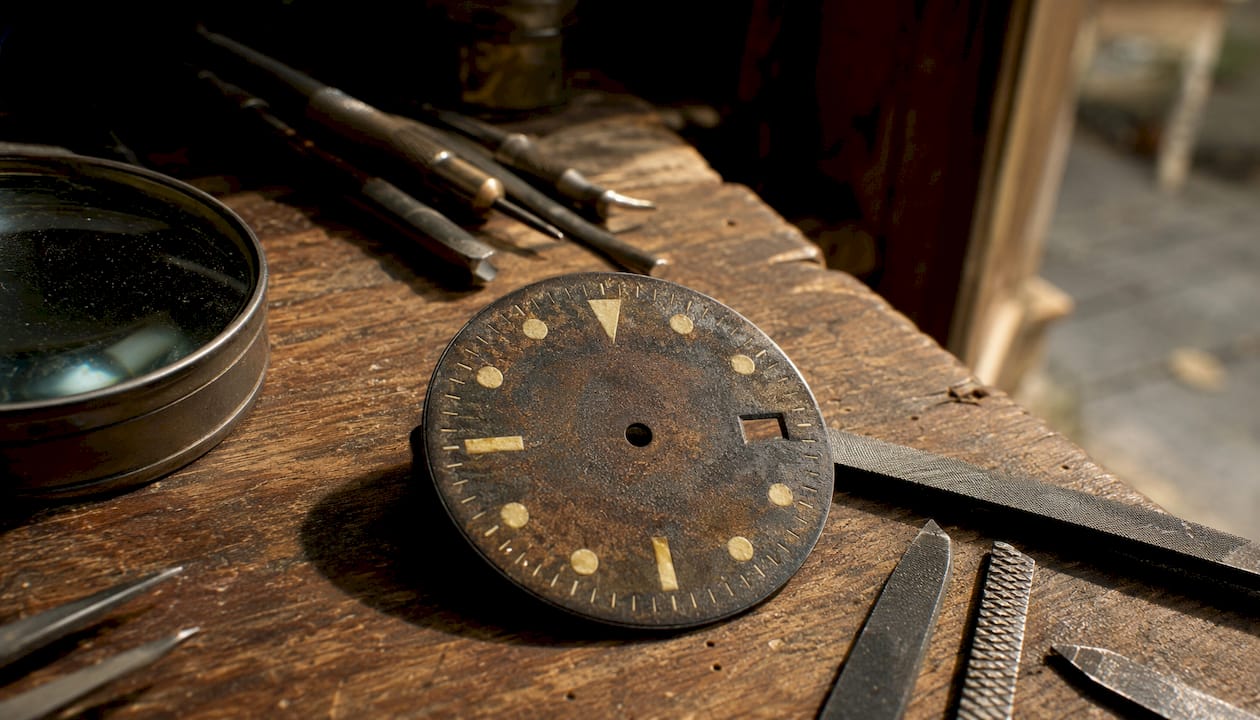
Entering this world requires immediately grasping a “dialect” where microscopic details translate into thousands of euros. The dial commands attention. Until the late 1990s, the watch industry used tritium to make the hands and hour markers glow in the dark. Unlike modern Super-LumiNova, which remains consistently white or green, tritium ages. It reacts to humidity, sunlight, and being stored in a safe, taking on hues ranging from vanilla yellow to dark ochre. A uniform, warm patina transforms a standard dial into a desirable rarity.
However, it is important to distinguish between noble aging and simple deterioration. A dial damaged by moisture—one whose lacquer is flaking or whose markings are fading—is not “tropical”—a term referring to a black dial that naturally turns chocolate brown under the effect of UV light—but simply damaged. Inspection under a magnifying glass (or using high-definition macro photographs) can reveal a repainted dial—a common practice in past decades to give a watch a fresh look, but one that drastically reduces the object’s collectible value today.
The Obsession with Sharp Edges
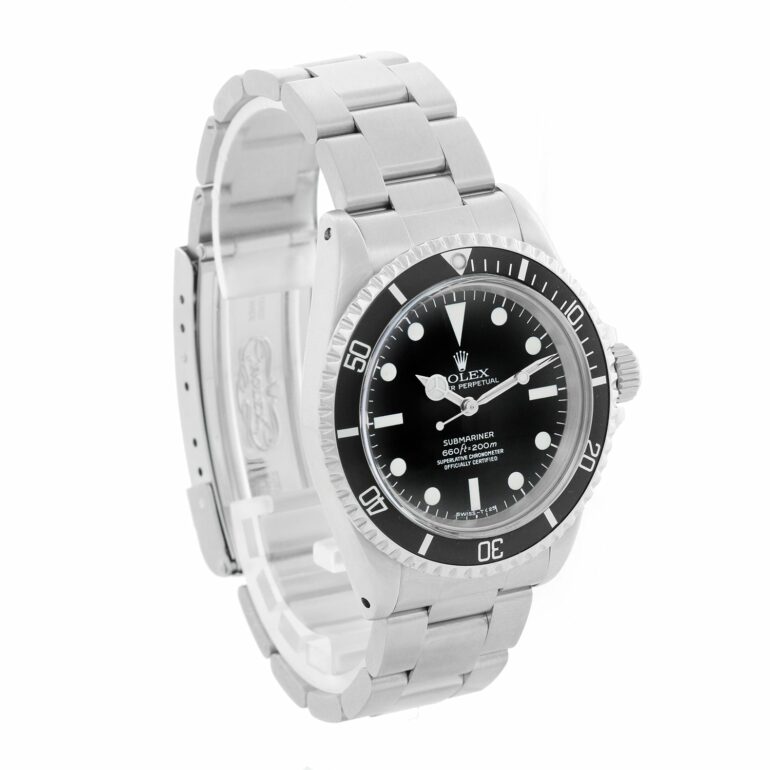
Another strict criterion for collectors concerns the case’s architecture. During regular servicing, watchmakers have long had the habit of polishing the metal to remove wear scratches and restore the watch’s shine. Each pass on the polishing wheel removes material. Over time, the angles become rounded, the chamfers (those polished bevels separating the sides of the top surface from the lugs) disappear, and the geometry envisioned by the designer vanishes. Collectors seek out the “unpolished” condition. A case that is scratched and pitted, but whose edges are still sharp enough to almost cut the finger, will always be preferred to a case that has been polished to extremes, leaving it blurry and soft. The sharpness of the original lines speaks to the watch’s integrity.
This integrity is also assessed on the bracelet, particularly for steel sports watches. The links from the 1970s and 1980s, often folded or riveted, wear down from friction and stretch. This lateral play, known as “stretch,” must be assessed before purchase, as restoring a vintage bracelet is a costly and complex process.
Navigating Between Online Platforms and Brick-and-Mortar Stores
The market has become radically digitized. Aggregators like Chrono24 offer a dizzying global panorama, ranging from Japanese professionals to German private sellers. Their escrow systems secure the financial aspect of the transaction. However, the buyer is left on their own with only images to go by, having to judge the authenticity of a bezel insert or the consistency of a serial number without holding the piece in their hands.
For a first-time purchase, the saying that you “buy the seller before the watch” takes on its full meaning. The physical storefront of a reputable specialist dealer serves as a safety net. The dealer assumes the risk upfront, guarantees the authenticity of every component, often performs a pre-purchase service, and offers a one-year warranty. Above all, a physical store allows you to try the watch on. A spec sheet listing a diameter of 34 millimeters might scare off a collector accustomed to contemporary standards (often around 40 millimeters). However, the length of the lugs, the width of the dial, and the thickness of the Plexiglas completely alter the visual perception. Only trying it on your wrist can confirm your choice.
The specter of “Franken” watches and the importance of archives
The main threat in the pre-owned market comes from so-called “Franken” watches (a reference to Frankenstein). These are timepieces assembled from authentic components, but sourced from different eras or models. A watch from the 1960s fitted with luminescent hands from the 1990s following a service, or featuring a replacement bezel, loses its historical integrity. A novice buyer does not necessarily have the expertise required to spot a date window whose typography does not match the year of production engraved between the lugs.

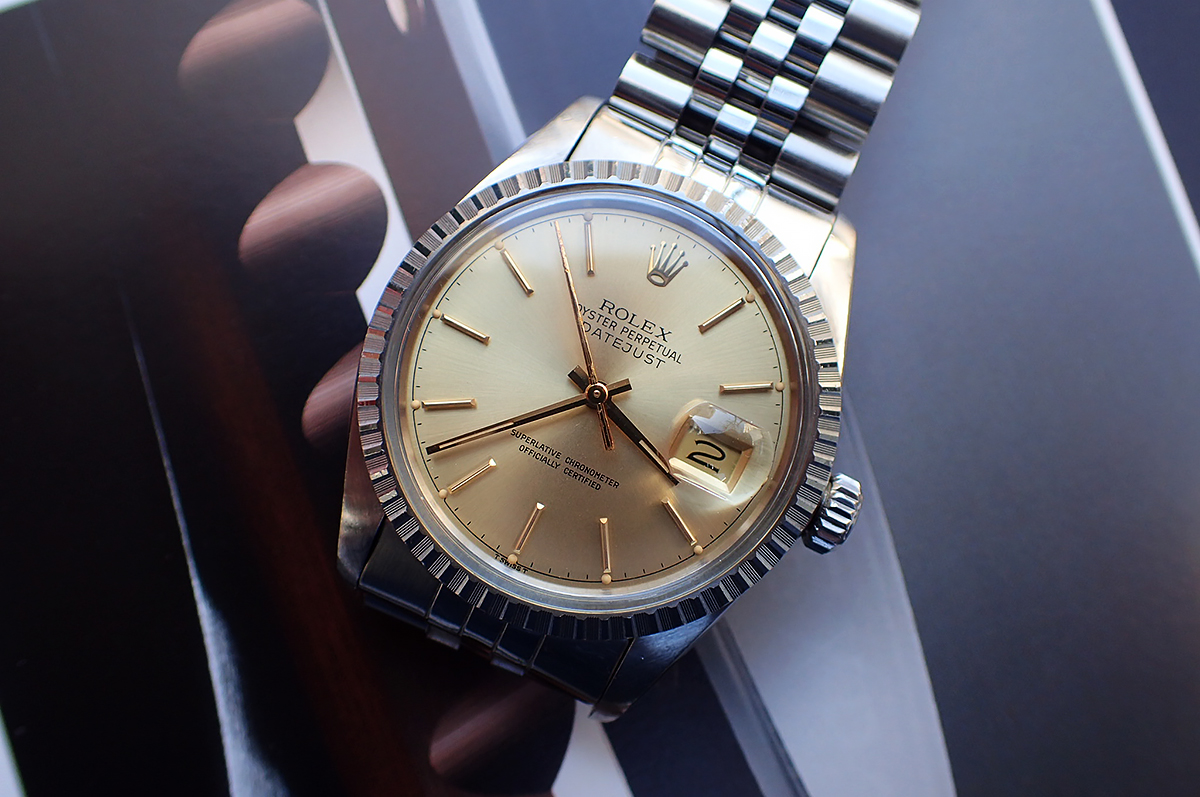
This is where the heritage departments of watch manufacturers play a decisive role. Companies such as Omega and Longines maintain meticulous archives and, for a fee and upon provision of the movement number, issue a registry extract. This document certifies the watch’s factory-original configuration and its original delivery location. While the famous “Full Set” (the original box and warranty papers) commands a substantial premium justified by the rarity of these ephemeral items, a recent archive extract offers intellectual assurance that is often more relevant to the buyer.
The Invisible Mechanics: Planning for the Post-Purchase Period
Behind the aesthetics of the dial and the patina of the case, the movement remains a mechanism subject to mechanical wear. Lubricating oils dry out after five to seven years, the gears grind against one another, the balance wheel’s amplitude drops, and accuracy plummets. A common mistake is to spend one’s entire budget on the purchase without factoring in maintenance costs. Buying a pre-owned watch—especially one without a recent service history documented by a detailed invoice—means setting aside funds for a visit to the watchmaker’s workshop.
The availability of replacement parts also dictates a pragmatic approach to your choice. Generic Swiss movements (such as ETA or Valjoux), used by numerous brands from the 1970s to the 2000s, benefit from a virtually inexhaustible supply of components. A qualified independent watchmaker will be able to service them at reasonable rates. Conversely, tackling a discontinued in-house caliber or a complication from a defunct brand often requires sending the watch back to the manufacturer, with restoration estimates that can skyrocket.
The Haven of Neo-Vintage
To avoid the headaches associated with faulty water resistance or Plexiglas crystals that are too prone to scratches, many enthusiasts set their sights on watches from the 1990s and the very early 2000s. The neo-vintage era is emerging as the ideal balance. Watches from this decade benefit from contemporary technical advancements (scratch-resistant sapphire crystal, modernized movements, robust water-resistant cases) while retaining the understated proportions and formal charm of classic watchmaking, just before the industry succumbed to the trend toward oversized designs.
These pieces offer access to major haute horlogerie houses at prices that remain, for the time being at least, reasonable. Finding the right piece requires weeks of research, dozens of alerts set up on sales websites, and numerous exchanges with sellers. When the package is finally opened, or when you step out of the store with your wrist encircled by leather and steel, the ticking of the movement resonates with a special depth. It’s no longer simply the time of day; it’s the time that has passed, ready to accompany a new chapter.