Make Texture a preferred source on Google to support us
Add Texture to GoogleThe contemporary eye has largely grown accustomed to consuming design in the form of sleek images, backlit by screens where the material ultimately dissolves into pixels. For the past fifteen years or so, Sabine Marcelis’s creations have circulated widely on these globalized digital interfaces, capturing the eye with their formal perfection and calculated reflections. Yet reducing her work to this virtual flatness is a misinterpretation. To grasp the profoundly physical, technical, and almost carnal nature of her pieces, a direct encounter with physical space was needed. It is precisely this shift toward the tangible that the Museum für Gestaltung in Zurich is facilitating. By taking over the Toni-Areal site, the Swiss institution is staging the very first major museum retrospective dedicated to the Dutch designer. More than a simple presentation of archival material, this exhibition, conceived by curator Damian Fopp, tackles the raw physicality of a body of work too often smoothed over by its own photogenic quality.
Materiality as a Turning Point
Born in 1985, Sabine Marcelis belongs to a generation of designers who had to navigate between the explosion of computer-aided design and a visceral need to return to the handmade. Upon graduating from the Design Academy Eindhoven in 2011, she immediately founded her own studio. Her choice of location was no accident: she set up shop in the port of Rotterdam. This industrial, rugged area—focused on heavy machinery—offers a striking contrast to the visual delicacy of her future creations. It is in this environment that she forges a unique working method, radically distinct from pure theory. In her practice, the material is never a secondary consideration applied to a preexisting design; it constitutes the absolute starting point for every project.
The designer champions an empirical, almost alchemical approach. Work in the studio takes precedence over digital renderings. Testing the limits of a resin, observing how a pigment reacts to heat, or how glass warps under its own weight are steps that no software can simulate with complete accuracy. It is this friction with the stubborn material that interests her. She also maintains a measured skepticism toward the screen, preferring the laboratory, the noise of the machines, and the dust of the workshop to uncover those happy accidents—those unexpected reactions that ultimately define the shape of an object.
Dissecting the Aesthetic Miracle
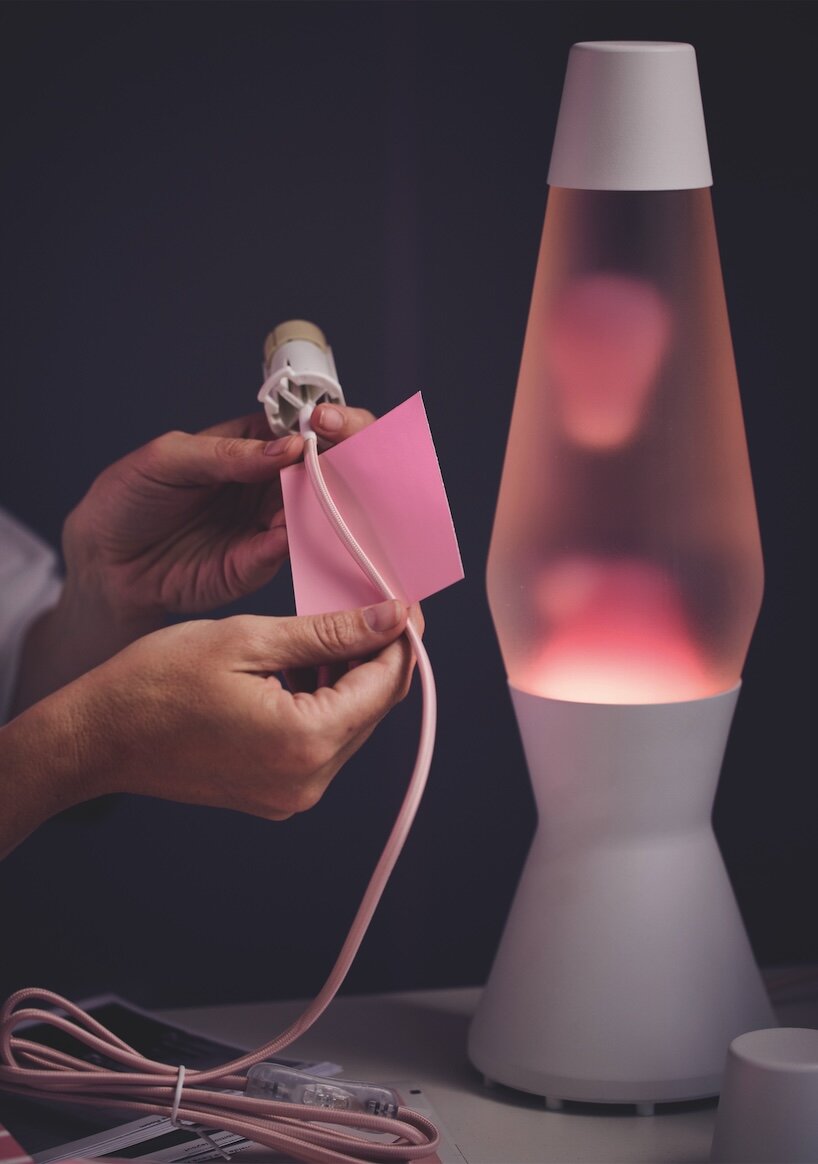
The Zurich exhibition takes this workshop reality and transposes it into the museum space. The exhibition design, created entirely by Studio Sabine Marcelis, aims to invert the visitor’s perspective. The goal is not to dazzle with the final result, but to reveal the brutality and demands of the creative process. The designer emphasizes the need to unveil the successive transformations her favorite materials undergo. Her Candy Cube is a telling example in this regard. Before reaching this stage of geometric perfection, absolute translucency, and tactile softness, the raw resin goes through a multitude of laborious phases. Casting, curing time, successive sanding, and final polishing are all invisible steps that the retrospective seeks to highlight.
Damian Fopp, the curator, agrees wholeheartedly. He views this monographic exhibition as a manifesto of “craftsmanship.” Exhibiting Sabine Marcelis today is a tribute to her exceptional technical mastery—an indispensable skill when working with materials as capricious and demanding as glass or synthetic resin. It is also, in accordance with the designer’s own vision, a way of placing the human element back at the center of the equation, by highlighting the crucial involvement of the many artisans, technicians, and collaborators who contribute to her projects. The work is not the result of spontaneous creation, but the crystallization of collective intelligence and intense manual labor.
Light and Color as Tools of Construction
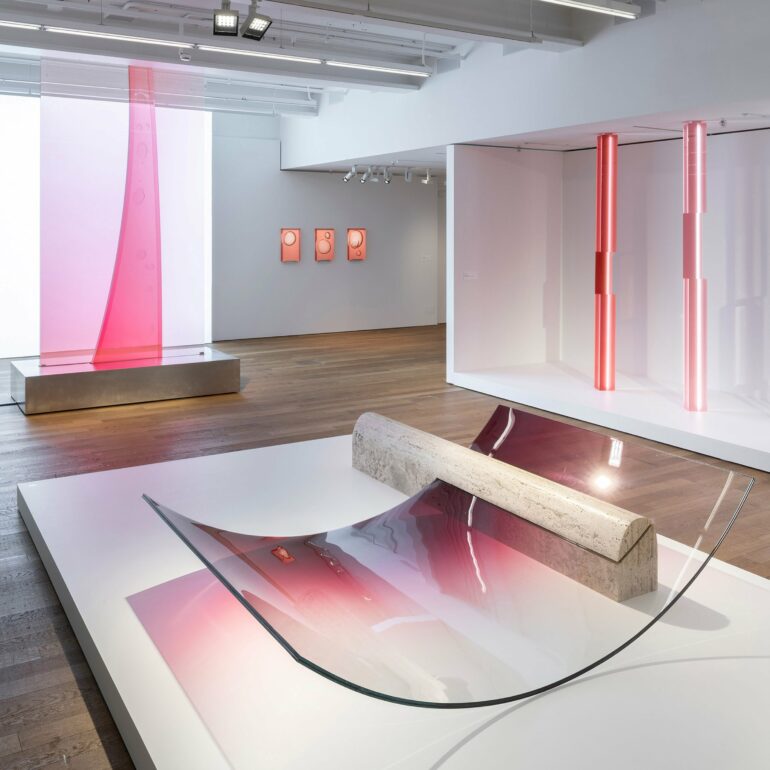
While material forms the body of her work, light and color constitute its nervous system. Sabine Marcelis does not use them as decorative elements or cosmetic finishes, but as active forces capable of altering the perception of a volume. Inside the Toni-Areal, the light is constantly changing. Visitors are invited to move around the pieces to understand how a layer of resin traps or releases light rays, how a skillfully angled mirror deconstructs the surrounding architecture, or how a hue seems to gain density depending on the viewing angle.

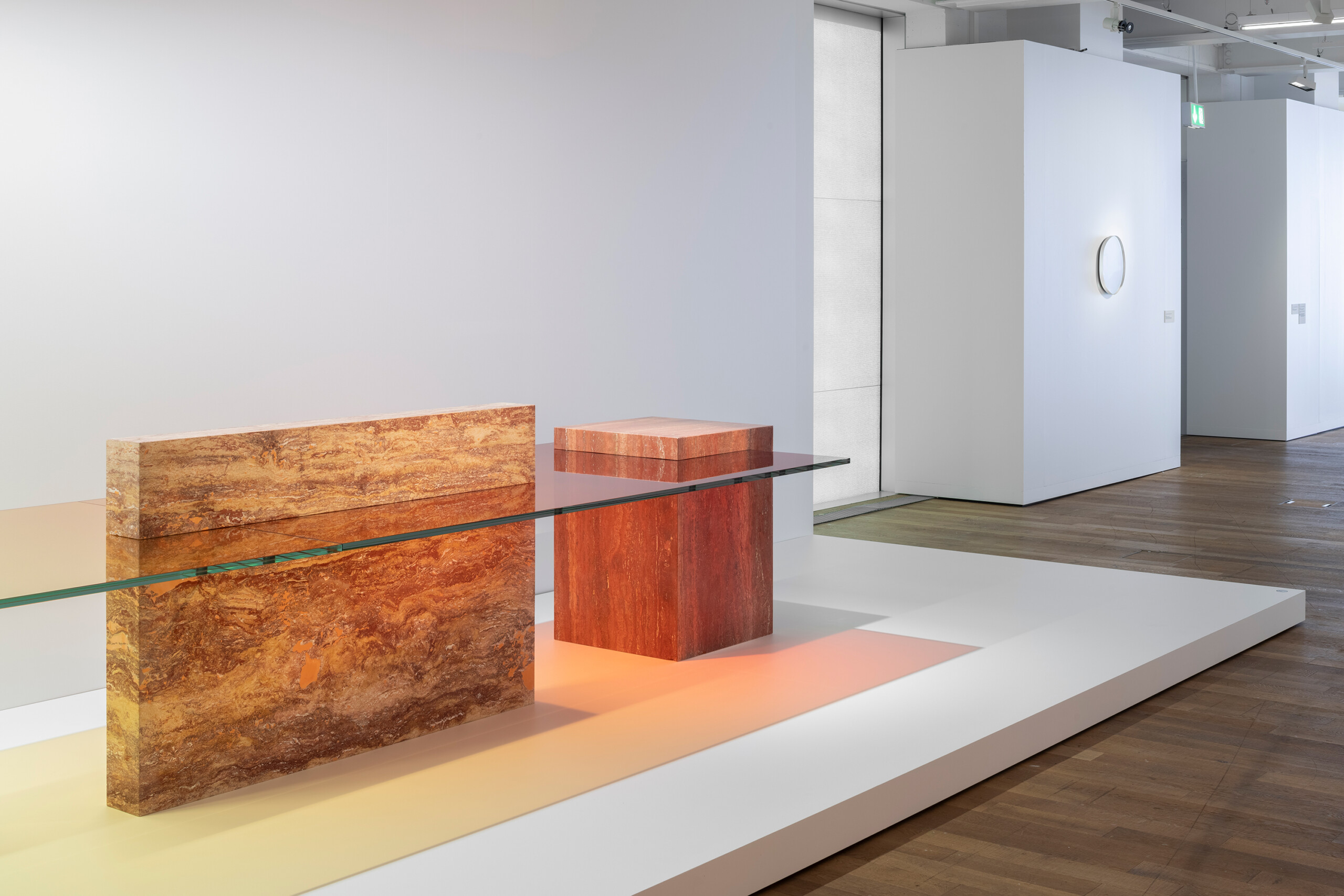
This dynamic approach necessitated radical curatorial choices. The exhibition, which will run from October 30, 2026, to April 4, 2027, deliberately turns its back on traditional chronological classification. The works are not presented in isolation on neutral pedestals. They demand space, air, and perspective. They are grouped according to their material affinities and the visual effects they generate, creating immersive environments where transparencies, plays of color, and reflections interact.
Toward an Ergonomics of Emotion
This shift from the singular object toward the spatial installation illustrates the fluidity with which the studio operates. Over the course of fifteen years of practice, Sabine Marcelis has navigated with remarkable ease between different scales. Whether designing a limited-edition product, fulfilling a commercial commission, conceiving a complete interior design, or creating a monumental installation, the vocabulary remains the same. The physics of light obey the same laws, whether it passes through a small block of resin resting on a table or floods an entire room.
At the heart of this flexibility in scale lies a unique reflection on function. Marcelis rejects the classic dichotomy between contemporary art—which is supposedly free from any utilitarian purpose—and design—which is supposedly subservient to it. For her, function goes beyond simply meeting a mechanical or domestic need. She theorizes what she calls an “emotional experience.” In her view, evoking wonder, compelling a passerby to pause in their stride, and arousing curiosity through a deliberate optical illusion are functions just as vital and legitimate as the physical ergonomics of a chair.
This approach in no way precludes rigor. The context, the identity of the site, and the people who will interact with the project remain at the heart of her approach. Each project, whether sculptural or utilitarian, arises from a careful assessment of what is necessary and appropriate for a given space. It is in this delicate balance between the poetry of the optical effect and the harsh reality of production that the true value of the Zurich exhibition lies. An invitation to look beyond the reflection, to where the material works, resists, and ultimately comes to life.