
Make Texture a preferred source on Google to support us
Add Texture to GoogleOptimizing space in contemporary homes requires a mindset that goes beyond mere functionality. Looking ahead to 2026, the pull-out bed is no longer content to serve merely as a hidden extra sleeping space; it is becoming a centerpiece of interior design. To define the layout of a bedroom where every square meter is maximized, design experts—such as Ania Agárdy, a Miami-based interior designer, or Lindsay Olson, founder of the California-based firm Lulu Designs, favor structures capable of transforming a room’s dynamic with just a few simple movements.
Retractable engineering and total modularity
The major challenge with space-saving furniture lies in its ability to offer comfort equal to that of a standard bed. The Twin Daybed model from the brand Milliard exemplifies this pursuit of technical versatility. For an investment of about €195 (US$210), this black tubular metal frame features a minimalist design that blends seamlessly into the decor. Its unique feature is a sophisticated retractable mechanism: a system of gas struts and folding legs allows the lower bed to rise to the same level as the upper frame. This configuration offers exceptional flexibility, allowing the two sleeping surfaces to be separated to create two independent twin beds or joined together to form a sleeping surface close to king-size dimensions.
In a similar vein, the DHP Locky model is specifically designed for adults. Also equipped with a “pop-up” system, it eliminates the sensation of sleeping close to the floor, which is often associated with traditional pull-out beds. This design choice meets guests’ comfort needs while maintaining the appearance of a daybed during waking hours.
A Return to Cabinetmaking and Historic Design
Far from industrial austerity, some designers are turning to models that draw on the history of decorative arts to define the space. The Jenny Lind Spindle Bed, offered by Crate & Kids, stands out as a statement piece with its solid wood construction. Recognizable by its turned spindles, this model pays homage to the Swedish singer Jenny Lind and 19th-century style. Priced at approximately €1,380 (US$1,498), it features a pull-out drawer mounted on casters, combining the sturdiness of solid wood with smooth mobility.
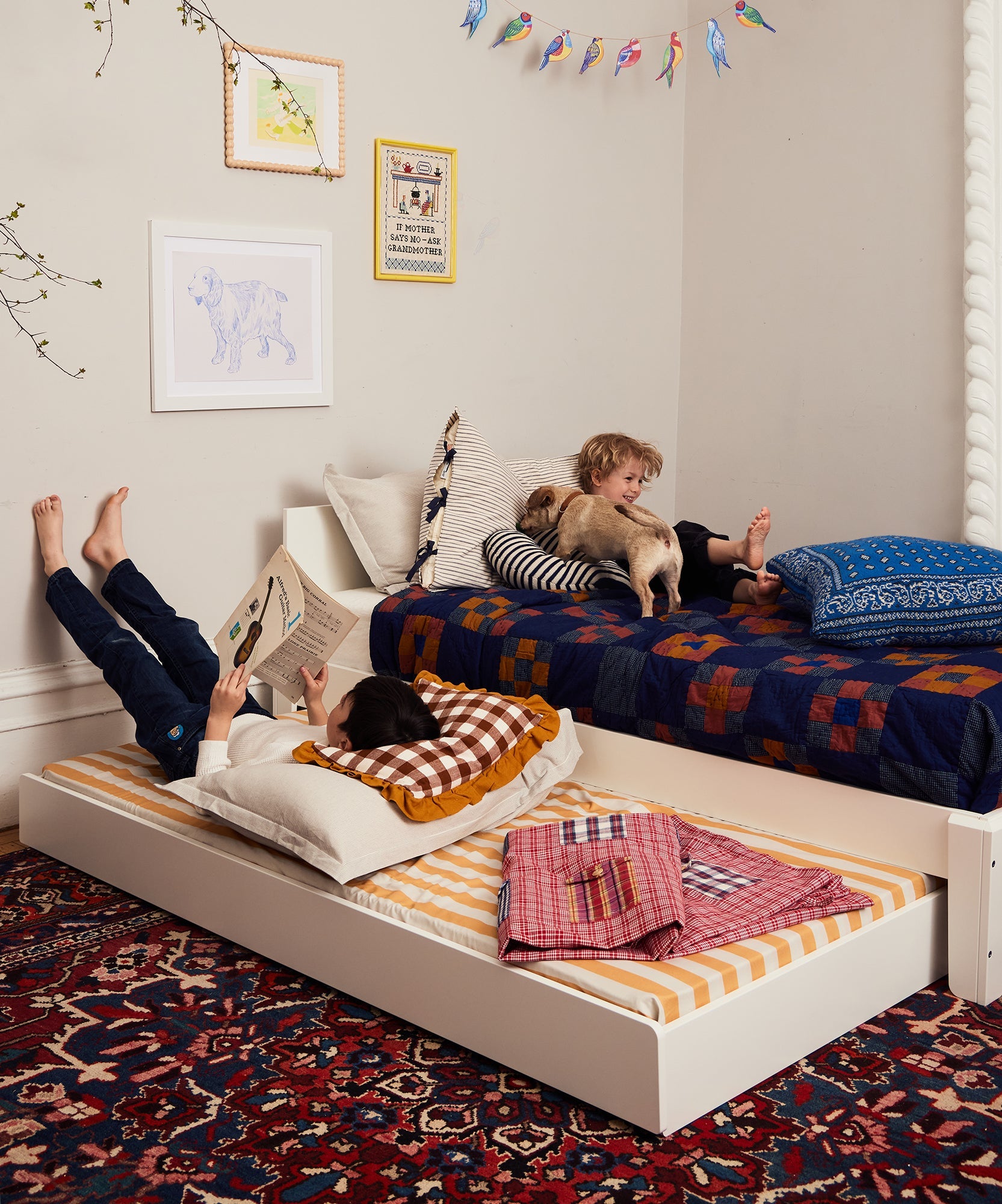
This aesthetic approach is also evident at Pottery Barn Kids with the Ava Regency model. Here, the inspiration shifts to Hollywood’s golden age and the Regency style. The frame, with its ornate decorative moldings, accommodates a drawer sold separately (approximately €460 or $499 USD). The drawer is highly versatile: it can hold a thin mattress for a last-minute guest or serve as ample storage space for linens or personal items, thereby preventing visual clutter in the room.

Material Hybridization and Industrial Style
For interiors that favor a more raw aesthetic, design trends are moving toward textural blends. New Jersey-based designer Daniella Hoffer highlights the appeal of hybrid structures like that of the Zinus Suzanne. Priced at around €175 (US$191), this daybed combines black-lacquered steel—for structural rigidity—with natural bamboo accents that add organic warmth. The bottom drawer is equipped with swivel casters featuring a floor-locking mechanism—a technical detail essential for ensuring the bed’s stability once unfolded.
Managing Vertical Space in Shared Areas
When space is at a premium—particularly in children’s bedrooms or vacation homes—the solution lies in making the most of ceiling height. The Merax Trundle Bunk Bed offers a three-in-one configuration. For around €270 (US$291), this double-decker bunk bed conceals a third sleeping surface in a lower drawer on casters. The design follows the “modern farmhouse” trend, using wood to soften the presence of this imposing piece of furniture. Safety is ensured by a built-in vertical ladder and guardrails, transforming a simple bed into a complete sleeping unit for three people without encroaching on daytime living space.
Choosing a pull-out bed in 2026 is therefore no longer a compromise, but rather a deliberate choice to shape the room’s layout. Whether through “pop-up” mechanisms that level the sleeping surfaces or through the use of premium materials such as turned solid wood, these models make it possible to create versatile living spaces. The selection curated by industry experts shows that the value of a piece of furniture is now measured by its ability to disappear or transform, without ever compromising its original aesthetic standards.