
Make Texture a preferred source on Google to support us
Add Texture to GoogleNow, a single click is all it takes to have any leather goods item delivered, regardless of the time zone or how rare the model may seem. The ubiquity of e-commerce has almost completely eliminated the thrill of acquiring a beautiful object. Faced with this inevitable homogenization, South Korea’s retail giants—long defined by their square footage and glittering storefronts—are orchestrating a radical strategic shift. The transaction itself is taking a back seat. The challenge is no longer to move inventory, but to establish themselves as the ultimate influencers of a clientele’s leisure time—a clientele whose purchasing power demands a narrative rather than just a receipt.
A recent analysis by the South Korean publication Edaily reflects a profound transformation of the industry. Long-standing players such as Shinsegae, Lotte, and Hyundai are moving away from their roles as retailers to embrace that of lifestyle architects. The contemporary business equation is stark: in the luxury sector, price wars have lost their meaning. A brand’s desirability is now measured by its ability to curate, to open doors that are hermetically sealed to the general public, and to bring the unattainable to life.
The Disappearance of the Department in Favor of the Address Book
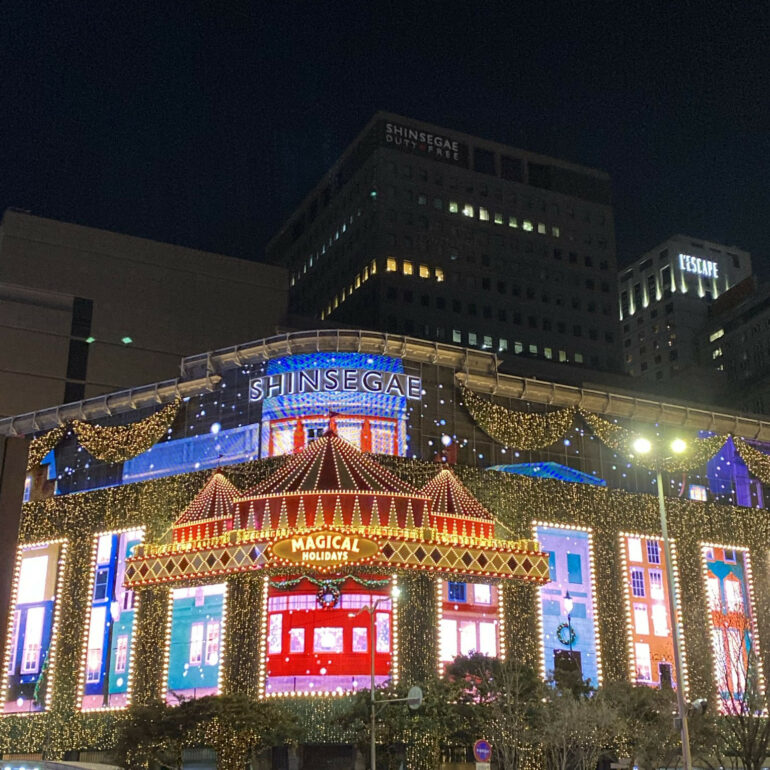
The very architecture of the product offering has been transformed as a result. Last year, Shinsegae’s aisles saw the introduction of a new kind of offering through a program called “The Showcase.” The department store began selling luxury cars, distributing limited-edition bottles of whiskey, and securing access to the finals of major tennis tournaments. Customers are also offered tailor-made dinners created in collaboration with Michelin-starred restaurants. The strategy paid off: fifty thousand VIP profiles were acquired within twelve months through this initiative alone.
At the very top of Shinsegae’s pyramid, the exclusive circle known as “Trinity” illustrates this shift from impulse buying to ultra-personalized recommendations. Three-quarters of these high-end shoppers no longer add items to their carts on their own; they seek prior consultation with the retailer. The average amount spent during these interactions reaches 20 million won, confirming the economic viability of a model based on the long term, active listening, and intermediation rather than on sales volume alone.
Breaking Free from the Confines of the Store
Breaking free from the confines of the store to capture shoppers’ leisure time. This approach may come as a surprise from commercial real estate giants, but it follows the relentless logic of the experience economy. Last year, the “Via Shinsegae” platform laid the groundwork for this extraterritoriality. The retailer transformed itself into an expedition agency, sending its customers into the polar cold on Arctic missions led by explorer James Hooper, or immersing them in the electrifying atmosphere of Abu Dhabi for exclusive motorsports events.
Lotte is now applying a similar approach with the recent launch of its “Avenuel Global Trip,” an exclusive opportunity reserved strictly for members of its Avenuel VIP ecosystem. The building takes a back seat to the cruise ship cutting through the waters of Alaska, the private guide orchestrating an immersion in Japanese spring, or the expert deciphering European cultural heritage. Lotte is committed to transforming the Avenuel brand into a self-sufficient private club. Transactional perks give way to golf and equestrian academies, the organization of prestigious weddings, and the hosting of gala dinners. Culture and gastronomy become the pillars of a closed world envisioned by the retailer.
Last April, Hyundai joined this race for paid escapism with its own venture, “The Hyundai Hi.” The catalog targets hyper-exclusivity from the outset, offering access to Formula 1 paddocks during the Hungarian and Singapore Grand Prix. The prices listed for these trips far exceed typical retail price ceilings, yet the brand has seen the offerings sell out almost immediately, proving the remarkable elasticity of demand when the product is truly exceptional.
Psychographics Rather Than Demographics
This sophistication in the product offering is accompanied by a much more nuanced understanding of the target audience. Chronological age or income level alone take a back seat to behavioral profiles and specific passions. While loyalty used to be bought through the accumulation of points, it is now earned through the relevance of the exclusive community offered. Hyundai has taken this approach particularly far by segmenting its services according to very specific status markers: mastery of golf, investment in rare bags, or expertise in niche whiskeys.
The brand has formalized this segmentation through its “The Highest Class” series, which brings together connoisseurs through programs dedicated to contemporary art, specialized tastings centered on coffee culture, and introductions to club sports. At the same time, Hyundai draws a clear generational line with its “Club YP,” to which those over 45 are strictly barred. A buyer is no longer viewed solely through the lens of their wallet, but as a complex individual who must be engaged with content tailored to their social codes.
The Risk of Pointless Accumulation
In this rapidly changing landscape, competition among South Korean players has shifted. It no longer plays out in billboard campaigns or the size of storefronts, but in the hushed silence of concierge services and private lounges. The challenge remains fundamentally defensive: preserving the legitimacy of brick-and-mortar retail by elevating everything that algorithms fail to replicate. The warmth of a personal encounter, the thrill of tangible rarity, and the flawless execution of a bespoke service are now the only barriers to entry capable of curbing digital erosion.
The danger lurking for these conglomerates lies in a blind pursuit of the unattainable. By piling on one spectacular offering after another, there is a risk of descending into a disjointed inventory, transforming spaces designed for elegance into mere catalogs of services lacking any coherence. A collection of experiences priced at a premium is not enough to create a lifestyle if there is no overarching theme. The legitimacy of this move upmarket rests on the retailers’ ability to maintain a strict editorial line in the selection of their partners and destinations. Seoul’s department stores have acknowledged the end of their original purpose; they must now prove that they know how to write the next chapter of their story.