
Make Texture a preferred source on Google to support us
Add Texture to GoogleIn the historic city of Vassouras, in the heart of the state of Rio, a new museum space is redefining the narrative of the Vale do Café. Much more than just a place of preservation, the new Museu Vassouras is dedicated to highlighting marginalized communities, folk traditions, and collective memory. Through its inaugural exhibition, *Chegança*, which brings together more than 60 artists and nearly 130 works, the institution is launching an ambitious project where territory, identity, and local economic vitality intersect.
A Heritage Setting for a Vibrant Museum Experience
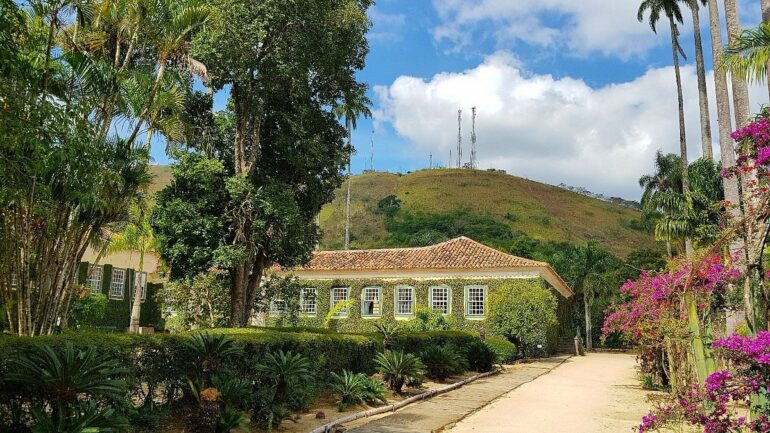
Nestled in a majestic building dating back to 1848—which served successively as a hospital and then a social welfare institution—the museum has undergone a meticulous renovation spearheaded by Ronaldo Cezar Coelho. This exceptional venue has now been transformed into a unique cultural hub. Moving away from the static model of a permanent collection, the museum prioritizes a dynamic program designed as a true laboratory for research, education, and exchange.
This approach places it in the tradition of the most cutting-edge contemporary institutions, where the exhibition space reflects the present while questioning the past.
Beyond Opulence: Memory Reinvented
The vision behind Chegança is bold: to tell the story of Brazil’s coffee heritage by moving beyond the narrow lens of grand stately homes and their opulence. Under the curatorial direction of Marcelo Campos, the exhibition highlights the workers, Afro-descendant communities, indigenous traditions, and popular expressions that have truly shaped the region. The museum thus opts for a broader—and deliberately more poignant—interpretation of local history.
The exhibition design is structured around strong thematic blocks—Folias, Vapor, and Milagre—creating a dialogue between rituals, landscapes, and social tensions. Renowned contemporary artists such as Rosana Paulino, Dalton Paula, Rafa Bqueer, Denilson Baniwa, and Gustavo Caboco juxtapose historical figures with works from the past, avoiding the pitfall of mere nostalgia. The inclusion of paintings by Tarsila do Amaral, who came from a line of coffee-growing aristocrats, takes on a new dimension here, illustrating a complex network of cultural exchanges.
Brazil Through the Lens of Its Cultural Hybridity
The Museu Vassouras explores a truth often theorized but rarely portrayed with such precision: Brazilian culture is the result of an organic interweaving of African, Indigenous, and European heritages. The works featured in *Chegança* bear witness to a ceaseless exchange of dance, music, and the visual arts between these worlds, navigating the tension between historical violence and creative brilliance.
It is in this context that *A Hora do Pão* by Abigail de Andrade—a painter native to Vassouras who was long marginalized by art history—reveals its full power. Far from being a mere genre scene, the painting stands as a lucid testimony to the social divisions that were already shaping the 19th century.

An Urban and Economic Resonance
The project’s ambition extends beyond the institution’s walls to permeate the entire city. With tens of thousands of visitors drawn in since its opening, the museum attracts a diverse audience. This buzz is breathing new life into Vassouras, boosting the hospitality industry, the restaurant scene, and local businesses.
The challenge has been brilliantly met: to bring the collective memory to life while generating a tangible economic impact, free from any pretense.
Unlike certain cultural architecture projects designed primarily for visual spectacle, the Museu Vassouras prioritizes the authenticity of its mission. Its carefully scaled dimensions spare visitors the fatigue inherent in monumental tours, offering a fluid, unhurried stroll where the artwork and its context remain the focal point.
In this region where an economic golden age coexists with the scars of slavery, this approach carries profound symbolic significance. The institution does not mask any contradictions; it brings them to light. This is undoubtedly where the elegance and strength of this project lie: in celebrating a country steeped in cultural fusion, without ever obscuring its scars.