
Make Texture a preferred source on Google to support us
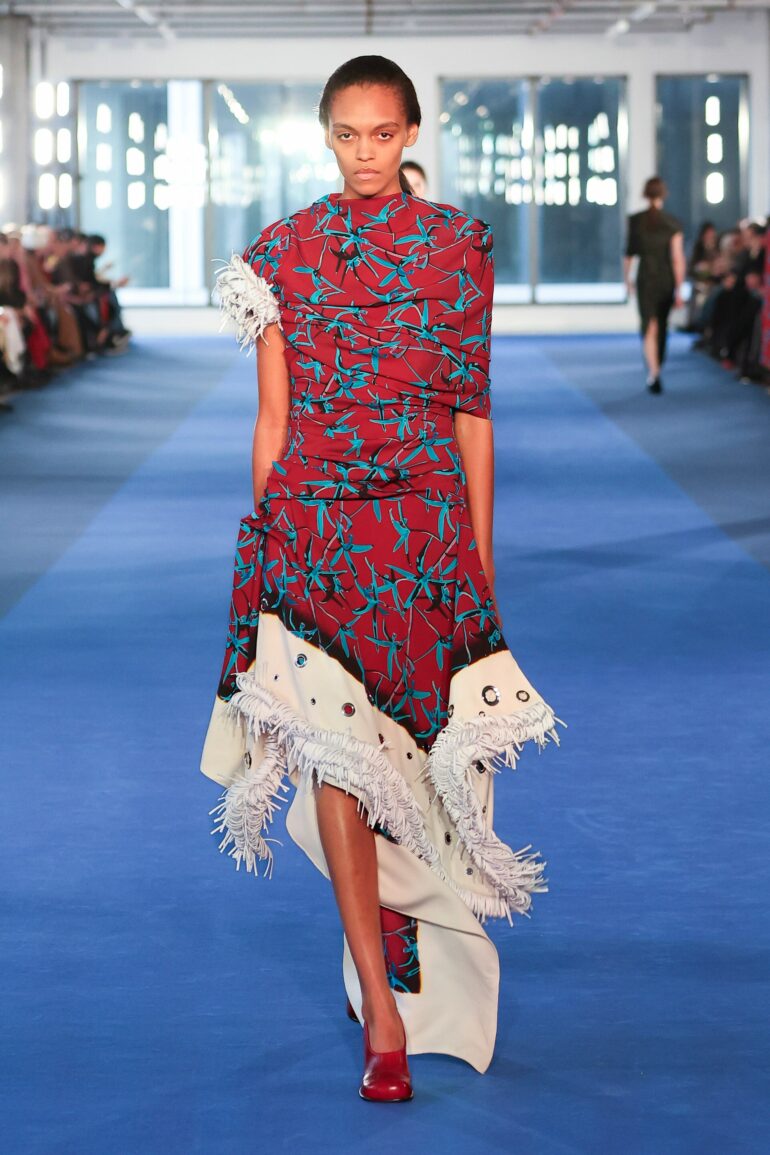
Add Texture to GoogleDuring the most recent New York Fashion Week in February 2026, one name captured everyone’s attention, dominating the media with rare intensity. Rachel Scott pulled off a logistical and creative feat that few designers—even seasoned ones—would dare attempt: presenting her own fashion house’s Fall/Winter 2026 collection, Diotima, and her first runway show as creative director of Proenza Schouler. This dual role is not merely an organizational feat. It marks the emergence of a figure who, born in Jamaica in 1984, is now redefining the contours of American luxury through the lens of a rigorous and emancipated Caribbean worldview.
Rachel Scott’s journey does not follow the linear path of the fashion world’s child prodigies. Her identity was forged in Kingston, in an environment where textile craftsmanship and home-based manufacturing were ubiquitous. The daughter of an Air Jamaica flight attendant who also ran a ready-to-wear boutique called Gaychel, and a furniture maker, she grew up in close contact with materials and commerce. This duality—between an openness to the world through travel and a deep connection to local production—forms the foundation of what she now calls “Caribbean creative power.”
The intellectualization of the cut: from Colgate to the Istituto Marangoni
When she left Jamaica in 2002 for the United States, Rachel Scott did not immediately head for design studios. She enrolled at Colgate University in New York State to study art, art history, philosophy, and French. This detour into the humanities—supplemented by stays in Dijon and summer courses at Central Saint Martins in London—gave her future practice a notable conceptual depth. It was only after completing this program that she enrolled at the Istituto Marangoni in Milan, from which she graduated with a degree in fashion design in 2007.
Her professional training took place at fashion houses known for their distinct aesthetics. In Milan, she cut her teeth at CoSTUME NATIONAL under the guidance of Ennio Capasa, where she learned a certain minimalist rigor. Back in New York, she worked in the ateliers of J. Mendel and Elizabeth and James before settling permanently at Rachel Comey. Over the course of seven years, she rose through the ranks to become vice president of design, refining an approach to fashion that prioritizes structure and the intelligence of the garment over artifice.
Diotima: The Deconstruction of Folklore
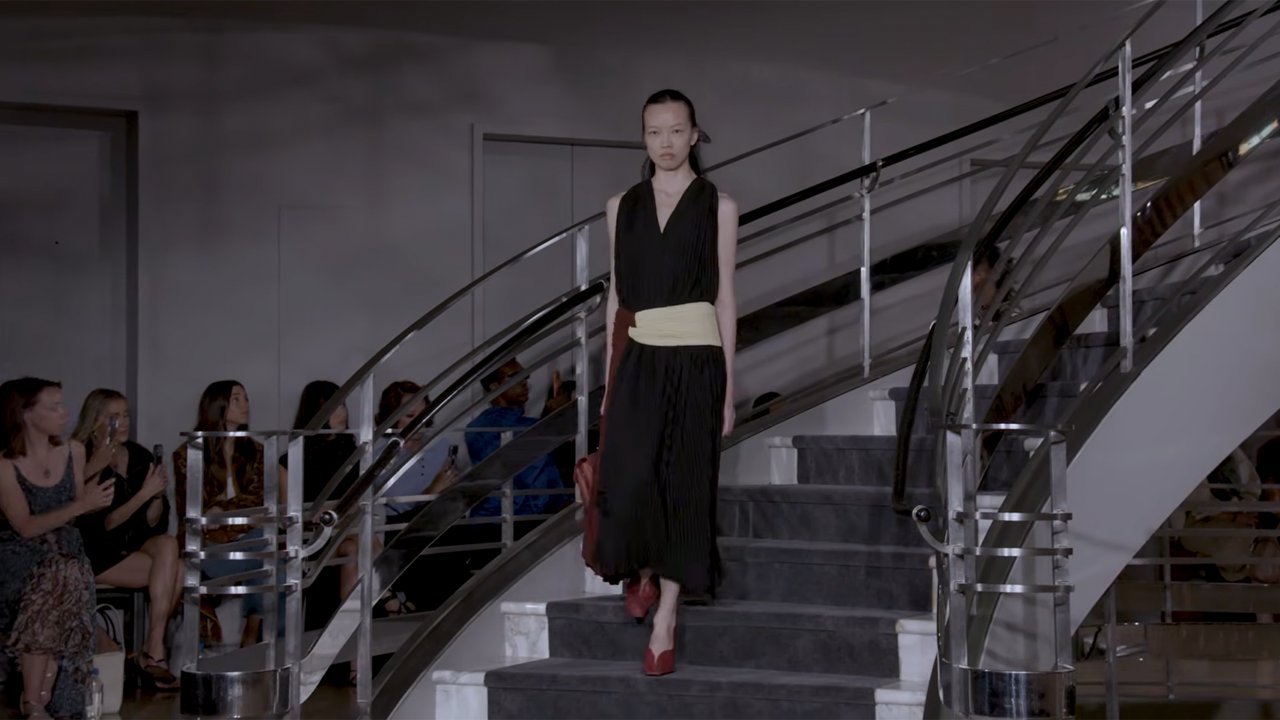
In 2021, in the midst of the pandemic, Rachel Scott launched her personal label from her Brooklyn studio. She chose not to name it after herself, preferring the name Diotima. This choice is a cultural statement of intent: Diotima of Mantinea is the priestess and philosopher featured in Plato’s *The Symposium*, the one who teaches Socrates the doctrine of Eros and the ascent toward beauty. By placing her brand under this patronage, Scott signals that her project is as much intellectual as it is textile.
Diotima’s aesthetic is rooted in a constant dialogue between New York and Jamaica. At the heart of the manufacturing process lies a commitment to Jamaican artisan communities. Crochet and knitting, handmade locally, become the cornerstones of a luxury wardrobe that rejects retro-tropical stereotypes. For Rachel Scott, Caribbean identity in fashion should not be a repetition of folkloric clichés, but a sophisticated proposition capable of rivaling European standards.
This vision draws on the ideas of the Martinican philosopher Édouard Glissant. Scott draws on the concepts of creolization and the rejection of rigid categorizations to build her collections. The collections feature pieces where intricate crochet meets heritage tweeds from the United Kingdom—a subtle nod to the Jamaican diaspora of the Windrush generation—or lightweight woolens from high-end Italian mills. This textile hybridization creates a new silhouette, rooted in postcolonial history yet projected into an urban modernity.
An Economy of Artisanal Luxury
Diotima’s pricing strategy confirms its commitment to elevating Caribbean craftsmanship to the level of haute couture or international luxury ready-to-wear. The prices listed on the brand’s e-shop in October 2026 reflect the complexity of the craftsmanship involved. A top like the Aleatorio Top is priced at $1,195 (approximately €1,100), while the Antilles pants cost $1,795 (approximately €1,650). Tailored pieces, such as the Ave jacket or the coat of the same name, range from 1,995 USD to 2,495 USD.

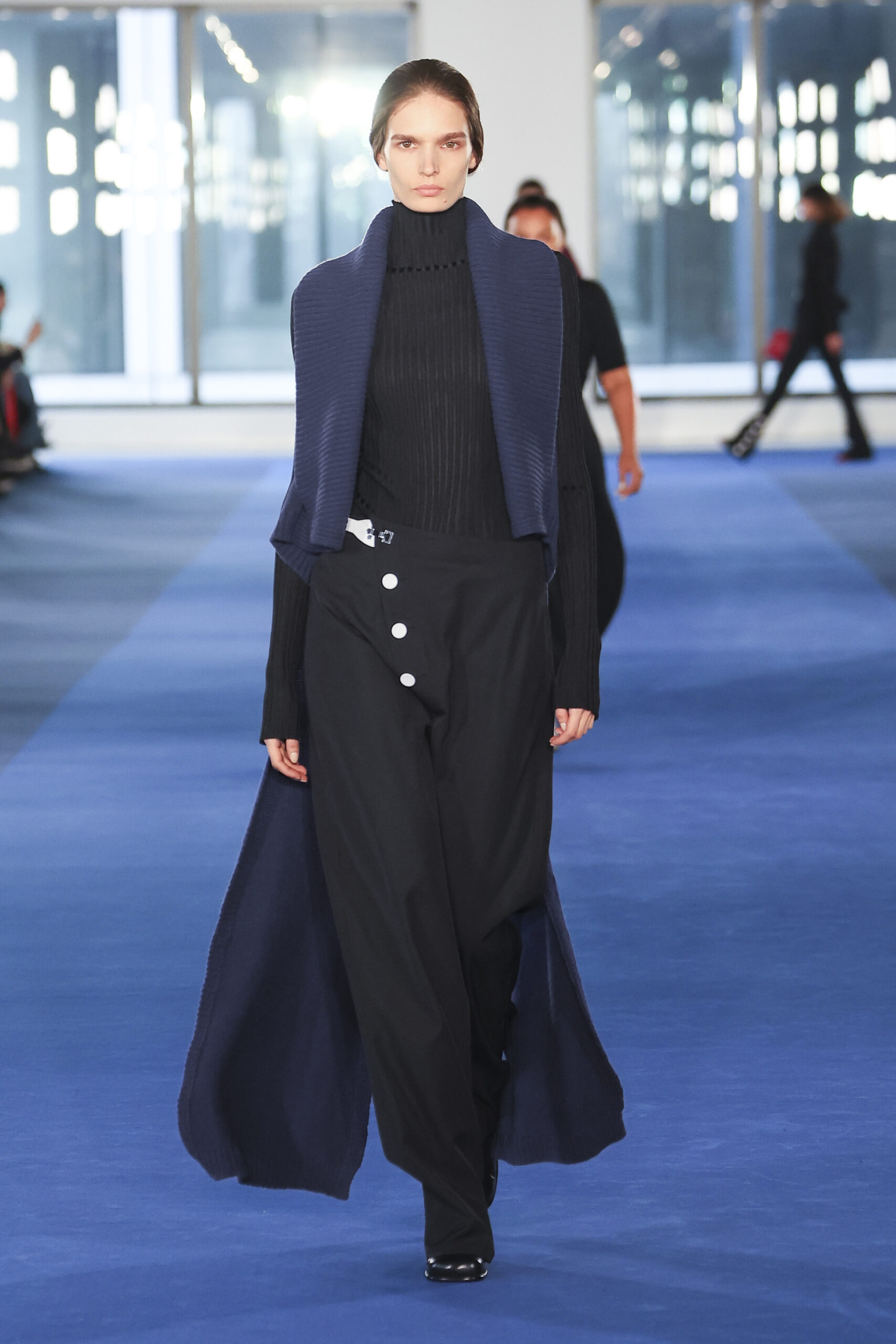
However, it is the runway dresses—true masterpieces of crochet work—that represent the pinnacle of this price range. The Mane dress is priced at $1,895, the Emin at $2,295, and the Gala Gown at $2,795. The most iconic piece, the Matonica dress, retails for $4,995 (approximately 4,600 EUR), with its cost justified by the dozens of hours of manual labor performed by partner artisans in Jamaica. This business model allows value to be reinvested directly into local communities while affirming the viability of non-Western luxury in the global market.
The Rise at Proenza Schouler
Rachel Scott’s appointment as creative director of Proenza Schouler in September 2025 sent a welcome shockwave through the industry. Succeeding founders Jack McCollough and Lazaro Hernandez, she became the first Black woman to take the helm of such a well-established American fashion house. This strategic choice underscores the recognition of her technical expertise and her ability to lead a large-scale organization while maintaining a strong identity.
Her first runway show for the brand, presented in February 2026, demonstrated her ability to embrace Proenza Schouler’s aesthetic while infusing it with her own conceptual rigor. It was a daunting challenge: leading a New York institution while maintaining Diotima’s independence and growth. By handling both presentations simultaneously during the same Fashion Week, Scott proved that his vision was not merely a stylistic exercise, but a new way of approaching creative direction in the 21st century—one that is more fluid and less compartmentalized.
Artistic Dialogues and Political Messages
Rachel Scott’s commitment is also evident in her cross-disciplinary collaborations with the art world. For her Fall-Winter 2026 collection at Diotima, she collaborated with the heirs of Cuban painter Wifredo Lam. This partnership gave rise to intricate textile patterns incorporating anti-imperialist messages, transforming clothing into a medium for political and historical discourse. This was not her first foray into this field: she had previously worked with sculptor Laura Facey for the Fall-Winter 2024 collection and with artist Nadia Huggins for the Fall 2022 pre-collection.
A finalist for the LVMH Prize in 2023, Rachel Scott has now established herself as a key figure in what some call the new generation of American fashion. Her strength lies in her refusal to compromise: Diotima does not seek to please with an easy aesthetic, but instead imposes its own sense of time and its own geography. Between New York and Kingston, between the writings of Plato and the paintings of Wifredo Lam, the designer outlines a vision of fashion that does more than simply clothe—it contemplates its relationship to the world.