
Make Texture a preferred source on Google to support us
Add Texture to GoogleA cup of coffee, a gallery tour, a conversation that drags on: in luxury boutiques, the time spent takes on a new meaning. Customers no longer necessarily come just to pick up an item and leave. They want to understand the brand, discover its history, and forge a connection with the person who welcomes them. This is the shift Antoine Arnault describes. And perhaps—even more than his optimism about the current economic climate—this is the most revealing aspect of his remarks: to sustain desire, the luxury sector must now be willing to explain itself.
The Store Put to the Test of Conversation
The contrast is stark. According to Antoine Arnault, efficient service used to be enough to meet most in-store expectations. The brand’s narrative would sometimes complement the purchase, without necessarily driving it. Today, this hierarchy has shifted. Discovering the brand takes center stage, and the interaction with the sales associate plays a direct role in many transactions.
This shift is transforming the role of the boutique. When a fashion house features a museum or gallery, these spaces extend the visit beyond the presentation of the collections. A glass of champagne can also alter the pace of the experience. However, one must not confuse hospitality with distraction: the challenge remains to give the product a depth that its display alone does not always suffice to convey.
When asked about the risk of the experience overshadowing the object, Antoine Arnault argues, on the contrary, that the two complement each other. In his view, gaining a deeper understanding of a house, its traditions, and its history fosters a lasting attachment. It is as much a commercial venture as it is a cultural one. The visit must leave visitors with more than just the memory of a warm welcome: it must give them a reason to choose this brand over another.
The executive describes a trend common to different regions of the world, rather than a uniquely European or American phenomenon. In many of the group’s new stores, he observes that visitors stay longer. He does not provide specific figures for this increase in dwell time. His observation, however, highlights a priority: turning this available time into a relationship, rather than simply a waiting period before a purchase.
The local customer: far from grand statements
This focus takes on particular significance when business slows down. Antoine Arnault emphasizes the need to work more effectively with the local clientele. This approach brings the discourse of luxury down to a very concrete level: that of a sales team and the people they serve. The power of a brand name does not exempt one from having to convince customers or from re-engaging them in conversation.
He even sees an internal benefit in this challenge. Having to put in more effort for each sale, he believes, would be motivating for employees. This perspective deserves to be heard for what it is: a managerial interpretation of the current climate, which transforms sales pressure into an invitation to improve service. It also serves as a reminder of how much the customer relationship—often presented as an intangible value—relies on the daily work of the staff.
There’s a tension here. The stores want visitors to take their time, while their teams must redouble their efforts to close a sale. The experience doesn’t eliminate the sale; it simply makes the path to it less direct. The sales associate is tasked with guiding this journey without reducing every interaction to its commercial outcome.
Opening Doors to Broaden Perspectives
The “Journées Particulières” event adds another dimension to this desire for connection. For its sixth edition, 71 LVMH venues welcomed the public across 13 countries. From Paris to Shanghai, via Tokyo, Rome, and New York, the event offered a different way to experience the group’s activities beyond its storefronts. Antoine Arnault spoke at the Paris opening.
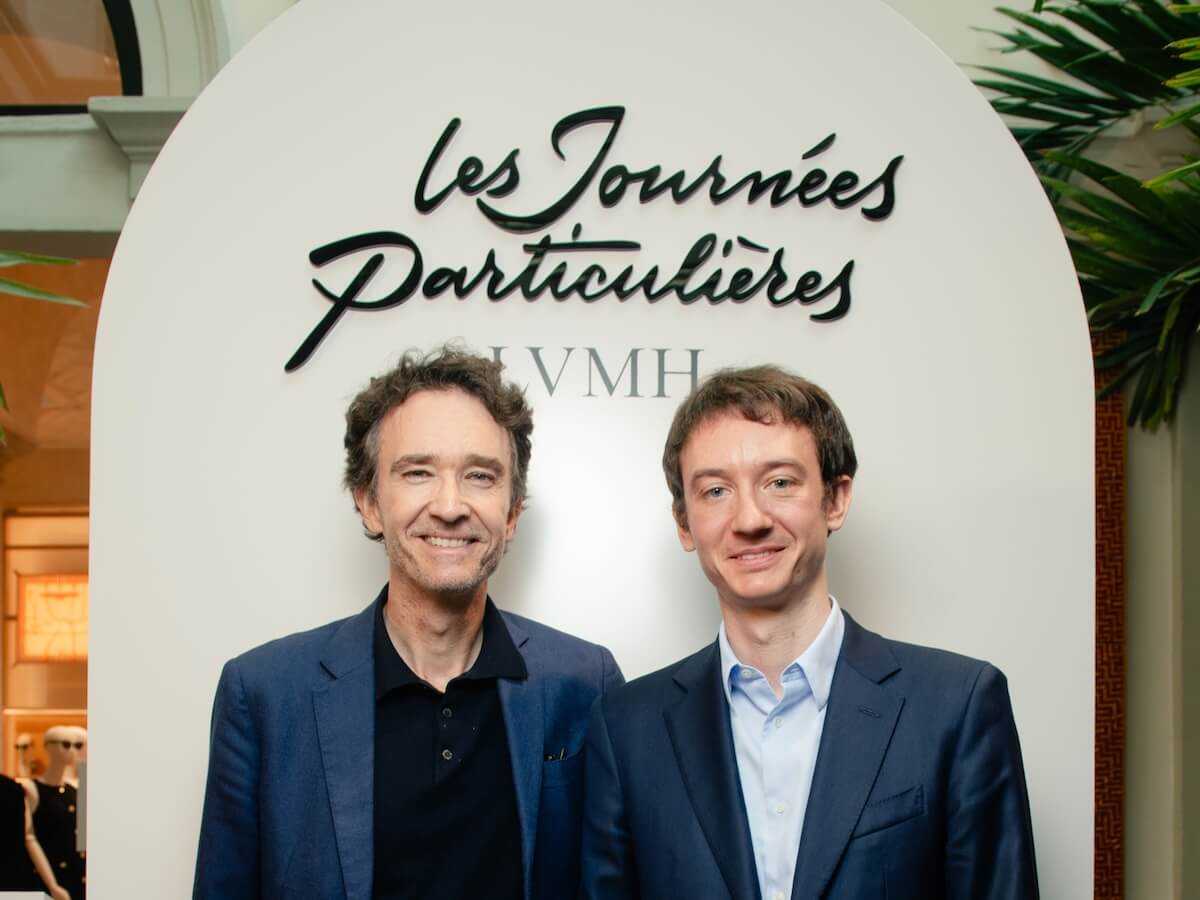
The number of locations matters, but the target audience is just as important. These open houses are aimed at both customers and non-customers alike. The executive noted that thousands of people came to learn about the various professions, engage in conversation, and ask questions. He sees this as evidence of enduring curiosity about the sector, as well as its continued ability to spark interest.
This curiosity does not equate to an intention to purchase. However, it offers luxury houses a space for dialogue that a retail store, with its commercial purpose, does not create in the same way. One can be interested in the craftsmanship without wanting to purchase the finished product. For a luxury group, accepting this distance also makes it possible to speak to a broader audience than just its clientele.

Artisans Confronted with the Image of the Giant
Antoine Arnault makes no secret of the event’s other purpose: to shape perceptions of LVMH. As the group’s Director of Image and Environment and a member of its executive committee, he also serves as Managing Director and Vice Chair of the Board of Directors at Christian Dior SE. His analysis thus lies at the intersection of reputation and strategy.
He acknowledges that the group may be perceived as too imposing, or overly concerned with its financial results. His response is to invite the public to meet the artisans and witness their pride in belonging to the houses. The choice is significant. In the face of criticism regarding its size and financial figures, LVMH highlights the people and their connection to the craft.
This shift obviously does not answer all questions about how a large conglomerate operates. But it brings to light a reality that financial commentary often overlooks: the products are made by teams whose commitment extends far beyond the bottom line. “Les Journées Particulières” organizes this gathering while also enhancing the company’s image. The two aspects coexist.
Optimism That Doesn’t Yet Translate to the Bottom Line
Then there is the market situation. Antoine Arnault acknowledges that this has been a very difficult period, while noting that he sees the first signs of improvement. He advocates the idea of a readjustment rather than a lasting decline in the luxury sector. No company, he essentially points out, can sustain growth indefinitely; a stabilization phase is also a natural part of the economic cycle.
His optimism is based primarily on desires he believes remain intact: giving a gift, treating oneself, or opening a fine bottle of wine or champagne. This reasoning focuses on consumer motivations, not on indicators of recovery. The remarks reported here contain neither numerical forecasts nor a timeline that would clarify how they will translate into business results.
The strategic response, however, remains product-centric. Antoine Arnault reaffirms the ambition to bring together the materials and talent capable of offering the best in each category, while anticipating customers’ future expectations. The development of the in-store experience is therefore not presented as a change in direction, but as a different way to raise awareness of and foster appreciation for this offering.
It is in the stores themselves that this approach will be judged. In a boutique, the conversation must truly inform the customer’s choice. During an open house, an encounter with a craftsman should offer more than just a well-rehearsed story. Among the visitors to the 71 accessible locations, some came specifically to ask questions: it’s up to the brands to provide them with concrete enough answers to sustain their interest after the visit.