
Make Texture a preferred source on Google to support us
Add Texture to GoogleIn the heart of Hong Kong’s central district, the hustle and bustle of the financial world momentarily gave way to an almost imperceptible sound: the steady scraping of a polishing tool against a steel pivot. From October 13 to 19, 2026, at the Chater House complex, Jaeger-LeCoultre chose to set aside grandiloquent speeches to showcase the silent artistry of its workshops. The seventh edition of its heritage program, titled “The Collectibles VII,” focused on hands-on demonstrations. Alongside artisans dispatched from the Manufacture-Atelier, the public was able to observe live demonstrations of hand-bluing—those discreet gestures that usually escape the owner’s notice but ensure the longevity of a time-honored mechanism. It was a way of grounding luxury in the reality of the workbench.
This meticulous presentation went beyond the simple framework of a technical demonstration. It is part of a specific institutional strategy aimed at redefining the very concept of watchmaking heritage. The challenge for the Joux Valley manufacture is no longer to jealously guard its archives in safes, but to share them. By restoring historic timepieces and then offering them for sale through its own digital channel, accompanied by excerpts from its official archives, the brand is making a clear transition. The vintage timepiece sheds its status as an untouchable relic to once again become a functional watch, rooted in the daily lives of a new generation of enthusiasts.
The Rigorous Curation of a Golden Age
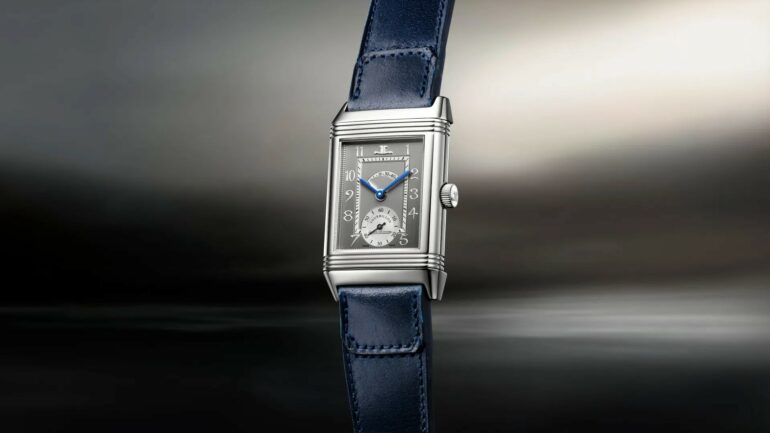
The selection presented in Hong Kong resembled a condensed anthology of 20th-century watchmaking. Ten vintage watches, restored with clinical precision, formed the backbone of the exhibition. Among them, the 1931 Reverso Cordonnet evoked the sporty and geometric origins of the Art Deco period. Further along, the secret 1949 Duoplan Tubogas and the 1955 Duoplan Chain, crafted in 18-karat rose gold, illustrated the house’s mastery in the complex realm of jewelry watches, where the movement must conform to the demands of the jewelry design.

Industrial design enthusiasts also had the chance to admire the 1958 Futurematic E502. With its distinctive aesthetic—which earned it the nickname “Porthole”—this model reflects an era when the pursuit of mechanical innovation gave rise to new case and dial designs. These ten or so pieces represent only a fraction of the spectrum covered by The Collectibles program, which catalogs seventeen categories of models deemed fundamental by the brand. From the scientific robustness of the Geophysic to the underwater ingenuity of the Memovox Polaris, the collection paints a portrait of a watchmaker obsessed with solving complex technical problems.
The decision to narrow the focus to ten watches for this Asian stop helped avoid the pitfall of visual overload. Each model was given the space it needed to stand on its own, serving as a precise marker of time in the evolution of the Jaeger-LeCoultre style. The exhibition design encouraged slow, thoughtful observation, inviting visitors to understand how an aesthetic solution from the 1930s came to influence developments in the decades that followed.
The Miniature Architecture of the Caliber 101
While the past formed the foundation of the event, the present took center stage with the world premiere of the Caliber 101 Chain. This new high jewelry creation fully embraces its lineage from the 1950s Duoplan Chain, while radically altering the balance of colors and materials. The sculptural bracelet, cast in 18-karat rose gold, is set with 158 brilliant-cut diamonds.
The piece’s intensity stems from the way its contrasts are managed. The designers incorporated bands of HyCeram® in absolute glossy black, a composite material that interacts directly with the black lacquered dial. This sharp contrast between the warmth of the gold, the fire of the gemstones, and the depth of the black lacquer prevents the piece from veering into decorative excess. The watch makes a graphic, almost architectural statement on the wrist.

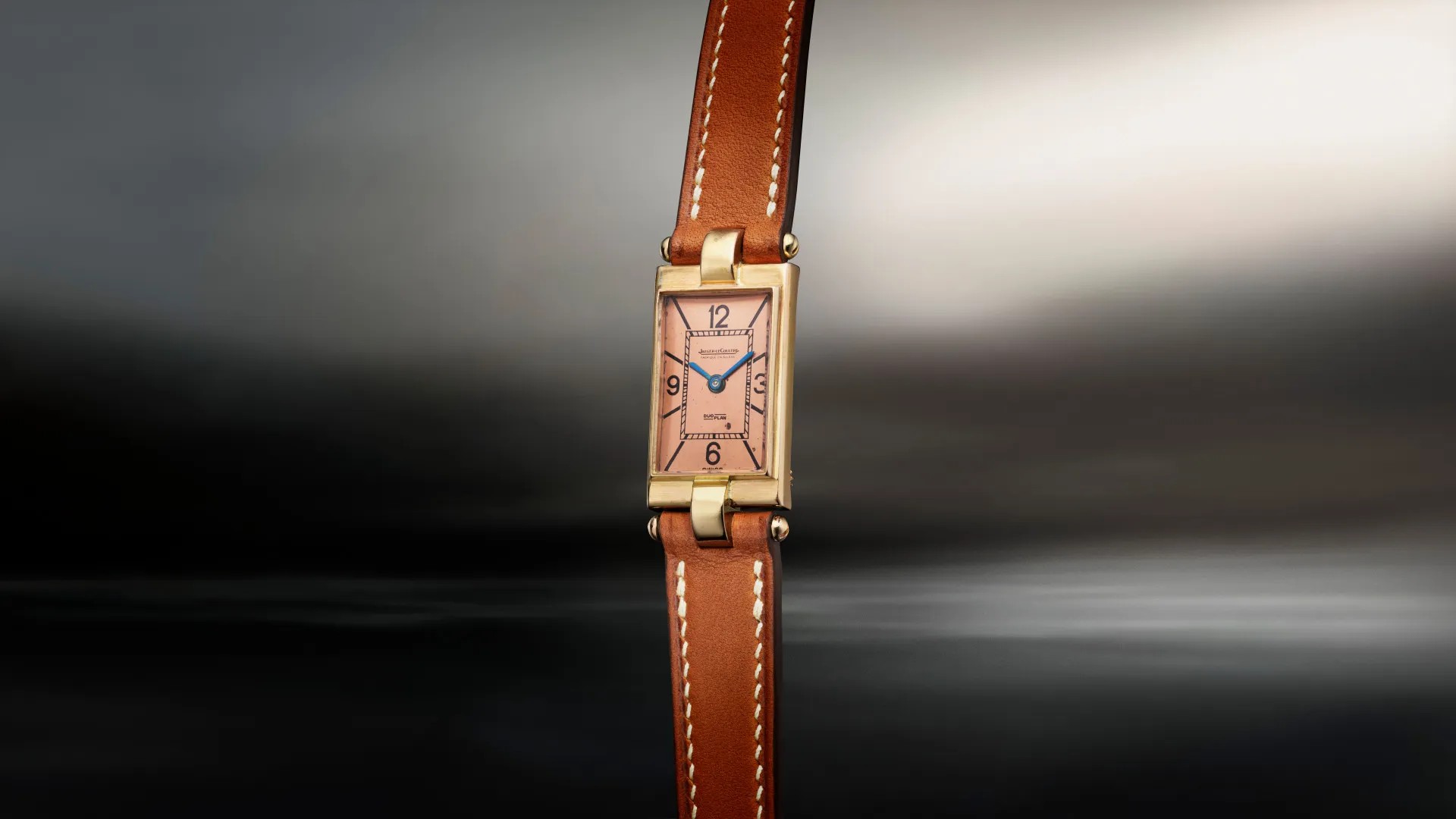
However, the true tour de force lies inside the case. The timepiece is powered by Caliber 101. First introduced in 1929, this hand-wound mechanical movement retains its title as the world’s smallest rectangular caliber. Its integration into a contemporary timepiece highlights a rare industrial feat: the ability to keep a micromechanism—designed nearly a century ago—in production without altering its original architecture. This is not merely a superficial aesthetic homage, but the ongoing use of historic miniature technology.
The Standard for Certified Patina
The Hong Kong exhibition also served as a platform for reflection on the evolution of the collectibles market. Roundtable discussions brought together local and international experts alongside Matthieu Sauret, Jaeger-LeCoultre’s Director of Product and Heritage. Discussions focused on the paradoxes of high-level restoration: to what extent should one intervene on an antique piece to ensure its reliability without erasing the traces of time? How can a worn component be replaced while preserving the historical integrity of the movement?
These questions reflect a profound shift in buyer behavior. The craze for vintage items is no longer driven solely by aesthetic appeal. The market now demands documentation, traceability, and a guarantee of functionality. By handling the search for these rare pieces in-house—including their authentication through period records and their restoration by watchmakers in its own workshop—the manufacture provides a reassuring response to a secondary market that can sometimes be opaque.
The approach taken at Chater House stands out for its clarity. Rather than relying on a romanticized narrative of its history, the watchmaker has chosen to stick to the facts: polished components, set diamonds, typed archival excerpts, and movements that have been measuring time with precision for several decades. In an industry often prone to exaggeration, this almost documentary-style rigor is undoubtedly the most appropriate way to showcase the piece. Once repaired and documented, the historical timepiece speaks for itself.