
Make Texture a preferred source on Google to support us
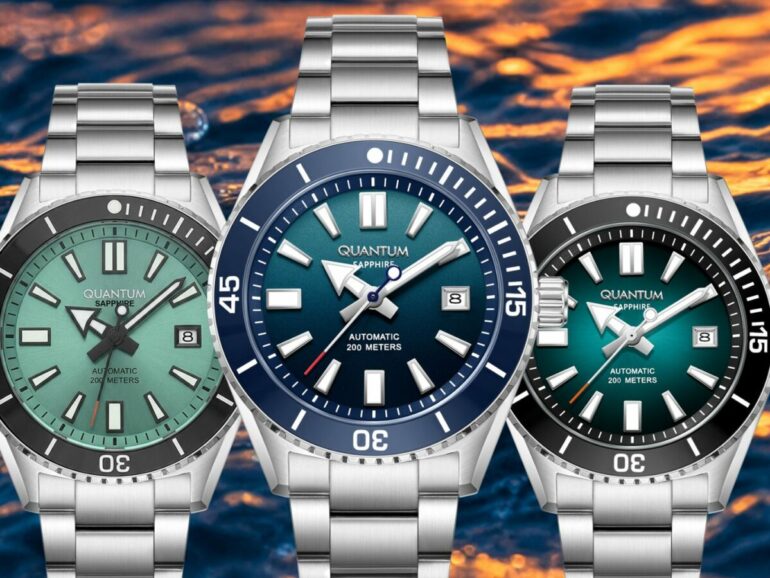
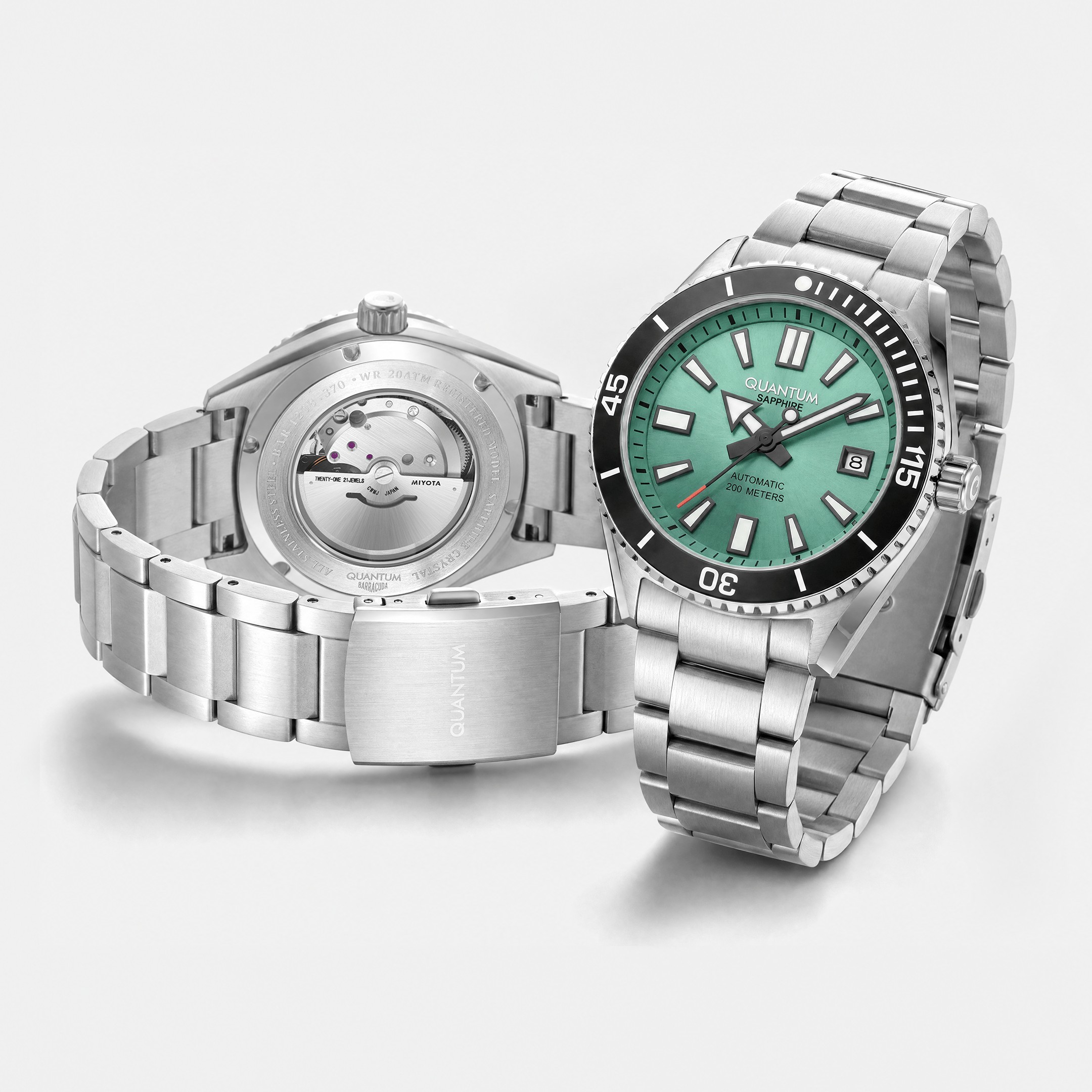
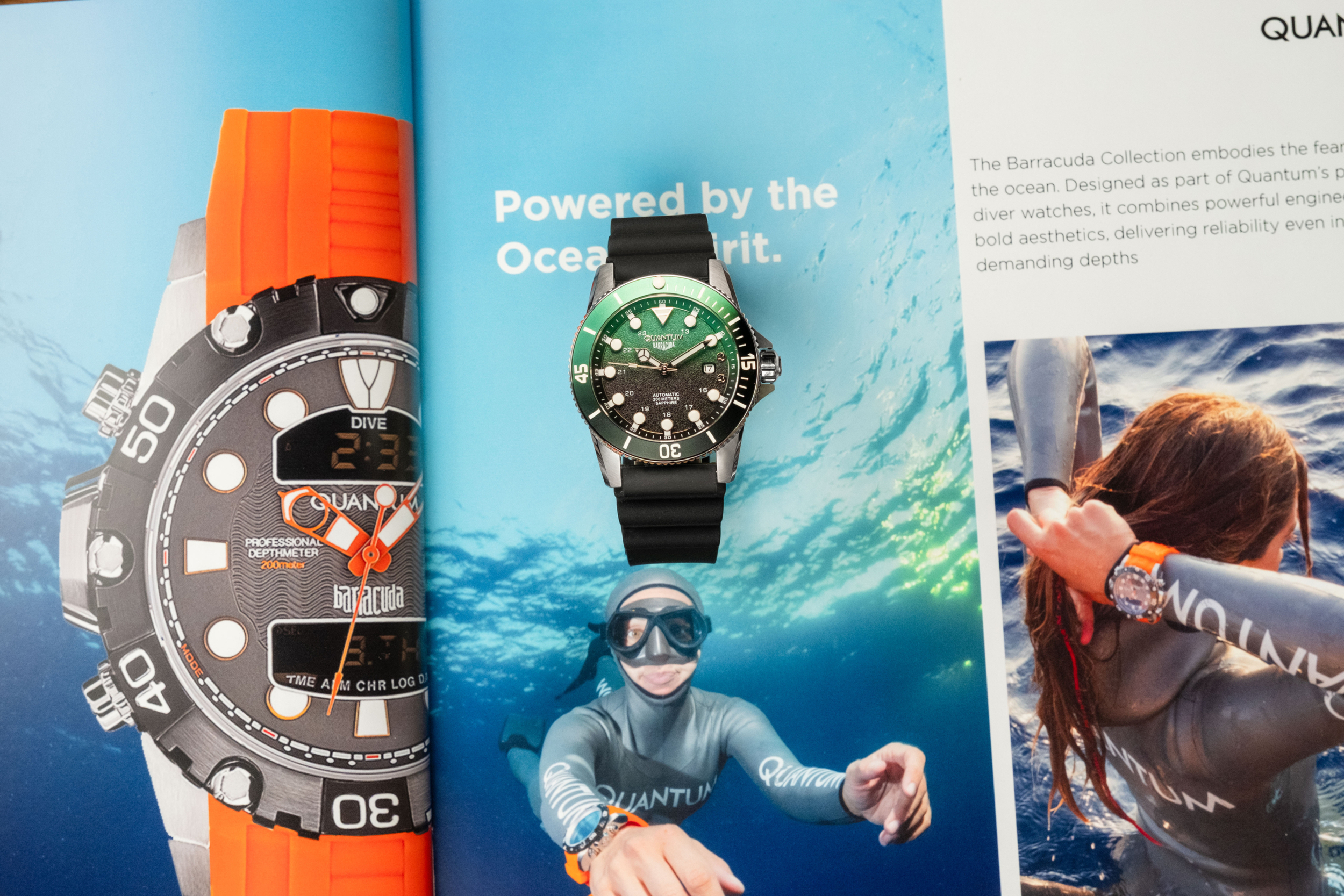
Add Texture to GooglePerhaps the clearest sign of the watch industry’s current vitality lies in a 220-pound watch: a 41-mm diver’s watch, water-resistant to 200 meters, equipped with a rotating ceramic bezel and a proven Japanese movement. With its Barracuda, Quantum reminds us that independence is no longer reserved for collectors able to spend five figures. Between micro-brands, revived houses, and more ambitious workshops, the segment under 10,000 pounds is now a thriving, sometimes uneven, but rarely so inventive landscape.
An affordable price no longer precludes character
The most affordable offerings now cover very distinct styles. Quantum’s Barracuda embraces the classic dive watch aesthetic, powered by the Miyota 8215 and available in six colors, from salmon to blue. In contrast, the Von Doren Runde Vintage opts for understated elegance: a sunburst copper and salmon dial, a small black sub-dial, domed mineral crystal, and a 39-mm case. Its Ronda 1069 quartz movement makes no pretense of being anything else—and that suits it quite well.
At Kiwame Tokyo, the KUBO Usuki is designed for those seeking a dress watch without unnecessary embellishments. Its lacquered ivory dial, raised Arabic numerals, and off-center small seconds sub-dial at 4:30 create an almost understated presence. The 37-mm stainless steel case is just 9.3 mm thick, while the regulated Miyota 82S5 movement beats at 3 Hz. This edition is currently sold out, with the next pre-order phase announced for late November.
Nostalgia, however, doesn’t necessarily require artificial aging. The Octo 1016 Missilemaster methodically recreates the design elements of a model from the 1960s and 1970s: a folded-link bracelet, acrylic crystal, perforated lugs, and the rocket logo at 6 o’clock. Its silver checkered dial and luminous details prevent it from being a mere reproduction. Limited to 200 pieces and priced starting at $550, it illustrates a simple idea: vintage designs are more compelling when they also respect the construction methods of their era.
Dials as Testing Grounds
The dial has become the space where small brands take the risks that major conglomerates are still weighing. Mandetbrote thus transforms aventurine—usually associated with a certain style of classic watchmaking—into an almost architectural object. On the Orbital II, the hour is indicated by a circular disc that moves along a quadrilateral track with rounded corners. The center, which is significantly raised, houses the minute hand. Beneath this unusual geometry lies a modified Miyota 9015 movement.
Erebus takes a more decorative approach. The Nexus Premium retains the angular silhouette of a sports watch with an integrated bracelet, but its dial consists of a three-tone mother-of-pearl mosaic. This material, often reduced to its white iridescence, gains chromatic depth here. Its Sellita SW200-1 movement and 100-meter water resistance ensure the watch remains suitable for everyday use.
Natural stone introduces another form of uniqueness. The Loresum LS04 V2 Eisenkiesel uses iron-rich quartz, whose rust-brown veins make each dial unique. Its 36.5-mm rose gold-plated case also houses a precise 29.5-day moon phase, achieved by modifying a Sellita SW200-1 movement. The mother-of-pearl moon phase complements a cutout of the same shape on the case back.
Costins’ design takes a different approach. The Arcadia features a jumping hour set against a backdrop of concentric circles inspired by traditional Moldovan architecture. The pattern becomes denser toward the bottom and lighter toward the top, on a semi-transparent dial punctuated by BGW9 Super-LumiNova blocks. Behind this graphic design, a Miyota 9015 movement is equipped with a jumping hour module. The result is anything but understated—especially at 640 pounds.
The tool watch breaks away from military clichés
The sports segment has become one of the most competitive arenas in the independent watch market. The Lacité Urbanite GMT is designed for urban travel: a 40.5-mm black case, a dial reminiscent of asphalt, blue accents, and a genuine Miyota 9075 GMT movement. It comes with an Italian leather strap and a black nylon strap; it’s best to stick with the latter, as it’s more in keeping with its technical character.
The Second Hour Gin Clear Mk3 draws on a more nautical aesthetic. Its founder, Peter, trained as a divemaster in Crystal Bay, on Nusa Lembongan, where currents can quickly become dangerous. This third-generation model features a ball-bearing bezel, new lugs compatible with standard straps, and a 316L case hardened to 1,200 Vickers. It is water-resistant to 300 meters, while its hand-beaded caseback showcases a level of craftsmanship rarely seen in this price range.
The Nuncier x NASA Lunar Mission prefers the lunar landscape to the ocean floor. Limited to 100 pieces, it combines a 40.5-mm Grade 2 titanium case with a textured dial bearing the imprint of an astronaut’s footprint. The peripheral minute track traces the stages of a launch, from liftoff to return to Earth. The Miyota 9039 movement features a custom oscillating weight for this special edition.
Two field watches, meanwhile, demonstrate that a modest diameter does not mean limited functionality. The CiRCULA ProTrail, completely redesigned from the ground up, offers 150 meters of water resistance, magnetic resistance of 80,000 A/m, and the Sellita SW200-2 Power+ with a 65-hour power reserve. The Serica 7505 measures just 35 mm in diameter, with 200 meters of water resistance and a Soprod M100 movement. Its new versions—the black enameled “Minute Critical” and the black-and-beige “Tuxedo”—come with the brand’s Bonklip strap.
Complications Are No Longer Intimidating
The full calendar, long reserved for significantly more expensive watches, is now accessible at Venezianico. The Arsenale Calendario combines day, date, month, power reserve, and day-night indicator in a 40-mm case that is 9.6 mm thick. Available in Blu Luna blue or Rosso Sole red, it uses a Miyota 9100 movement set to plus or minus fifteen seconds per day. Three series have already found buyers; the next series, consisting of 300 pieces, was scheduled to ship starting October 28.
The Meia Lua Callisto Semi Red features a more straightforward calendar: day, date, and 24-hour display are handled by the Miyota 9122. Its sunburst red dial, moon-shaped hour markers, and Jubilee-style steel bracelet give it a more assertive look than previous Inception models. Only 30 pieces of this Halfmoon Edition will be produced.
The jumping hour feature is interpreted in two much more dramatic ways. The Olto-8 Chrono Gate Burgundy advances the hour along a 24-hour scale, set against a sunburst-guilloché smoked burgundy dial. Eighty hand-set moissanites encircle its bezel. The Baltic x SpaceOne Seconde Majeure, the result of a collaboration conceived from the outset as a hybrid timepiece, instead separates the hours, minutes, and seconds within a partially openworked regulator-style architecture. Its 38.5-mm case is crafted from 904L steel and houses a Soprod P024 movement.
The chronograph, without the racing-inspired look
The independent chronograph no longer needs to mimic the paddock style. Makina treats the Cassiel_II as a piece of industrial design: sandblasted steel, sharp facets, displays visible through cut-out openings, and a custom black rotor on a Valjoux/ETA 7750 base. At night, the luminescence reveals a second reading on the dial.
More classic in style, the Atelier Nossedh AN.01 echoes the compact proportions of vintage bi-compax chronographs: 37 mm, white dial, tachymeter, and a Sellita SW510 M manual-winding movement with a 63-hour power reserve. The Christopher Ward C63 Sealander Chronograph features a more contemporary design with a black ceramic tachymeter bezel and new elongated cubic pushers. Its Sellita SW510-1 movement offers a 62-hour power reserve, housed in a 41-mm case water-resistant to 100 meters.
When independence becomes a matter of movement
Starting at 2,000 pounds, the conversation takes on a whole new dimension. The Yema Navygraf Barracuda CMM.20, created to mark the 400th anniversary of the French Navy, founded in 1626, combines a forged carbon dial, a decompression bezel, and an in-house caliber with a tungsten micro-rotor. It offers a 70-hour power reserve, housed in a 39-mm case that is 9.75 mm thick and water-resistant to 300 meters. It is limited to 400 pieces.
The Vertex M36, for its part, reimagines a “broad arrow” watch supplied to the British Army in 1944. With its 36-mm diameter, molded Super-LumiNova dial, and Sellita SW260-1 movement, it stands in stark contrast to the over-the-top designs of some contemporary military watches. At Delma, the Midland Meteorite Automatic offers another rarity: a dial carved from a Muonionalusta meteorite, whose Widmanstätten patterns make each piece unique. Only 100 pieces are planned.
Finally, independent watchmakers are also venturing into ultra-thin timepieces and high-end complications. The Blütezeit Wien No. 4 houses, within a 6.9-mm-thick case, a La Joux-Perret 7380 manual-winding movement with a 90-hour power reserve. Its anthracite dial, hand-guilloché by Yann Von Kaenel, sets a new standard for artisanal craftsmanship. The Sherpa Ultradive Tuxedo retains the ruggedness of a diver’s watch with its two-crown compression case and bayonet-style caseback, while featuring a silver dial and a red date.
The showcase continues with the Formex Aria, a 40-mm titanium watch measuring 6.9 mm in height, powered by the FX01 caliber derived from the Horage K2 with a micro-rotor. Its black-and-gold bridges and hand-finished bevels complement a titanium bracelet designed by Dexel. And just under the symbolic 10,000-pound mark, the Horage Tourbillon 3 Skeleton Relik features an in-house flying tourbillon, a 120-hour power reserve, and a diameter reduced to 38.5 mm. The openwork grid dial, available with accents of purple, forest green, or blue-green, reveals the tourbillon without confining it to the usual trappings of haute horlogerie.